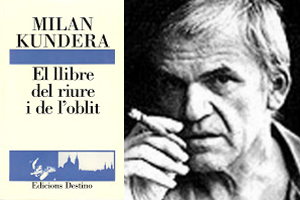
Many are so angry or bewildered that they give up trying to understand what is going on. Many refuse to make a contribution to the emerging universal culture because at some point they decided once and for all that the world around them was incomprehensible, hostile, bloodthirsty, demented or diabolical. Many are tempted to see themselves as mere victims - victims of America, of the West, of capitalism or liberalism, of the new technologies, of the media, of change, and so on. It cannot be denied that such people really do feel wronged and suffer accordingly, but their reaction seems to me inappropriate. To imprison oneself in a victim mentality can do the injured party even more harm than the aggression itself. And this is as true of societies as of individuals. They huddle themselves away, they barricade themselves in, they try to ward off everything, they close their minds, they ruminate, they give up looking for anything new, they don't explore anymore, they don't make any more progress, they are afraid of the future, of the present and of everyone else.

Stockholm Syndrome for The Machine.
Not only do we surrender our work to machines that run almost entirely by themselves, we also sacrifice important parts of our lives to them. Machines tell us what to buy and where, what to eat and drink, whom to date and marry, what to read and what kind of music we should listen to. They give us, unprompted, the latest news and social gossip, and they rush to satisfy what they take to be our intellectual and emotional needs. And, apart from a handful of experts involved in their programming, they don't need us. Machines are a world unto themselves. They feed and maintain themselves- they even teach themselves, learning from their own errors and ours.
Freed from toil and worries, we should be happy at last, hunting in the morning, fishing in the afternoon, cowboys in the evening, as Karl Marx once wanted us to be. But we are far from happy.
We can no longer get away from the machines that make this possible. The machines (from the personal computer and smartphone to the internet itself) have permeated our lives so thoroughly that if, for some reason, we are severed from them, we are no longer ourselves. Our alienation is now complete.
Significantly, we find ourselves in a state more helpless than before we started using the machines. It is not just that, by giving in to them, we have ceased to practice some important skills, lost some of our mental sharpness, or forgotten how to use simpler, yet more demanding tools. It's much worse: we have altered ourselves. Our heavy reliance on automation and artificial intelligence so wot and was and me incroncingly dependent on things over which we have little control—it is making us positively dumber. Surrounded by objects that run by themselves, we encounter little that challenges us to think. Trained and fed and taken care of by algorithms as we increasingly are, our mind is largely jobless. And when thinking is not employed, it atrophies and dies.
Thinking dies like an abused dog: famished and mistreated, all skin and bones, yet absurdly loyal to its abuser, till its last breath. As we become increasingly attached to our machines, we unwittingly start aping them. Eventually, not to be outdone, we tend to develop a whole new "machine self," one that ideally should live up to the machines' commandments: don't take lazy detours, as humans used to, go "straight to the point"; don't waste time with useless things (machines don't do anything useless); don't use ambiguous language (machines are always literal); and, above all, rid yourself of humor (machines don't laugh they have no reason to). Eventually, if we spend enough time in their proximity, we will end up as well-oiled, efficient, and dead inside as the machines themselves. Human automata. If the machines weren't the mindless objects that they are, our over-the-top flattery might embarrass them; but being what they are, they don't mind.
The ultimate irony of course is that, when a tool is fully automated, it's a feat of engineering and a demonstration of human intelligence. When a human being is automated, it becomes stupidity embodied. Artificial intelligence begets the ultimate stultification.
Only a god, or the gift of failure, can save us now.
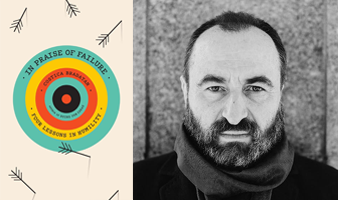
Behind the lines.
“An intention is more than a conscious purpose, it’s the congruence of that purpose. It requires an alignment of all aspects of one’s self. Of conscious thought and unconscious beliefs, of capabilities and commitment, of actions when working and not. It’s a state of living in harmonic agreement with oneself.
Not all projects take time, but they do take a lifetime. In calligraphy, the work is created in one movement of the brush. All the intention is in that single concentrated movement. The line is a reflection of the energy transfer from the artist’s being, including the entire history of their experiences, thoughts, and apprehensions, into the hand. The creative energy exists in the journey to the making, not in the act of constructing.”
(…)
“Intention is all there is. The work is just a reminder.”
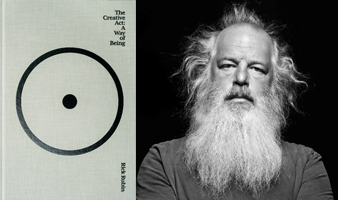
Capitalism in hyperdrive.
Matthew Crawford, in The World Beyond Your Head, contrasts the world of a "peon" airport lounge—saturated in advertising, filled with mesmerizing screens—with the quiet, ad-free world of a business lounge: "To engage in playful, inventive thinking, and possibly create wealth for oneself during those idle hours spent at an airport, requires silence.
But other people's minds, over in the peon lounge (or at the bus stop), can be treated as a resource—a standing reserve of purchasing power." Our digital technologies aren't politically neutral. The young person who cannot or will not be alone, converse with family, go out with friends, attend a lecture, or perform a job without monitoring her smartphone is an emblem of our political economy's leechlike attachment to our very bodies. Digital technology is capitalism in hyperdrive, injecting its logic of consumption and promotion, of monetization and efficiency, into every waking minute.
Brand Africa.
I think I have the same feeling toward the word “brand” as I do toward the word “Africa.” “Africa” is an incredibly problematic word for me. It’s a word used with great frequency to describe an intricately complex area made up of people, countries, and cultures that have no more in common than we do with Uzbekistan.
But because it’s a convenient word, and a well-known word, and a geographically defined continent, we use that word to sum up and generalize everyone who lives within the continent. In a way, it really is unfair. But we’ve inherited that framework, and I think we’d be better off if we banned the word entirely.
Getting back to “brand,” the word has similar implications. Yes, it’s of much smaller consequence—it’s a trivial example of the same problem, but it is a problem. The word gets thrown around so recklessly that I wonder whether we wouldn’t be better off setting it aside. Instead, if we could use more specific words that zero in on what we’re really interested in discussing, it would help the conversation.
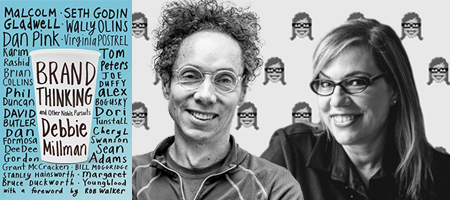
Millman, D. (2013) Brand thinking and other noble pursuits. New York: Allworth Press.
Dr Stranger Love: How I Learned to Stop Worrying and Love the Singularity
The true future of humanity lies not just in our species bidding farewell to Earth and expanding outward into space, but also in slipping the bonds of the “real world” and expanding inward into countless strange and strangely rewarding virtual worlds of our own design. If all of reality can plausibly be designed by computers and artificial intelligence, and if a simulated mode of reality can theoretically become more real than natural reality, then we owe it to ourselves and our society to delve as deeply as possible into those digital frontiers.
(…)
Perhaps this scenario reminds you of The Matrix, and those films’ visions of endless fields of humans kept alive in pods, unaware that their brains are connected to a computer simulation. But I would submit that the dystopian thing about this premise isn’t that trillions of humans might live their lives wholly inside cyberspace, but that they were forced there by hostile robots that had designed the simulation as a control mechanism. I believe that, in the future, plenty of people will choose to connect directly to a simulation as a means of pursuing peak fulfillment. Why does that seem like a bad thing?
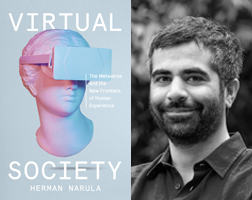
Narula, H. (2022) Virtual society: The metaverse and the new frontiers of human experience. London, UK: Penguin Business.
Llops i caputxetes.
Aixeco la tapa del vàter per pixar i ho veig, la llepada de merda seca a la paret interior de la tassa.
«És molt bonic advocar per la igualtat de gènere al mercat laboral i no replantejar-se qui neteja el vàter a casa», deia una economista de qui Ilegia una entrevista I'altre dia a l'oficina en els meus matins de no fer res.
Passejo la mirada pel lavabo, però no com sempre, pensant: «Hauria de posar-hi quadrets bucòlics i inspiradors o tovalloletes grogues que fessin joc», sinó com ho feia la meva àvia, amb una mirada inquisitorial. M'adono de la quantitat de ronya que hi ha per tot arreu, de la crosta groguenca de la banyera, de les restes seques de dentífric a la pica. Penso quant de temps deu fer de l'última neteja a fons. Quan vam decidir que el nou replantejament econòmic deixava fora la Gladys, que a més de cuidar els nens ens donava un cop de mà amb la neteja, l'Horacio em va dir: «Ja me n'encarregaré jo, olvidate». Quan ho decidíem ho vaig veure, com en una il·luminació, com en una aparició mariana, em vaig veure a mi mateixa amb els guants de goma grocs, el Pato per desinfectar el vàter a la mà, ajupida a la tassa, pensant: «Net? Quins collons, net!». Em vaig veure arribant a aquest extrem, als límits de la pandemia, de l'ebola, del tifus, de l'escorbut. «Jo ho veig net, flaca», em diria ara mateix si s'aixequés, amb els cabells despentinats i els calçotets negres amagant una semierecció. Hi ha una lluita, aquí, no només contra els gèrmens. Ell es grataria el cul i em ficaria la mà al pit, amb els ulls encara clucs per la son, aliè a aquest camí cap a la igualtat que ell no ha hagut de transitar mai, amb guants de goma i un pot de Pato a la mà. I penso en tots aquells homes arribant a l'Everest, o al pol Nord, o a l'Antàrtida, o a la fama, quan el que realment és una fita és arribar aquí, en aquest lloc on el vàter es perd cap endins, la cova fosca on rau el perill, l'agonia, l'autèntica lluita de generes.
Crime and Entertainment.
HARRIS: (…) Given what we've just said, we know that every person is essentially a force of nature. And in this corner of the universe, the laws of physics are playing out perfectly. Whether the universe is purely deterministic or there's an added factor of randomness doesn't matter; that still gives us no basis to believe in free will. Every person is a puppet who didn't pick his own strings, and the strings reach back to the Big Bang.
But people often do modify their behavior because of what we say or do. That process can be fraught with frustration, of course. But these influences are real. You're doing something I want to discourage, and I know that you, as another primate, are susceptible to being influenced by disincentives—or punishments, in the extreme case. And it becomes totally rational to invoke all the usual means of influencing another person's behavior without attributing free will to whomever you're trying to influence.
SAPOLSKY: I agree. Whether in Eric Kandel's classic work with Aplysia (a sea slug) and all the way up to us, nervous systems can be conditioned by positive and negative reinforcement. We understand that down to the molecular level. Yes, nervous systems can be changed by inputs. They abundantly are, and the inputs sometimes take the form of what we might call punishment, when it may be necessary to change somebody's behavior. If a child gets a "time out" for doing something rotten to another kid, the penalty is going to affect his frontal cortical neurons and strengthen the synapses that tell him not to do that next time. It's a mechanistic thing—and nonetheless it's punitive. What we need to do is use punishment instrumentally, when we know it will accomplish something within a biological framework. But don't stand there and preach while you're doing it, and don't take pleasure from a sense of justice being served.
HARRIS: The wrinkle here is that the pleasure of justice, and even a lust for vengeance, runs so deep in us. The free-will illusion is so compelling that people argue (or at least feel) that the criminal justice system should acknowledge it in some way. Justice isn't satisfying if we medicalize human evil—saying, basically, that every criminal is not guilty by reason of insanity, and we'll either cure them or warehouse those we can't cure, without any moralizing about it. How do you think about the moral improvement of our species in light of the fact that so many people find retribution, and even vengeance, morally compelling, and in some cases psychologically necessary?
SAPOLSKY: This is obviously very powerful, challenging stuff. Neurobiologically, justice is pleasurable. It activates mesolimbic dopamine systems. It feels good. It has an evolutionary logic to it: Third-party punishment (carried out by an objective bystander, rather than by the person who has been wronged) is costly. It costs to have a police department, it costs to have judges, it costs to give dental insurance to prison guards. So there has to have evolved a certain pleasure, a certain reward, in having done the right punitive thing.
But take the historical perspective. There was a time when society's worst people would have been set upon by a mob and beaten to death. And at some point, governmental authorities said, "Yes, yes, we know that's pleasurable, but from now on you have to turn the person oner to us so that we can beat them to death, and tou can watch:" And people had to adjust to that. And then at some lafer point they'd say, "Yes, but now we’re going to do something more humane. We’re going to hang people. You can come and see it and bring your picnic baskets. We’re going to have a public hanging. But you'll have to ger your pleasures in some other way than watching the person being slowly beaten to death." And people adjust to that, and then you don't have crowds at executions anymore. Then we have people designing machines that do lethal injections.
At every step of the way, what essentially has been said is, 'Yes, yes, there's a certain visceral sense of pleasurable vengeance in having it done this way. But we're not doing that anymore, and you're going to have to get used to it." And people have gotten used to it at each one of those steps. People will have to get used to the idea that a damaging act by a human is like a bear attack or a hurricane. We already think that way when it's clear the damaging act was unintentional, purely accidental, and the perpetrator is crippled with remorse. We simply will have to expand that recognition further. At each one of those steps, there's a cultural shift as to what punishments we don't impose anymore, and it's just going to keep happening. Yet at any point where the line is currently drawn, it still seems inconceivable: "My God, if somebody did that to my loved one and they then got to spend the rest of their life enjoying three meals a day, that would just consume me."
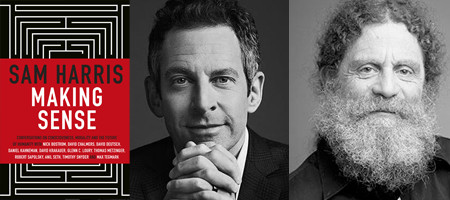
Harris, Sam, and Robert Sapolsky. “The Biology of Good and Evil.” Making Sense, Bantam Press, Ealing, UK, 2020, pp. 270–272.
Götterdämmerung, year 15.
Until the age of thirteen, when I was sent from Bombay to boarding school in faraway England, I was a much more homogeneous self than I am now. I had lived in the same house in the same city all my life, in the bosom of my family, among people whose customs I knew without having to do anything as conscious as ‘know’ them, speaking the languages that people spoke in that city, in that country, in that time. These are the four roots of the self: language, place, community, custom. But in our age, the great age of migration, many of us have at least one of these roots pulled up. We move away from the place we know, away from the community that knows us, to a place where the customs are different and, perhaps, the most commonly spoken language is one we don’t know, or if we speak it, we speak it badly and cannot express in it the subjects of what we think and who we are. In my case, I had been brought up multilingually, so my English was fine, it was the one root still planted in the earth, but the others had all gone. In Norse mythology, the World Tree, the great ash Yggdrasil, has three roots. One falls into the Pool of Knowledge near Valhalla, the pool from which odin drinks, but the others are slowly being destroyed, one gnawed by a monster called the Nidhogg, the other being gradually burned away by the flames of the fire region, Muspelheim. When these two roots are destroyed, the tree falls, and the Götterdämmerung begins. The migrant too is at first a tree standing without roots, trying not to fall. Migration is an existential act, stripping us of our defences, mercilessly exposing us to a world that understands us badly, if at all: as if the earth were stripped of its atmosphere and the sun were to bear down upon it in all its pitiless force.

Manadas
A los hombres les gusta hablar de las mujeres. Así no tienen que hablar sobre sí mismos. ¿Cómo se explica que en los últimos treinta años ningún hombre haya producido un texto innovador sobre la masculinidad? Ellos que son tan locuaces y tan competentes cuando se trata de disertar sobre las mujeres, ¿cómo se explica ese silencio con respecto a sí mismos? Porque sabemos que cuanto más hablan, menos dicen. Sobre lo esencial, lo que tienen realmente en la cabeza. ¿Quizá quieren que seamos ahora nosotras las que hablemos de ellos? ¿Querrán, por ejemplo, que digamos qué es lo que pensamos nosotras, desde fuera, de sus violaciones colectivas? Diremos que ellos quieren verse follando entre ellos, mirarse las pollas los unos a los otros, empalmarse juntos, diremos que tienen ganas de metérsela entre ellos por el culo. Diremos que de lo que tienen ganas, realmente, es de follar entre ellos. A los hombres les gustan los hombres. Nos explican todo el rato cuánto les gustan las mujeres, pero todas sabemos que no son más que palabras. Se quieren entre hombres. Se follan unos a otros a través de las mujeres, muchos de ellos piensan en sus amigos mientras la meten en un coño. Se miran a sí mismos en el cine, se dan los mejores papeles, se sienten potentes, fanfarronean, alucinan de ser tan fuertes, tan guapos y de tener tanto valor. Escriben unos para otros, se felicitan mutuamente, se apoyan. Tienen razón. Pero de tanto escucharles quejarse de que las mujeres no follan bastante, de que no les gusta tanto el sexo como haría falta, de que no entienden nada, acabamos preguntándonos: ¿a qué esperan para darse por el culo los unos a los otros? Venga. Si eso os puede devolver la sonrisa, entonces es que está bien, Pero entre las cosas que les han inculcado bien está el miedo de ser marica, la obligación de que les gusten las mujeres. Así que se comportan. Refunfuñan, pero obedecen. Y de paso, furiosos por tener que someterse, le dan un par de hostias a una o dos chicas.

NYC
It was 1978. I was new to New York. A rich acquaintance had invited me to a housewarming party, and, as my cabdriver wound his way down increasingly potholed and dingy streets, I began wondering whether he'd got the address right. Finally he stopped at the doorway of a gloomy, unwelcoming industrial building. Two winos were crumpled on the steps, oblivious. There was no other sign of life in the whole street.
"I think you may have made a mistake", I ventured.
But he hadn't. My friend's voice called "Top Floor!" when I rang the bell, and I thought - knowing her sense of humour - "Oh this is going to be some kind of joke!" I was all ready to laugh. The elevator creaked and clanked slowly upwards, and I stepped out - into a multi-million dollar palace. The contrast with the rest of the building and the street outside couldn't have been starker.
I just didn't understand. Why would anyone spend so much money building a place like that in a neighbourhood like this? Later I got into conversation with the hostess. "Do you like it here?" I asked. "It's the best place I've ever lived", she replied. "But I mean, you know, is it an interesting neighbourhood?" "Oh, the neighbourhood? Well that's outside!" she laughed.
The incident stuck in my mind. How could you live so blind to your surroundings? How could you not think of where I live as including at least some of the space outside your four walls, some of the bits you couldn't lock up behind you? I felt this was something particular to New York: I called it "The Small Here". I realised that, like most Europeans, I was used to living in a bigger Here.
I noticed that this very local attitude to space in New York paralleled a similarly limited attitude to time. Everything was exciting, fast, current, and temporary. Enormous buildings came and went, careers rose and crashed in weeks. You rarely got the feeling that anyone had the time to think two years ahead, let alone ten or a hundred. Everyone seemed to be passing through. It was undeniably lively, but the downside was that it seemed selfish, irresponsible and randomly dangerous. I came to think of this as "The Short Now", and this suggested the possibility of its opposite - "The Long Now".
"Now" is never just a moment. The Long Now is the recognition that the precise moment you're in grows out of the past and is a seed for the future. The longer your sense of Now, the more past and future it includes. It's ironic that, at a time when humankind is at a peak of its technical powers, able to create huge global changes that will echo down the centuries, most of our social systems seem geared to increasingly short nows. Huge industries feel pressure to plan for the bottom line and the next shareholders meeting. Politicians feel forced to perform for the next election or opinion poll. The media attract bigger audiences by spurring instant and heated reactions to human interest stories while overlooking longer-term issues - the real human interest.
Meanwhile, we struggle to negotiate our way through an atmosphere of Utopian promises and dystopian threats, a minefield studded with pots of treasure. We face a future where almost anything could happen. Will we be crippled by global warming, weapons proliferation and species depletion, or liberated by space travel, world government and molecule-sized computers? We don't even want to start thinking about it. This is our peculiar form of selfishness, a studied disregard of the future. Our astonishing success as a technical civilisation has led us to complacency, to expect that things will probably just keep getting better.
But there is no reason to believe this. We might be living in the last gilded bubble of a great civilisation about to collapse into a new Dark Age, which, given our hugely amplified and widespread destructive powers, could be very dark indeed.
If we want to contribute to some sort of tenable future, we have to reach a frame of mind where it comes to seem unacceptable - gauche, uncivilised - to act in disregard of our descendants. Such changes of social outlook are quite possible - it wasn't so long ago, for example, that we accepted slavery, an idea which most of us now find repellent. We felt no compulsion to regard slaves as fellow-humans and thus placed them outside the circle of our empathy. This changed as we began to realise, perhaps it was partly the glory of their music, that they were real people, and that it was no longer acceptable that we should cripple their lives just so that ours could be freer. It just stopped feeling right.
The same type of change happened when we stopped employing kids to work in mines, or when we began to accept that women had voices too. Today we view as fellow-humans many whom our grandparents may have regarded as savages, and even feel some compulsion to share their difficulties - aid donations by individuals to others they will never meet continue to increase. These extensions of our understanding of who qualifies for our empathy, indicate that culturally, economically and emotionally we live in an increasingly Big Here, unable to lock a door behind us and pretend the rest of the world is just "outside".
We don't yet, however, live in The Long Now. Our empathy doesn't extend far forward in time. We need now to start thinking of our great-grandchildren, and their great-grandchildren, as other fellow-humans who are going to live in a real world which we are incessantly, though only semi-consciously, building. But can we accept that our actions and decisions have distant consequences, and yet still dare do anything? It was an act of complete faith to believe, in the days of slavery, that a way of life which had been materially very successful could be abandoned and replaced by another, as yet unimagined, but somehow it happened. We need to make a similar act of imagination now.
Since this act of imagination concerns our relationship to time, a Millennium is a good moment to articulate it. Can we grasp this sense of ourselves as existing in time, part of the beautiful continuum of life? Can we become inspired by the prospect of contributing to the future? Can we shame ourselves into thinking that we really do owe those who follow us some sort of consideration, just as the people of the nineteenth century shamed themselves out of slavery? Can we extend our empathy to the lives beyond ours?
I think we can. Humans are capable of a unique trick: creating realities by first imagining them, by experiencing them in their minds. When Martin Luther King said "I have a dream", he was inviting others to dream it with him. Once a dream becomes shared in that way, current reality gets measured against it and then modified towards it. As soon as we sense the possibility of a more desirable world, we begin behaving differently, as though that world is starting to come into existence, as though, in our minds at least, we're already there. The dream becomes an invisible force which pulls us forward. By this process it starts to come true. The act of imagining something makes it real.
This imaginative process can be seeded and nurtured by artists and designers, for, since the beginning of the 20th century, artists have been moving away from an idea of art as something finished, perfect, definitive and unchanging towards a view of artworks as processes or the seeds for processes - things that exist and change in time, things that are never finished. Sometimes this is quite explicit - as in Walter de Maria's "Lightning Field", a huge grid of metal poles designed to attract lightning. Many musical compositions don't have one form, but change unrepeatingly over time - many of my own pieces and Jem Finer's Artangel installation "LongPlayer" are like this. Artworks in general are increasingly regarded as seeds - seeds for processes that need a viewer's (or a whole culture's) active mind in which to develop. Increasingly working with time, culture-makers see themselves as people who start things, not finish them.
And what is possible in art becomes thinkable in life. We become our new selves first in simulacrum, through style and fashion and art, our deliberate immersions in virtual worlds. Through them we sense what it would be like to be another kind of person with other kinds of values. We rehearse new feelings and sensitivities. We imagine other ways of thinking about our world and its future.
Danny Hillis's Clock of the Long Now is a project designed to achieve such a result. It is, on the face of it, far-fetched to think that one could make a clock which will survive and work for the next 10,000 years. But the act of even trying is valuable: it puts time and the future on the agenda and encourages thinking about them. As Stewart Brand, a colleague in The Long Now Foundation, says:
“Such a clock, if sufficiently impressive and well engineered, would embody deep time for people. It should be charismatic to visit, interesting to think about, and famous enough to become iconic in the public discourse. Ideally, it would do for thinking about time what the photographs of Earth from space have done for thinking about the environment. Such icons reframe the way people think.
The 20th Century yielded its share of icons, icons like Muhammad Ali and Madonna that inspired our attempts at self-actualisation and self-reinvention. It produced icons to our careless and misdirected power - the mushroom cloud, Auschwitz, and to our capacity for compassion - Live Aid, the Red Cross.
In this, the 21st century, we may need icons more than ever before. Our conversation about time and the future must necessarily be global, so it needs to be inspired and consolidated by images that can transcend language and geography. As artists and culture-makers begin making time, change and continuity their subject-matter, they will legitimise and make emotionally attractive a new and important conversation.

Prozac blues.
No matter how corrupt, greedy, and heartless our government, our corporations, our media, and our religious & charitable institutions may become, the music will still be wonderful.
If I should ever die, God forbid, let this be my epitaph:
THE ONLY PROOF HE NEEDED
FOR THE EXISTENCE OF GOD
WAS MUSIC
***
Back to music. It makes practically everybody fonder of life than he or she would be without it. Even military bands, although I am a pacifist, always cheer me up. And I really like Strauss and Mozart and all that, but the priceless gift that African Americans gave the whole world when they were still in slavery was a gift so great that it is now almost the only reason many foreigners still like us at least a little bit. That specific remedy for the worldwide epidemic of depression is a gift called the blues. All pop music today—jazz, swing, be-bop, Elvis Presley, the Beatles, the Stones, rock-and-roll, hip-hop, and on and on—is derived from the blues.
A gift to the world? One of the best rhythm-and-blues combos I ever heard was three guys and a girl from Finland playing in a club in Krakow, Poland.
The wonderful writer Albert Murray, who is a jazz historian and a friend of mine among other things, told me that during the era of slavery in this country—an atrocity from which we can never fully recover—the suicide rate per capita among slave owners was much higher than the suicide rate among slaves.
Murray says he thinks this was because slaves had a way of dealing with depression, which their white owners did not: They could shoo away Old Man Suicide by playing and singing the Blues. He says something else which also sounds right to me. He says the blues can't drive depression clear out of a house, but can drive it into the corners of any room where it's being played.
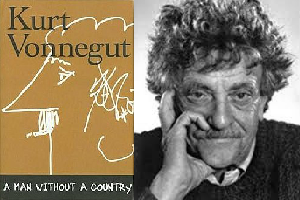
Google Street View, word edition.
This is a story about love and death in the golden land, and begins with the country. The San Bernardino Valley lies only an hour east of Los Angeles by the San Bernardino Freeway but is in certain ways an alien place: not the coastal California of the subtropical twilights and the soft westerlies off the Pacific but a harsher California, haunted by the Mojave just beyond the mountains, devastated by the hot dry Santa Ana wind that comes down through the passes at 100 miles an hour and whines through the eucalyptus windbreaks and works on the nerves. October is the bad month for the wind, the month when breathing is difficult and the hills blaze up spontaneously. There has been no rain since April. Every voice seems a scream. It is the season of suicide and divorce and prickly dread, wherever the wind blows. The Mormons settled this ominous country, and then they abandoned it, but by the time they left the first orange tree had been planted and for the next hundred years the San Bernardino Valley would draw a kind of people who imagined they might live among the talismanic fruit and prosper in the dry air, people who brought with them Midwestern ways of building and cooking and praying and who tried to graft those ways upon the land. The graft took in curious ways. This is the California where it is possible to live and die without ever eating an artichoke, without ever meeting a Catholic or a Jew. This is the California where it is easy to Dial-A-Devotion, but hard to buy a book. This is the country in which a belief in the literal interpretation of Genesis has slipped imperceptibly into a belief in the literal interpretation of Double Indemnity, the country of the teased hair and the Capris and the girls for whom all life’s promise comes down to a waltz-length white wedding dress and the birth of a Kimberly or a Sherry or a Debbi and a Tijuana divorce and a return to hairdressers’ school. “We were just crazy kids,” they say without regret, and look to the future. The future always looks good in the golden land, because no one remembers the past. Here is where the hot wind blows and the old ways do not seem relevant, where the divorce rate is double the national average and where one person in every thirty-eight lives in a trailer. Here is the last stop for all those who come from somewhere else, for all those who drifted away from the cold and the past and the old ways. Here is where they are trying to find a new life style, trying to find it in the only places they know to look: the movies and the newspapers.

Let's take it outside.
The indigenous resistance to the westering anglos as they punched their way over the Appalachian Crest for the seizure and enclosing of the continent was led by a young Shawnee warrior, Tecumseh. Invited into the governor's mansion to negotiate, Tecumseh refused: "Houses are built for you to hold council in: Indians hold theirs in the open air." He also refused to take a chair when offered one, saying that he would repose on the bosom of the earth. There is a resonance here with the spirit of Occupy, and its mode of inhabiting space.
Popular protest takes to the streets because that is the space that remains. To be sure, most of the major events in history have happened outside, in the sense that the decisions taken inside—in the chancelleries, the boardrooms, the smoke-filled backrooms, etc.—are ultimately conditioned by things that happen, or do not happen, in the open air. Tecumseh's retort to Governor Harrison points up the significance of spatial and political form, and of the different architectonics of societies rooted in common—as opposed to private—property.
The spaces of modernity are shaped and dominated by private and state interests; under modernity public space is a subordinate category, residual even, and confined to what is left once land has been commodified and parceled into private lots. What remains is the open air. Literally. The air itself treated by economists as and "externality" (in the language of the business schools), which are commons of a peculiar capitalist kind. The air becomes a sink for the waste produced during the manufacture of commodities. This amounts to the theft of a common, though it is sometimes hard to see since it doesn't happen all at once, nor everywhere. Like many other things, pollution is very uneven, and has a class geography.
(...)
As more and more of modern life moves away into a representation, as the image-world comes to dominate civil society, and as the spectacular state gets drawn further into the day-to-day management of consumer obedience, internal policing, and the prevention of riposte to its lies, so the problem of image politics and of the very possibility of making spaces for strategic discussion takes on critical importance. (...) Given the de-realization of human collectivity under conditions of spectacle, these brief interruptions—the occupations of the squares and critical mass rides—produce real manifestations of community, albeit fleeting. Yet in each case it's a move beyond the horizon of representational politics, and takes life off the screen for a moment.
White-out history.
El febrer de 1948 el dirigent comunista Klement Gottwald va sortir al balcó d'un palau barroc de Praga per adreçar-se als centenars de ciutadans txecs que omplien la plaça de la Ciutat Vella. Aquella havia de ser una gran fita en la història de Bohèmia. Un d'aquells moments fatídics que ocorren una o dues vegades cada mil·lenni. Gottwald estava envoltat pels seus camarades i just al seu costat hi havia Clementis. La neu planava en l'aire, feia fred i Gottwald anava amb el cap descobert. Clementis, tot sol·lícit, es va treure la gorra de pell i la va posar al cap de Gottwald.
La secció de propaganda va reproduir en centenars de milers d'exemplars la fotografia del balcó des del qual Gottwald, amb una gorra de pell al cap i envoltat de camarades, s'adreça al poble. En aquell balcó va començar la història de la Bohemia comunista. Aquella fotografia, la coneixien tots els nens d'haver-la vista en els cartells, en els Ilibres de text i en els museus.
Quatre anys més tard Clementis va ser acusat de traició i penjat. La secció de propaganda el va esborrar immediatament de la història i, naturalment, de totes les fotografies. Des d'aleshores Gottwald està tot sol al balcó. En el lloc on havia estat Clementis hi ha només el mur buit del palau. De Clementis tan sols ha quedat la gorra de pell al cap de Gottwald.