Many are so angry or bewildered that they give up trying to understand what is going on. Many refuse to make a contribution to the emerging universal culture because at some point they decided once and for all that the world around them was incomprehensible, hostile, bloodthirsty, demented or diabolical. Many are tempted to see themselves as mere victims - victims of America, of the West, of capitalism or liberalism, of the new technologies, of the media, of change, and so on. It cannot be denied that such people really do feel wronged and suffer accordingly, but their reaction seems to me inappropriate. To imprison oneself in a victim mentality can do the injured party even more harm than the aggression itself. And this is as true of societies as of individuals. They huddle themselves away, they barricade themselves in, they try to ward off everything, they close their minds, they ruminate, they give up looking for anything new, they don't explore anymore, they don't make any more progress, they are afraid of the future, of the present and of everyone else.
Wor(l)d.
Every universe, our own included, begins in conversation. Every golem in the history of the world, from Rabbi Hanina's delectable goat to the river-clay Frankenstein of Rabbi Judah Loew ben Bezalel, was summoned into existence through language, through murmuring, recital, and kabbalistic chitchat -- was, literally, talked into life.
White-out history.
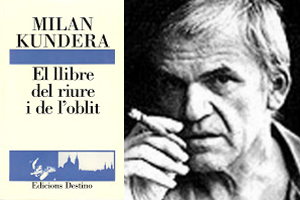
El febrer de 1948 el dirigent comunista Klement Gottwald va sortir al balcó d'un palau barroc de Praga per adreçar-se als centenars de ciutadans txecs que omplien la plaça de la Ciutat Vella. Aquella havia de ser una gran fita en la història de Bohèmia. Un d'aquells moments fatídics que ocorren una o dues vegades cada mil·lenni. Gottwald estava envoltat pels seus camarades i just al seu costat hi havia Clementis. La neu planava en l'aire, feia fred i Gottwald anava amb el cap descobert. Clementis, tot sol·lícit, es va treure la gorra de pell i la va posar al cap de Gottwald.
La secció de propaganda va reproduir en centenars de milers d'exemplars la fotografia del balcó des del qual Gottwald, amb una gorra de pell al cap i envoltat de camarades, s'adreça al poble. En aquell balcó va començar la història de la Bohemia comunista. Aquella fotografia, la coneixien tots els nens d'haver-la vista en els cartells, en els Ilibres de text i en els museus.
Quatre anys més tard Clementis va ser acusat de traició i penjat. La secció de propaganda el va esborrar immediatament de la història i, naturalment, de totes les fotografies. Des d'aleshores Gottwald està tot sol al balcó. En el lloc on havia estat Clementis hi ha només el mur buit del palau. De Clementis tan sols ha quedat la gorra de pell al cap de Gottwald.
Read between the lines.
The Rosetta Stone survived unread through 2,000 years of further foreign occupations. After the Greeks came Romans, Byzantines, Persians, Muslim Arabs and Otoman Turks – all had stretches of rule in Egypt. At some point the stone was moved from the temple at Sais in the Nile Delta, where it was first erected, to the town of el-Rashid, now known as Rosetta, about forty miles away.
Then, in 1798, Napoleon arrived. The French invasion was of course primarily military (they wanted to cut the British route to India). But with the French army came scholars. Soldiers rebuilding fortifications in Rosetta dug up the stone – and accompanying experts knew immediately that they had found something of great significance.
The French seized the stone as a trophy of war, but it never made it back to Paris. With his fleet destroyed by Nelson at the Battle of the Nile, Napoleon himself returned to France, leaving the French army behind. In 1801 the French surrendered to the British and Egyptian generals. The terms of the Treaty of Alexandria included the handing over of antiquities, among them the Rosetta Stone.
Most books will tell you, as I just have, that there are three languages on the Rosetta Stone, but if you look on the broken side you can see a fourth. There, painted in English, you can read: CAPTURED IN EGYPT BY THE BRITISH ARMY IN 1801 (and elsewhere) PRESENTED BY KING GEORGE III. Nothing could make it clearer that while the text on the front of the stone is about the first European empire in Africa, Alexander the Great's, the finding of the stone stands at the beginning of another European adventure: the bitter rivalry between Britain and France for dominance in the Middle East and Africa, which continued from the time of Napoleon until the Second World War. I asked the Egyptian writer Ahdaf Soueif for his view of this history:
"This stone makes me think of how often Egypt has been the theatre of other people's battles. It's one of the earliest objects through which you can trace Western colonial interest in Egypt. The French and the British argued over it; nobody seems to have considered that it belonged to neither of them. Egypt's foreign rulers, from the Romans to the Turks to the British, have always made free with Egypt's heritage. Egypt had foreign rulers for 2,000 years, and in 1952 much was made of the fact that Nasser was the first Egyptian ruler since the pharaohs."
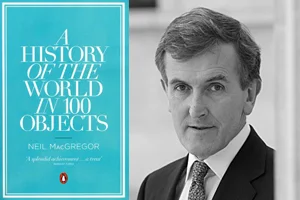
MacGregor, Neil (2010) A History of the World in 100 Objects.
Raise your left fist!
De aquel hombre me acuerdo y no han pasado
sino dos siglos desde que lo vi,
no anduvo ni a caballo ni en carroza:
a puro pie
deshizo
las distancias
y no llevaba espada ni armadura,
sino redes al hombro,
hacha o martillo o pala,
nunca apaleó a ninguno de su especie:
su hazaña fue contra el agua o la tierra,
contra el trigo para que hubiera pan,
contra el árbol gigante para que diera leña,
contra los muros para abrir las puertas,
contra la arena construyendo muros
y contra el mar para hacerlo parir.
Lo conocí y aún no se me borra.
Cayeron en pedazos las carrozas,
la guerra destruyó puertas y muros,
la ciudad fue un puñado de cenizas,
se hicieron polvo todos los vestidos,
y él para mí subsiste,
sobrevive en la arena,
cuando antes parecía
todo imborrable menos él.
En el ir y venir de las familias
a veces fue mi padre o mi pariente
o apenas si era él o si no era
tal vez aquel que no volvió a su casa
porque el agua o la tierra lo tragaron
o lo mató una máquina o un árbol
o fue aquel enlutado carpintero
que iba detrás del ataúd, sin lágrimas,
alguien en fin que no tenía nombre,
que se llamaba metal o madera,
y a quien miraron otros desde arriba
sin ver la hormiga
sino el hormiguero
y que cuando sus pies no se movían,
porque el pobre cansado había muerto,
no vieron nunca que no lo veían:
había ya otros pies en donde estuvo.
Los otros pies eran él mismo,
también las otras manos,
el hombre sucedía:
cuando ya parecía transcurrido
era el mismo de nuevo,
allí estaba otra vez cavando tierra,
cortando tela, pero sin camisa,
allí estaba y no estaba, como entonces,
se había ido y estaba de nuevo,
y como nunca tuvo cementerio,
ni tumba, ni su nombre fue grabado
sobre la piedra que cortó sudando,
nunca sabía nadie que llegaba
y nadie supo cuando se moría,
así es que sólo cuando el pobre pudo
resucitó otra vez sin ser notado.
Era el hombre sin duda, sin herencia,
sin vaca, sin bandera,
y no se distinguía entre los otros,
los otros que eran él,
desde arriba era gris como el subsuelo,
como el cuero era pardo,
era amarillo cosechando trigo,
era negro debajo de la mina,
era color de piedra en el castillo,
en el barco pesquero era color de atún
y color de caballo en la pradera:
cómo podía nadie distinguirlo
si era el inseparable, el elemento,
tierra, carbón o mar vestido de hombre?
Donde vivió crecía
cuanto el hombre tocaba:
la piedra hostil
quebrada
por sus manos,
se convertía en orden
y una a una formaron
la recta claridad del edificio,
hizo el pan con sus manos,
movilizó los trenes,
se poblaron de pueblos las distancias,
otros hombres crecieron,
llegaron las abejas,
y porque el hombre crea y multiplica
la primavera caminó al mercado
entre panaderías y palomas.
El padre de los panes fue olvidado,
él que cortó y anduvo, machacando
y abriendo surcos, acarreando arena,
cuando todo existió ya no existía,
él daba su existencia, eso era todo.
Salió a otra parte a trabajar, y luego
se fue a morir rodando
como piedra del río:
aguas abajo lo llevó la muerte.
Yo, que lo conocí, lo vi bajando
hasta no ser sino lo que dejaba:
calles que apenas pudo conocer,
casas que nunca y nunca habitaría.
Y vuelvo a verlo, y cada día espero.
Lo veo en su ataúd y resurrecto .
Lo distingo entre todos
los que son sus iguales
y me parece que no puede ser,
que así no vamos a ninguna parte,
que suceder así no tiene gloria.
Yo creo que en el trono debe estar
este hombre, bien calzado y coronado.
Creo que los que hicieron tantas cosas
deben ser dueños de todas las cosas.
Y los que hacen el pan deben comer!
Y deben tener luz los de la mina!
Basta ya de encadenados grises!
Basta de pálidos desaparecidos!
Ni un hombre más que pase sin que reine.
Ni una sola mujer sin su diadema.
Para todas las manos guantes de oro.
Frutas del sol a todos lo oscuros!
Yo conocí a aquel hombre y cuando pude,
cuando ya tuve ojos en la cara,
cuando ya tuve la voz en la boca
lo busqué entre las tumbas, y le dije
apretándole un brazo que aún no era polvo:
"Todos se irán, tú quedarás viviente.
Tú encendiste la vida
Tú hiciste lo que es tuyo".
Por eso nadie se moleste cuando
parece que estoy solo y no estoy solo,
no estoy con nadie y hablo para todos:
Alguien me está escuchando y no lo saben
pero aquellos que canto y que lo saben
siguen naciendo y llenarán el mundo.