Real Free Speech.

Cooperating instead of competing. Telling instead of lecturing. Listening instead of eavesdropping. Compassion not judgment. Acceptance not censorship. Celebrating identities not shaming. Risking exposure, not hiding. Paying attention instead of zoning out.

That is what makes community storytelling unique and transformational. But what makes it radical?

For one thing, the pure democracy of it all. The essential structure provides all storytellers an equal opportunity to take to the stage and tell about real things that happened to them, things they saw and did, things that they want to share with a roomful of strangers. It’s a place where everyday folks, with different life experiences, joys and sorrows, have a voice. Providing a venue and audience for this sort of activity could be seen as downright subversive. Nothing is canned, predictable or especially polite. It can be raw. mean or sugary sweet depending on who is brave enough to commit to a rehearsal, have their name and bio go out over social media, and show up for the event.

The structure inspires honesty and confessional tales. Intimacy emerges from the bare bones of a stage, a mic, a teller and listeners. One night at an Odyssey Storytelling show a woman, whose mother sat in the audience, confessed to sneaking out of her second story bedroom window, undetected, when she was a teenager. Twenty years later, Mom laughed at the story along with everyone else.

Stories about shame, triumph, and prejudice; love, revenge, and greed; all presented on a neutral stage, inviting deep respect and listening. I’ve never seen nor heard anyone being confrontational, although sometimes people are shocked or confused. If you weren’t expecting to hear about the sex life of a transman, it might take a moment or two to adjust your expectations and relax into serious appreciation.

Exposure = understanding = acceptance = true connection

Radically changing minds and hearts is just one of many advantages of community storytelling. Shaking people out of their insular lives and dropping them into another reality is radical. Community Storytelling is a place where diversity is celebrated and lessons are learned in the best possible le way—from people who are different from us. By listening fiercely and intensely, we allow ourselves to be amused or scared or made joyful; we open up to new possibilities. As the Tucson Meet Yourself 40th Anniversary Commemorative Magazine so aptly put it, “The messiness of cultures bumping into each other is the messiness of democracy—the elusive aspiration of equality, justice, and respect.”

Infusing storytellers with self-confidence and the knowledge that their stories matter is radical. Exposing tellers to nonjudgmental witnesses who validate their experience by offering kindness in exchange for honesty/trust subverts the paradigm of separateness and competition. For two hours, the length of a show, a community is created. And there is spillover—friendships are forged, connections happen, overlapping social networks will amaze and make us say, “But, of course.”
Crime and Entertainment.

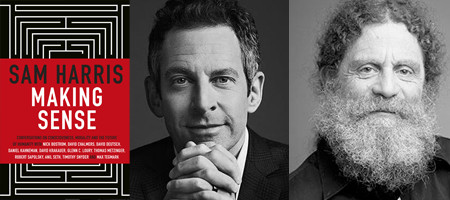
HARRIS: (…) Given what we've just said, we know that every person is essentially a force of nature. And in this corner of the universe, the laws of physics are playing out perfectly. Whether the universe is purely deterministic or there's an added factor of randomness doesn't matter; that still gives us no basis to believe in free will. Every person is a puppet who didn't pick his own strings, and the strings reach back to the Big Bang.

But people often do modify their behavior because of what we say or do. That process can be fraught with frustration, of course. But these influences are real. You're doing something I want to discourage, and I know that you, as another primate, are susceptible to being influenced by disincentives—or punishments, in the extreme case. And it becomes totally rational to invoke all the usual means of influencing another person's behavior without attributing free will to whomever you're trying to influence.

SAPOLSKY: I agree. Whether in Eric Kandel's classic work with Aplysia (a sea slug) and all the way up to us, nervous systems can be conditioned by positive and negative reinforcement. We understand that down to the molecular level. Yes, nervous systems can be changed by inputs. They abundantly are, and the inputs sometimes take the form of what we might call punishment, when it may be necessary to change somebody's behavior. If a child gets a "time out" for doing something rotten to another kid, the penalty is going to affect his frontal cortical neurons and strengthen the synapses that tell him not to do that next time. It's a mechanistic thing—and nonetheless it's punitive. What we need to do is use punishment instrumentally, when we know it will accomplish something within a biological framework. But don't stand there and preach while you're doing it, and don't take pleasure from a sense of justice being served.

HARRIS: The wrinkle here is that the pleasure of justice, and even a lust for vengeance, runs so deep in us. The free-will illusion is so compelling that people argue (or at least feel) that the criminal justice system should acknowledge it in some way. Justice isn't satisfying if we medicalize human evil—saying, basically, that every criminal is not guilty by reason of insanity, and we'll either cure them or warehouse those we can't cure, without any moralizing about it. How do you think about the moral improvement of our species in light of the fact that so many people find retribution, and even vengeance, morally compelling, and in some cases psychologically necessary?

SAPOLSKY: This is obviously very powerful, challenging stuff. Neurobiologically, justice is pleasurable. It activates mesolimbic dopamine systems. It feels good. It has an evolutionary logic to it: Third-party punishment (carried out by an objective bystander, rather than by the person who has been wronged) is costly. It costs to have a police department, it costs to have judges, it costs to give dental insurance to prison guards. So there has to have evolved a certain pleasure, a certain reward, in having done the right punitive thing.

But take the historical perspective. There was a time when society's worst people would have been set upon by a mob and beaten to death. And at some point, governmental authorities said, "Yes, yes, we know that's pleasurable, but from now on you have to turn the person oner to us so that we can beat them to death, and tou can watch:" And people had to adjust to that. And then at some lafer point they'd say, "Yes, but now we’re going to do something more humane. We’re going to hang people. You can come and see it and bring your picnic baskets. We’re going to have a public hanging. But you'll have to ger your pleasures in some other way than watching the person being slowly beaten to death." And people adjust to that, and then you don't have crowds at executions anymore. Then we have people designing machines that do lethal injections.

At every step of the way, what essentially has been said is, 'Yes, yes, there's a certain visceral sense of pleasurable vengeance in having it done this way. But we're not doing that anymore, and you're going to have to get used to it." And people have gotten used to it at each one of those steps. People will have to get used to the idea that a damaging act by a human is like a bear attack or a hurricane. We already think that way when it's clear the damaging act was unintentional, purely accidental, and the perpetrator is crippled with remorse. We simply will have to expand that recognition further. At each one of those steps, there's a cultural shift as to what punishments we don't impose anymore, and it's just going to keep happening. Yet at any point where the line is currently drawn, it still seems inconceivable: "My God, if somebody did that to my loved one and they then got to spend the rest of their life enjoying three meals a day, that would just consume me."

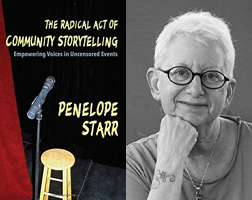
Harris, Sam, and Robert Sapolsky. “The Biology of Good and Evil.” Making Sense, Bantam Press, Ealing, UK, 2020, pp. 270–272.