Many are so angry or bewildered that they give up trying to understand what is going on. Many refuse to make a contribution to the emerging universal culture because at some point they decided once and for all that the world around them was incomprehensible, hostile, bloodthirsty, demented or diabolical. Many are tempted to see themselves as mere victims - victims of America, of the West, of capitalism or liberalism, of the new technologies, of the media, of change, and so on. It cannot be denied that such people really do feel wronged and suffer accordingly, but their reaction seems to me inappropriate. To imprison oneself in a victim mentality can do the injured party even more harm than the aggression itself. And this is as true of societies as of individuals. They huddle themselves away, they barricade themselves in, they try to ward off everything, they close their minds, they ruminate, they give up looking for anything new, they don't explore anymore, they don't make any more progress, they are afraid of the future, of the present and of everyone else.
Magic and logic.
Science describes accurately from outside, poetry describes accurately from inside. Science explicates, poetry implicates. Both celebrate what they describe. We need the languages of both science and poetry to save us from merely stockpiling endless "information" that fails to inform our ignorance or our irresponsibility.
By replacing unfounded, willful opinion, science can increase moral sensitivity; by demonstrating and performing aesthetic order or beauty, poetry can move minds to the sense of fellowship that prevents careless usage and exploitation of our fellow beings, waste and cruelty.
Shadows reveal light.
High above the city, on a stone terrace at the top of one of Moscow's most beautiful buildings, built over a century and a half ago, two are watching the sunset: Azazello and Woland. They were not visible from the street below, shielded from prying eyes by a balustrade with plaster pots and plaster flowers, but from there they could see almost to the edges of the city.
Woland sat on a folding stool, wearing his black soutane. His long broad rapier was sticking vertically out of the gap between two terrace tiles, making a sundial. Slowly and steadily, the sword's shadow grew longer, creeping towards the black shoes on Satan's feet. Resting his sharp chin on his fist, huddling on the stool with one leg tucked underneath him, Woland had his gazed fixed on the immense collection of palaces, giant buildings and tiny hovels listed for demolition.
Azazello had parted with his modem attire — the jacket, bowler and patent-leather shoes — and was dressed in black, like Woland. He now stood motionlessly, not far from his master, his eyes likewise glued to the city.
Woland spoke: 'What an interesting city, is it not?'
Azazello shifted and answered respectfully: 'I prefer Rome, Messire.'
'Yes, it is a matter of taste,' Woland replied.
A short while later, his voice came again: 'And why is there smoke over there on the boulevard?'
'That's Griboyedov burning,' Azazello replied.
'I suppose that inseparable couple, Korovyov and Behemoth, has been there.'
'There can be no doubt of it, Messire.'
They fell silent again, both watching as the west wood windows on the top floors of the giant buildings lit up with blinding, fragmented sunlight. Woland's eye burned just like one of those windows, even though he was sitting with his back to the sunset.
But then something made Woland turn away from the city and direct his attention to a round tower, located behind him on the roof. A grim, ragged, black-bearded man, smeared with clay mud, stepped out of the tower wall. He wore a chiton and homemade sandals.
'Hah!' Woland exclaimed, looking at the visitor condescendingly. 'You are the last person I would have expected to see here! What is your business, uninvited but foreseen guest?'
'I'm here to see you, spirit of evil and master of shadows,' said the visitor glaring unpleasantly at Woland.
'If you are here to see me, why didn't you wish me a good evening, former tax collector?' Woland asked sternly.
'Because I do not wish you anything good,' the visitor brazenly replied.
'Then you'll have to reconcile yourself to the fact that I am doing quite well,' countered Woland, and a grin twisted his face. 'You began spouting nonsense the moment you appeared on this roof, and let me tell you what it is — your tone. You spoke as though you did not recognize shadows or evil. Kindly think on this: what would all your good be if evil did not exist? What would the earth look like without shadows? Objects cast shadows and people, too. Here is the shadow from my sword, but there are also shadows from trees and living creatures. Or would you strip the entire globe of trees and living things to fulfil your fantasy of basking in barren light? You are a fool.'

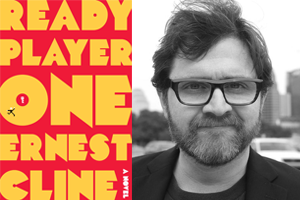
Virtual realities.
The worst thing about being a kid was that no one told me the truth about my situation. In fact, they did the exact opposite. And, of course, I believed them, because I was just a kid and I didn’t know any better. I mean, Christ, my brain hadn’t even grown to full size yet, so how could I be expected to know when the adults were bullshitting me?
So I swallowed all of the dark ages nonsense they fed me. Some time passed. I grew up a little, and I gradually began to figure out that pretty much everyone had been lying to me about pretty much everything since the moment I emerged from my mother’s womb.
This was an alarming revelation.
It gave me trust issues later in life.
I started to figure out the ugly truth as soon as I began to explore the free OASIS libraries. The facts were right there waiting for me, hidden in old books written by people who weren’t afraid to be honest. Artists and scientists and philosophers and poets, many of them long dead. As I read the words they’d left behind, I finally began to get a grip on the situation. My situation. Our situation. What most people referred to as “the human condition.”
It was not good news.
I wish someone had just told me the truth right up front, as soon as I was old enough to understand it. I wish someone had just said:
“Here’s the deal, Wade. You’re something called a ‘human being.’ That’s a really smart kind of animal. Like every other animal on this planet, we’re descended from a single-celled organism that lived millions of years ago. This happened by a process called evolution, and you’ll learn more about it later. But trust me, that’s really how we all got here. There’s proof of it everywhere, buried in the rocks. That story you heard? About how we were all created by a super-powerful dude named God who lives up in the sky? Total bullshit. The whole God thing is actually an ancient fairy tale that people have been telling one another for thousands of years. We made it all up. Like Santa Claus and the Easter Bunny.
“Oh, and by the way … there’s no Santa Claus or Easter Bunny. Also bullshit. Sorry, kid. Deal with it.
“You’re probably wondering what happened before you got here. An awful lot of stuff, actually. Once we evolved into humans, things got pretty interesting. We figured out how to grow food and domesticate animals so we didn’t have to spend all of our time hunting. Our tribes got much bigger, and we spread across the entire planet like an unstoppable virus. Then, after fighting a bunch of wars with each other over land, resources, and our made-up gods, we eventually got all of our tribes organized into a ‘global civilization.’ But, honestly, it wasn’t all that organized, or civilized, and we continued to fight a lot of wars with each other. But we also figured out how to do science, which helped us develop technology. For a bunch of hairless apes, we’ve actually managed to invent some pretty incredible things. Computers. Medicine. Lasers. Microwave ovens. Artificial hearts. Atomic bombs. We even sent a few guys to the moon and brought them back. We also created a global communications network that lets us all talk to each other, all around the world, all the time. Pretty impressive, right?
“But that’s where the bad news comes in. Our global civilization came at a huge cost. We needed a whole bunch of energy to build it, and we got that energy by burning fossil fuels, which came from dead plants and animals buried deep in the ground. We used up most of this fuel before you got here, and now it’s pretty much all gone. This means that we no longer have enough energy to keep our civilization running like it was before. So we’ve had to cut back. Big-time. We call this the Global Energy Crisis, and it’s been going on for a while now.
“Also, it turns out that burning all of those fossil fuels had some nasty side effects, like raising the temperature of our planet and screwing up the environment. So now the polar ice caps are melting, sea levels are rising, and the weather is all messed up. Plants and animals are dying off in record numbers, and lots of people are starving and homeless. And we’re still fighting wars with each other, mostly over the few resources we have left.
“Basically, kid, what this all means is that life is a lot tougher than it used to be, in the Good Old Days, back before you were born. Things used to be awesome, but now they’re kinda terrifying. To be honest, the future doesn’t look too bright. You were born at a pretty crappy time in history. And it looks like things are only gonna get worse from here on out. Human civilization is in ‘decline.’ Some people even say it’s ‘collapsing.’
“You’re probably wondering what’s going to happen to you. That’s easy. The same thing is going to happen to you that has happened to every other human being who has ever lived. You’re going to die. We all die. That’s just how it is.
“What happens when you die? Well, we’re not completely sure. But the evidence seems to suggest that nothing happens. You’re just dead, your brain stops working, and then you’re not around to ask annoying questions anymore. Those stories you heard? About going to a wonderful place called ‘heaven’ where there is no more pain or death and you live forever in a state of perpetual happiness? Also total bullshit. Just like all that God stuff. There’s no evidence of a heaven and there never was. We made that up too. Wishful thinking. So now you have to live the rest of your life knowing you’re going to die someday and disappear forever.
“Sorry.”
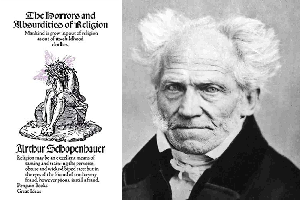
Animal rights vs. biblical literalism and unbridled science.
Another fundamental error of Christianity is that it has in an unnatural fashion sundered mankind from the animal world to which it essentially belongs and now considers mankind alone as of any account, regarding the animals as no more than things. This error is a consequence of creation out of nothing, after which the Creator, in the first and second chapters of Genesis, takes all the animals just as if they were things, and without so much as the recommendation of kind treatment which even a dog-seller usually adds when he parts with his dogs, hands them over to man for man to rule, that is to do with them what he likes; subsequently, in the second chapter, the Creator goes on to appoint him the first professor of zoology by commissioning him to give the animals the names they shall thenceforth bear, which is once more only a symbol of their total dependence on him, i.e their total lack of rights.
It can truly be said: Men are the devils of the earth, and the animals are the tormented souls. This is the consequence of that installation scene in the Garden of Eden. For the mob can be controlled only by force or by religion, and here Christianity leaves us shamefully in the lurch. I heard from a reliable source that a Protestant pastor, requested by an animal protection society to preach a sermon against cruelty to animals, replied that with the best will in the world he was unable to do so, because he could find no support in his religion. The man was honest, and he was right.
When I was studying at Göttingen, Blumenbach spoke to us very seriously about the horrors of vivisection and told us what a cruel and terrible thing it was; wherefore it should be resorted to only very seldom and for very important experiments which would bring immediate benefit, and even then it must be carried out as publicly as possible so that the cruel sacrifice on the altar of science should be of the maximum possible usefulness. Nowadays, on the contrary, every little medicine-man thinks he has the right to torment animals in the cruellest fashion in his torture chamber so as to decide problems whose answers have for long stood written in books into which he is too lazy and ignorant to stick his nose. – Special mention should be made of an abomination committed by Baron Ernst von Bibra at Nürnberg and, with incomprehensible naïveté, tanquam re bene gesta, [As if the thing were done well] narrated by him to the public in his Vergleichende Untersuchungen über das Gehirn des Menschen und der Wirbelthiere: he deliberately let two rabbits starve to death! – in order to undertake the totally idle and useless experiment of seeing whether starvation produces a proportional change in the chemical composition of the brain! For the ends of science – n'est-ce pas? Have these gentlemen of the scalpel and crucible no notion at all then that they are first and foremost men, and chemists only secondly? How can you sleep soundly knowing you have harmless animals under lock and key in order to starve them slowly to death? Don't you wake up screaming in the night?
It is obviously high time that the Jewish conception of nature, at any rate in regard to animals, should come to an end in Europe, and that the eternal being which, as it lives in us, also lives in every animal should be recognized as such, and as such treated with care and consideration. One must be blind, deaf and dumb, or completely chloroformed by the foetor judaicus, not to see that the animal is in essence absolutely the same thing that we are, and that the difference lies merely in the accident, the intellect, and not in the substance, which is the will.
The greatest benefit conferred by the railways is that they spare millions of draught-horses their miserable existence.
Arthur Schopenhauer (1788-1860) The Horrors and Absurdities of Religion
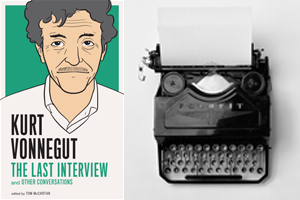
The elitist nature of ink.
We live in a very visual world today. Do words have any power left?
I was at a symposium some years back with my friends Joseph Heller and William Styron, both dead now, and we were talking about the death of the novel and the death of poetry, and Styron pointed out that the novel has always been an elitist art form. It’s an art form for very few people, because only a few can read very well. I’ve said that to open a novel is to arrive in a music hall and be handed a viola. You have to perform. [Laughs.] To stare at horizontal lines of phonetic symbols and Arabic numbers and to be able to put a show on in your head, it requires the reader to perform. If you can do it, you can go whaling in the South Pacific with Herman Melville, or you can watch Madame Bovary make a mess of her life in Paris. With pictures and movies, all you have to do is sit there and look at them and it happens to you.
Many years ago, you said that a writer’s job is to use the time of a stranger in such a way that he or she will not feel the time was wasted. There are a lot of ways for a stranger to pass time these days.
That’s right. There are all these other things to do with time. It used to be people would wonder what the hell they were going to do for the winter. [Laughs.] Then a big book would come out – a big, wonderful book – and everybody would be reading it to pass the time. It was a very primitive experiment, before television, where people would have to look at ink on paper, for God’s sake. I myself grew up when radio was very important. I’d come home from school and turn on the radio. There were funny comedians and wonderful music, and there were plays. I used to pass time with radio. Now, you don’t have to be literate to have a nice time.
You’ve stated that television is one of the most viable art forms in the world today.
Well, it is. It works like a dream. It’s a way to hold attention, and it’s awfully good at that. For a lot of people, TV is life itself. Churches used to provide people with better company than they had at home, but now, no matter what your neighborhood life or family life is like, you turn on the television and you get relatives, family. I don’t know if you’ve heard about this, but scientists have created baby geese that believe that an airplane is their mother. Human beings will believe in all kinds of things that aren’t true, and that’s okay. And TV is a part of that.
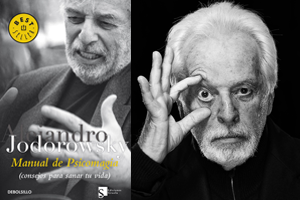
The path is the goal.
Para sanar o solucionar un problema se necesita una férrea voluntad. No poder hacer lo que deseamos ni poder no hacer lo que no deseamos, nos provoca una falta de autoestima profunda, causa de depresiones y enfermedades graves. El luchar incansablemente por lograr una meta que parece imposible desarrolla nuestra energía vital. Esto lo comprendieron muy bien los hechiceros medievales, creando recetarios que proponían actos imposibles de realizar, como por ejemplo un método para hacerse invisible. «Ponga a hervir un caldero de agua bendita con leña de vides blancas. Sumerja dentro un gato negro vivo, dejándolo cocer hasta que los huesos se aparten de la carne. Extraiga esos huesos con una estola de obispo y colóquese delante de una lámina de plata bruñida. Métase hueso tras hueso del gato escaldado en la boca, hasta que su imagen desaparezca del espejo de plata.» O bien un filtro para seducir a un hombre: «En un vaso modelado a mano con el barro que ha excavado el hocico de un jabalí, mezcle sangre de perro con sangre de gato más su sangre menstrual, agregue una perla molida y dele de beber a su amado diez gotas de este brebaje disueltas en una copa de vino». En el primer consejo, podríamos pensar que quizás no se habla de invisibilidad material, sino que quien debe hacerse transparente es el yo individual del aspirante a brujo. Después de tanto empeño en realizar algo tan cruel y dificil, se esfuma la personalidad individual y aparece el ser esencial, que es por esencia impersonal. En el segundo consejo cabe imaginar que si la bruja, por amor a un hombre, logra encontrar barro removido por un jabalí, asesinar a un perro, a un gato, y sacrificar dinero haciendo polvo una perla, despierta en ella tal seguridad en sí misma que se hace capaz de seducir a un ciego sordomudo.
Ciertas curaciones en lugares lejanos declarados milagrosos son en gran parte debidas al largo y costoso viaje que debe hacer el enfermo para llegar a ellos.
Everybody worships.
The only choice we get is what to worship. And an outstanding reason for choosing some sort of god or spiritual-type thing to worship–be it J.C. or Allah, be it Yahweh or the Wiccan mother-goddess of the Four Noble Truths or some infrangible set of ethical principles–is that pretty much anything else you worship will eat you alive.
If you worship money and things–if they are where you tap real meaning in life–then you will never have enough. Never feel you have enough. It’s the truth.
Worship your own body and beauty and sexual allure and you will always feel ugly, and when time and age start showing, you will die a million deaths before they finally plant you.
On one level we all know this stuff already–it’s been codified as myths, proverbs, clichés, bromides, epigrams, parables: the skeleton of every great story. The trick is keeping the truth up front in daily consciousness.
Worship power–you will feel weak and afraid, and you will need even more power over others to keep the fear at bay.
Worship your intellect, being seen as smart–you will end up feeling stupid, always on the verge of being found out.
And so on.
Look, the insidious thing about these forms of worship is not that they’re evil or sinful; it is that they are unconscious. They are default settings. They’re the kind of worship you just gradually slip into, day after day, getting more and more selective about what you see and how you measure value without ever being fully aware that that’s what you’re doing.
And the so-called “real world” will not discourage you from operating on your default settings, because the so-called “real world” of men and money and power hums along quite nicely on the fuel of fear and contempt and frustration and craving and the worship of self.
Our own present culture has harnessed these forces ins ays that they have yielded extraordinary wealth and comfort and personal freedom. The freedom all to be lords of our tiny skull-sized kingdoms, alone at the centre of all creation. This kind of freedom has much to recommend it.
But of course there are all different kinds of freedom, and the kind that is most precious you will not hear much talked about in the great outside world of winning and achieving and displaying. The really important kind of freedom involves attention, and awareness, and discipline, and effort, and being able truly to care about other people and to sacrifice for them, over and over, in myriad petty little unsexy ways, every day.
That is real freedom.