Many are so angry or bewildered that they give up trying to understand what is going on. Many refuse to make a contribution to the emerging universal culture because at some point they decided once and for all that the world around them was incomprehensible, hostile, bloodthirsty, demented or diabolical. Many are tempted to see themselves as mere victims - victims of America, of the West, of capitalism or liberalism, of the new technologies, of the media, of change, and so on. It cannot be denied that such people really do feel wronged and suffer accordingly, but their reaction seems to me inappropriate. To imprison oneself in a victim mentality can do the injured party even more harm than the aggression itself. And this is as true of societies as of individuals. They huddle themselves away, they barricade themselves in, they try to ward off everything, they close their minds, they ruminate, they give up looking for anything new, they don't explore anymore, they don't make any more progress, they are afraid of the future, of the present and of everyone else.

Lifting up the rock.
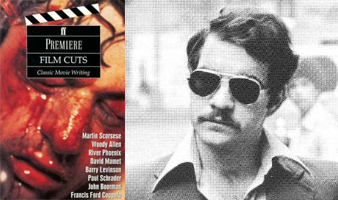
Kevin Jackson: Do you think that the film caught so many people's imaginations because of its strong sense of pent-up anger?
Paul Schrader: Yes. Godard once said that all great movies are successful for the wrong reasons, and there were a lot of wrong reasons why Taxi Driver was successful. The sheer violence of it really brought out the Times Square crowd.
But I have no real quarrel with that. I think that films can be extremely violent provided they understand the root causes of the violence. I think The Wild Bunch is a great film because it understands how deeply sick it is, and lets you know how sick it is; so it not only exploits your vicarious need for violence, but undermines it at the same time. I think films that analyse violence in that way are entirely justified.
KJ: But the violence in Travis is not held up for analysis in a sociological or psychological way, is it? The film seems to have distinct spiritual ambitions.
PS: Yes. Travis's is not a societally imposed loneliness or rage; it's an existential kind of rage. The book I reread just before sitting down to write the script was Sartre's Nausea, and if anything is the model for Taxi Driver, that would be it.
KJ: And there are references to Bresson as well - the line about thinking he has stomach cancer …
PS: And the scene where he makes the gun slide, which is sort of an allusion to Pickpocket. Originally Marty shot that scene so that it lasted ten minutes or more, dwelling on the sensuous mechanics of the process.
I think that what makes the film so vivid is what has made all my collaborations with Scorsese interesting, which is that we both have essentially the same moral background - a kind of closed-society Christian morality, though mine is rural and Protestant and his is urban and Catholic; mine is North European and his is South European. We can basically agree on everything in life, but we don't express it in the same way. I once described the film as the story of a Protestant kid from the snow country who wandered into a cathedral in the middle of New York City. That conflict of sensibilities is what makes it vibrate.
KJ: Presumably there was something about Travis's character that reflected an aspect of your own - the loneliness, the rage, the wish for a kind of purgation?
PS: At the time I wrote it I was very enamoured of guns, I was very suicidal, I was drinking heavily, I was obsessed with pornography in the way a lonely person is, and all those elements are upfront in the script. Obviously some aspects are heightened – the racism of the character, the sexism. Like every kind of underdog, Travis takes out his anger on the guy below him rather than the guy above. When they edited the film for TV I didn't so much mind having to lose the violence, but they had to remove huge sections of narration because of the virulent anti-black and anti-women characterizations. He appeared a very silly kind of guy because there was no edge to his anger; you just wanted to slap him in the face and say, 'Come on, come on.'
In fact, in the draft of the script that I sold, at the end all the people he kills are black. Marty and the Phillipses and everyone said, no, we just can't do this, it's an incitement to riot; but it was true to the character.
KJ: It's curious that he should be so racist, given that your first impulse towards fiction came about because of witnessing racial bullying.
PS: Well, that's really what art is about, you know. I think one is stung into progressive, positive behaviour by an awareness of the great lure of negative thought; it's the awareness of prejudice inside you that spurs you on to rid yourself and others of it. One of the things you should do in art is lift up the rock and look at those things inside you.
Manadas
A los hombres les gusta hablar de las mujeres. Así no tienen que hablar sobre sí mismos. ¿Cómo se explica que en los últimos treinta años ningún hombre haya producido un texto innovador sobre la masculinidad? Ellos que son tan locuaces y tan competentes cuando se trata de disertar sobre las mujeres, ¿cómo se explica ese silencio con respecto a sí mismos? Porque sabemos que cuanto más hablan, menos dicen. Sobre lo esencial, lo que tienen realmente en la cabeza. ¿Quizá quieren que seamos ahora nosotras las que hablemos de ellos? ¿Querrán, por ejemplo, que digamos qué es lo que pensamos nosotras, desde fuera, de sus violaciones colectivas? Diremos que ellos quieren verse follando entre ellos, mirarse las pollas los unos a los otros, empalmarse juntos, diremos que tienen ganas de metérsela entre ellos por el culo. Diremos que de lo que tienen ganas, realmente, es de follar entre ellos. A los hombres les gustan los hombres. Nos explican todo el rato cuánto les gustan las mujeres, pero todas sabemos que no son más que palabras. Se quieren entre hombres. Se follan unos a otros a través de las mujeres, muchos de ellos piensan en sus amigos mientras la meten en un coño. Se miran a sí mismos en el cine, se dan los mejores papeles, se sienten potentes, fanfarronean, alucinan de ser tan fuertes, tan guapos y de tener tanto valor. Escriben unos para otros, se felicitan mutuamente, se apoyan. Tienen razón. Pero de tanto escucharles quejarse de que las mujeres no follan bastante, de que no les gusta tanto el sexo como haría falta, de que no entienden nada, acabamos preguntándonos: ¿a qué esperan para darse por el culo los unos a los otros? Venga. Si eso os puede devolver la sonrisa, entonces es que está bien, Pero entre las cosas que les han inculcado bien está el miedo de ser marica, la obligación de que les gusten las mujeres. Así que se comportan. Refunfuñan, pero obedecen. Y de paso, furiosos por tener que someterse, le dan un par de hostias a una o dos chicas.

Reality is disappearing.
The disappearance of God has left us facing reality and the ideal prospect of transforming this real world. And we have found ourselves confronted with the undertaking of realizing the world, of making it become technically, integrally real.
···
Now, the world, even freed from all illusion, does not lend itself at all to reality. The more we advance in this undertaking, the more ambiguous it becomes, the more it loses sight of itself. Reality has barely had time to exist and already it is disappearing…
It is the excess of reality that makes us stop believing in it. The saturation of the world, the technical saturation of life, the excess of possibilities, of actualization of needs and desires. How are we to believe in reality once its production has become automatic?
The real is suffocated by its own accumulation. There is no way now for the dream to be an expression of a desire since its virtual accomplishment is already present.
Deprivation of dreams, deprivation of desire. And we know what mental disorder sleep deprivation induces.
Deep down, the problem is the same as with the ‘accursed share’: the problem of the surplus – not the lack, but the excess of reality – of which we no longer know how to rid ourselves.
There is no longer any symbolic resolution, by sacrifice, of the surplus, except in accidents or by the irruption of an anomic violence which, whatever its social or political determinations, is always a challenge to this irresistible objective constraint of a normalized world.
···
The eclipse of God left us up against reality. Where will the eclipse of reality leave us?

Jean Baudrillard (2005) The Intelligence of Evil: or, The Lucidity Pact