Behind the lines.

“An intention is more than a conscious purpose, it’s the congruence of that purpose. It requires an alignment of all aspects of one’s self. Of conscious thought and unconscious beliefs, of capabilities and commitment, of actions when working and not. It’s a state of living in harmonic agreement with oneself.

Not all projects take time, but they do take a lifetime. In calligraphy, the work is created in one movement of the brush. All the intention is in that single concentrated movement. The line is a reflection of the energy transfer from the artist’s being, including the entire history of their experiences, thoughts, and apprehensions, into the hand. The creative energy exists in the journey to the making, not in the act of constructing.”

(…)

“Intention is all there is. The work is just a reminder.”

Losses that wear winning skins.

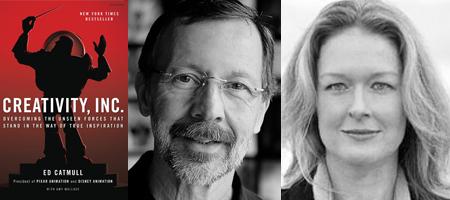
Let me give you an example of what I mean, drawn from the business I know best. In animation, we have many story, art, budget, technology, finance, constituencies: production, marketing, and consumer products. The people within each constituency have priorities that are important—and often opposing. The writer and director want to tell the most affecting story possible; the production designer wants the film to look beautiful; the technical directors want flawless effects; finance wants to keep the budgets within limits; marketing wants a hook that is easily sold to potential viewers; the consumer products people want appealing characters to turn into plush toys and to plaster on lunchboxes and T-shirts; the production managers try to keep everyone happy—and to keep the whole enterprise from spiraling out of control. And so on. Each group is focused on its own needs, which means that no one has a clear view of how their decisions impact other groups; each group is under pressure to perform well, which means achieving stated goals.

Particularly in the early months of a project, these goals— which are subgoals, really, in the making of a film—are often easier to articulate and explain than the film itself. But if the director is able to get everything he or she wants, we Will likely end up with a film that's too long. If the marketing people get their way, we Will only make a film that mimics those that have already been "proven" to succeed—in other words, familiar to viewers but in all likelihood a creative failure. Each group, then, is trying to do the right thing, but they're pulling in different directions. 

If any one of those groups "wins," we lose.

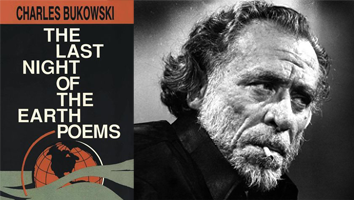
air and light and time and space

“– you know, I’ve either had a family, a job,
something has always been in the
way
but now
I’ve sold my house, I’ve found this
place, a large studio, you should see the space and
the light.
for the first time in my life I’m going to have
a place and the time to
create.”

no baby, if you’re going to create
you’re going to create whether you work
16 hours a day in a coal mine
or
you’re going to create in a small room with 3 children
while you’re on
welfare,
you’re going to create with part of your mind and your
body blown
away,
you’re going to create blind
crippled
demented,
you’re going to create with a cat crawling up your
back while
the whole city trembles in earthquake, bombardment,
flood and fire.

baby, air and light and time and space
have nothing to do with it
and don’t create anything
except maybe a longer life to find
new excuses
for.

The new needs friends.

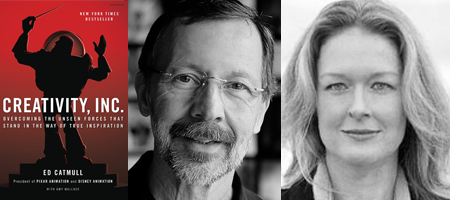
«In many ways, the work of a critic is easy,» Ego says. «We risk very little, yet enjoy a position over those who offer up their work and their selves to our judgment. We thrive on negative criticism, which is fun to write and to read. But the bitter truth we critics must face is that, in the grand scheme of things, the average piece of junk is probably more meaningful than our criticism designating it so. But there are times when a critic truly risks something, and that is in the discovery and defense of the new. The world is often unkind to new talent, new creations. The new needs friends.»

EC.png

Fictions and facts.

A picture hung on the wall of our parlor. In it, a woman was taking a shirt from a clothesline. She had clothespins in her teeth and it was windy and a boy was tugging at her dress. The woman looked like she was in a hurry and the whole scene gave me the idea that, just outside the frame, full, dark clouds were gathering. But that was not what it was. It was paint. So I decided right then and there to see the picture as it really was. I stared at the thing long and hard, trying to only see the paint. But it was no use. All my eyes would allow me to see was the lie. In fact, the longer I gazed at the paint, the more false detail I began to imagine. The boy was crying, as if afraid, and the woman was weaker than I had first believed. I finally gave up. I understood then that it takes a powerful imagination to see a thing for what it really is.

(...)

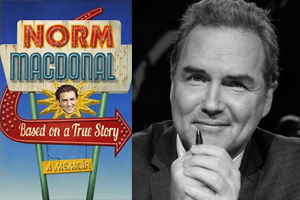
Death is a funny thing. Not funny haha, like a Woody Allen movie, but funny strange, like a Woody Allen marriage. When it’s unexpected, death comes fast like a ravenous wolf and tears open your throat with a merciful fury. But when it’s expected, it comes slow and patient like a snake, and the doctor tells you how far away it is and when, exactly, it will be at your door. And when it will be at the foot of your bed. And when it will be on your flesh. It’s all right there on their clipboards.

nm.png

I'll drink to that.

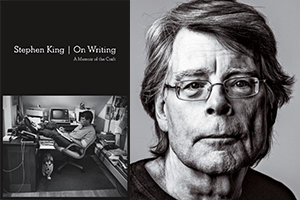
The idea that creative endeavor and mind-altering substances are entwined is one of the great pop-intellectual myths of our time. The four twentieth-century writers whose work is most responsible for it are probably Hemingway, Fitzgerald, Sherwood Anderson, and the poet Dylan Thomas. They are the writers who largely formed our vision of an existential English-speaking wasteland where people have been cut off from one another and live in an atmosphere of emotional strangulation and despair. These concepts are very familiar to most alcoholics; the common reaction to them is amusement. Substance-abusing writers are just substance abusers—common garden-variety drunks and druggies, in other words. Any claims that the drugs and alcohol are necessary to dull a finer sensibility are just the usual self-serving bullshit. I’ve heard alcoholic snowplow drivers make the same claim, that they drink to still the demons. It doesn’t matter if you’re James Jones, John Cheever, or a stewbum snoozing in Penn Station; for an addict, the right to the drink or drug of choice must be preserved at all costs. Hemingway and Fitzgerald didn’t drink because they were creative, alienated, or morally weak. They drank because it’s what alkies are wired up to do. Creative people probably do run a greater risk of alcoholism and addiction than those in some other jobs, but so what? We all look pretty much the same when we’re puking in the gutter.

Reality generates data. Or is it the other way around?

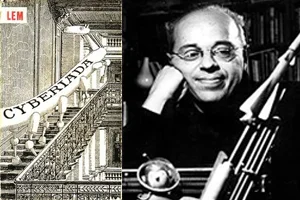
Everyone knows that dragons don’t exist. But while this simplistic formulation may satisfy the layman, it does not suffice for the scientific mind. The School of Higher Neantical Nillity is in fact wholly unconcerned with what does exist. Indeed, the banality of existence has been so amply demonstrated, there is no need for us to discuss it any further here. The brilliant Cerebron, attacking the problem analytically, probability theory to this area and, in so doing, created the field of statistical draconics, which says that dragons are thermodynamically impossible only in the probabilistic sense, as are elves, fairies, gnomes, witches, pixies and the like. Using the general equation of improbability, the two constructors obtained the coefficients of pixation, elfinity, kobolding, etc. They found that for the spontaneous manifestation of an average dragon, one would have to wait a good sixteen quintoquadrillion heptillion years. In other words, the whole problem would have remained a mathematical curiosity had it not been for that famous tinkering passion of Trurl, who decided to examine the nonphenomenon empirically. First, as he was dealing with the highly improbable, he invented a probability amplifier and ran tests in his basement – then later at the Dracogenic Proving Grounds established and funded by the probability theory to this area and, in so doing, created the field of statistical draconics, which says that dragons are thermodynamically impossible only in the probabilistic sense, as are elves, fairies, gnomes, witches, pixies and the like. Using the general equation of improbability, the two constructors obtained the coefficients of pixation, elfinity, kobolding, etc. They found that for the spontaneous manifestation of an average dragon, one would have to wait a good sixteen quintoquadrillion heptillion years. In other words, the whole problem would have remained a mathematical curiosity had it not been for that famous tinkering passion of Trurl, who decided to examine the nonphenomenon empirically. First, as he was dealing with the highly improbable, he invented a probability amplifier and ran tests in his basement – then later at the Dracogenic Proving Grounds established and funded by the Academy. To this day those who (sadly enough) have no knowledge of the General Theory of Improbability ask why Trurl probabilized a dragon and not an elf or goblin. The answer is simply that dragons are more probable than elves or goblins to begin with. True, Trurl might have gone further with his amplifying experiments, had not the first been so discouraging – discouraging in that the materialized dragon tried to make a meal of him. Fortunately, Klapaucius was nearby and lowered the probability, and the monster vanished.
The great leap backwards.

In 1957, a billion Chinese were going hungry.
Mao Zedong couldn’t admit this was because of the failings of his communist agricultural policies.
The reason must be something else.
He heard that sparrows were eating lots of grain.
That must be the reason.
So began ‘The Great Sparrow Campaign’.
The people must do whatever was necessary to rid China of sparrows.
That way the people would have plenty to eat.
It became everyone’s responsibility to help wipe out sparrows.
Masses of schoolchildren were taken on outings to destroy nests, to smash eggs, to kill chicks.
Everyone with any kind of gun was told to shoot sparrows wherever they saw them.
Poison was put wherever sparrows lived.
The Chinese organised in thousands to visit the areas where the sparrows gathered.
They did anything to stop them landing in the trees.
They made vast amounts of noise: sounding horns, thumping drums, even banging old pots and pans.
Propaganda films of the period show entire villages participating right across China.
They wouldn’t let the sparrows land and eventually the sparrows exhausted themselves and dropped to earth dead.
All over China, towns and villages were given recognition for the amount of sparrows they killed.
One day alone, in Shanghai, they killed 198,000.
Eventually, sparrows in China were eradicated, around two billion birds.
So that was the end of the problem, now food would be plentiful.
Well not quite.
What Mao Zedong hadn’t allowed for was what else the sparrows ate, besides grain.
They ate locusts.
Without the sparrows, the locusts had nothing to stop them.
They multiplied on a massive scale.
And locusts were many times more destructive than sparrows.
Plagues of locusts took over huge areas of Chinese farmland.
Each swarm covering hundreds of square miles made up of trillions of locusts.
It resulted in the Great Famine.
Which resulted in thirty million people dead from starvation.
Which created a new problem: what could be done to control the locusts?
The only solution was for China to import millions of sparrows from Communist Russia.
To try to put everything back the way it had been.
Because the solution had been worse than the problem.
Which is pretty much what’s happened to advertising.
Advertising was good, but we were looking for a way to make it better.
So we had to replace intuition and normal common-sense.
We had to make everything rational and verifiable, measurable and accountable, sensible and scientific.
And what happened?
We killed off the intuitive, the common-sense, the fun.
Advertising became formulaic, dull, invisible and predictable.

We killed off the sparrows and the locusts were worse.

Dave Trott (2015) Dave Trott's Blog.