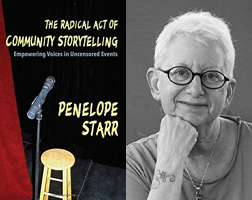
Cooperating instead of competing. Telling instead of lecturing. Listening instead of eavesdropping. Compassion not judgment. Acceptance not censorship. Celebrating identities not shaming. Risking exposure, not hiding. Paying attention instead of zoning out.
That is what makes community storytelling unique and transformational. But what makes it radical?
For one thing, the pure democracy of it all. The essential structure provides all storytellers an equal opportunity to take to the stage and tell about real things that happened to them, things they saw and did, things that they want to share with a roomful of strangers. It’s a place where everyday folks, with different life experiences, joys and sorrows, have a voice. Providing a venue and audience for this sort of activity could be seen as downright subversive. Nothing is canned, predictable or especially polite. It can be raw. mean or sugary sweet depending on who is brave enough to commit to a rehearsal, have their name and bio go out over social media, and show up for the event.
The structure inspires honesty and confessional tales. Intimacy emerges from the bare bones of a stage, a mic, a teller and listeners. One night at an Odyssey Storytelling show a woman, whose mother sat in the audience, confessed to sneaking out of her second story bedroom window, undetected, when she was a teenager. Twenty years later, Mom laughed at the story along with everyone else.
Stories about shame, triumph, and prejudice; love, revenge, and greed; all presented on a neutral stage, inviting deep respect and listening. I’ve never seen nor heard anyone being confrontational, although sometimes people are shocked or confused. If you weren’t expecting to hear about the sex life of a transman, it might take a moment or two to adjust your expectations and relax into serious appreciation.
Exposure = understanding = acceptance = true connection
Radically changing minds and hearts is just one of many advantages of community storytelling. Shaking people out of their insular lives and dropping them into another reality is radical. Community Storytelling is a place where diversity is celebrated and lessons are learned in the best possible le way—from people who are different from us. By listening fiercely and intensely, we allow ourselves to be amused or scared or made joyful; we open up to new possibilities. As the Tucson Meet Yourself 40th Anniversary Commemorative Magazine so aptly put it, “The messiness of cultures bumping into each other is the messiness of democracy—the elusive aspiration of equality, justice, and respect.”
Infusing storytellers with self-confidence and the knowledge that their stories matter is radical. Exposing tellers to nonjudgmental witnesses who validate their experience by offering kindness in exchange for honesty/trust subverts the paradigm of separateness and competition. For two hours, the length of a show, a community is created. And there is spillover—friendships are forged, connections happen, overlapping social networks will amaze and make us say, “But, of course.”