The Lioness Queen

Since having children of my own, I have become aware of slipping a few places down the hierarchy of people that my own parents want to hang out with. Like a smash hit from a new pop star, the grand. children have entered the charts at number one. But as rewarding as grandparenting may be, their existence is an evolutionary conundrum: why does human female reproduction cease so long before death?

Hardly any other species on Earth has such a prolonged post-reproductive lifespan. In most species - including all of our primate cousins - individuals continue breeding (or try to) until they drop dead. Humans do things differently. Unlike any of the other great. ape species, we have almost no overlap in breeding careers between mothers and daughters. Instead, the period when daughters become reproductively active coincides with the time when their mothers undergo a major physiological transition: menopause. Though we sometimes bemoan this period of life as signifying the start of old age, perhaps feeling as though we are becoming decrepit and defunct, I want to offer an alternative perspective. Menopause is an important switch-point in a woman's life that serves a specific purpose: this is when we change reproductive lanes, going from being breeders to being helpers.

The menopause is not simply an artefact of longer lifespans due to recent improvements in health care and lifestyles. Across most—if not all—societies, menopause occurs at around age fifty and is accompanied by an extended post-reproductive lifespan, even among people who lack access to technology or modern medicine. This includes contemporary hunter-gatherers and even historically high-mortality populations, such as plantation slaves living in Trinidad in the eighteenth century. The age of menopause is also heritable and, as more and more women living in industrialised societies delay having children until later in life, menopause also seems to be getting later.*

* Age at menopause is also influenced by environmental factors, like BMI and smoking. Interestingly, recent evidence finds that frequent sexual activity is associated with a later onset of menopause, suggesting that menopause might come earlier when the body knows' that there is no risk of becoming pregnant.

Taking a closer look at the underlying physiology shows us that menopause is not just part of the normal aging process. Human females are born with around 2 million follicles in situ, each capable of producing an egg. This supply declines steadily throughout life: by the time she is twenty, the average female has around 100,000 follicles remaining, and around 50,000 by the time she is thirty-five. Extrapolating forwards, even with this rate of decline, the average woman should be able to continue reproducing until she is well into her sixties and maybe even seventies. But something strange happens when she is around thirty-eight years old. Now, the number of follicles nose-dives, is going into a much steeper rate of decline. As a consequence, by the time she's fifty or thereabouts, her follicle levels drop below the minimum threshold required for regular menstrual cycles.

This highlights the mechanics of menopause. But it doesn't answer the question of why. Why do women experience this sharp, non-linear decrease in our fertility in our late thirties? And why do we then persist as sterile vessels, when it would seem that we have become reproductive dead ends?

*

To answer these questions, we need to take an evolutionary perspective. Through this lens, we come to realise that menopause is the outcome of an evolutionary battle, played out over millennia, between grandmothers and their daughters-in-law. Poor old mothers-in-law are the butt of a thousand schoolboy jokes but, as the saying goes, a joke is the truth wrapped in a smile.

The science isn't totally resolved on this, but there are good reasons to believe that dispersal in ancestral humans was female-biased. In other words, reproductive-age females tended to move to live with their 'husband' (I use this term loosely, to mean male breeding partner) and his family, rather than the other way around. An important consequence of female-biased dispersal is that the younger females (the wives) are potentially competing with their mothers-in-law over the limited resources needed to successfully raise children. We can make use of historical data sets of pre-industrial humans to get a feel for the effects of this competition. In Finland, the Lutheran church kept meticulous records of marriages, births and deaths from the 1700s until the early 1950s. Originally kept for tax purposes, these records now have a far greater value in helping us understand how selection might have acted upon historical human populations, in a time before inventions like the contraceptive pill and modern medicine could complicate estimates of fitness too much. This data shows that when a grandmother bred alongside her daughter-in-law, all of the children suffered. The costs were heavy: children were less than half as likely to survive to the age of fifteen when there was competition between breeding females. Nevertheless, co-breeding was also exceedingly uncommon, with just thirty or so grandmothers (out of more than 500) being reproductively active at the same time as their daughters-in-law. In most cases, we see a case of what looks like altruism: the older females concede to the younger ones in these reproductive battles. But how might grandmothers possibly benefit from curtailing their own reproduction and allowing younger females to breed unhindered?

This puzzle can be solved by considering the ways in which the younger and older females are related to one another's off. spring. The mother-in-law has a vested genetic interest in any children produced by her son's wife (so long as they are definitely his children*). The wife, on the other hand, has no genetic interest whatsoever in any offspring produced by her mother-in-law.

* Probably quite a safe bet in the Finnish data set, where monogamous marriage was strictly enforced and adultery was severely punished. On average, the median estimate for misattributed paternity worldwide is low, estimated to be about 1-2% - the Finnish data set is likely to be comparable.

This is what's known as a relatedness asymmetry - and it weakens the mother-in-law's hand. A grandmother is disincentivised to breed, if doing so harms her grandchildren. The reverse is not true: the younger female's genes simply don't care about any costs they might impose on those residing in the mother-in-law and her children. As a consequence of this relatedness asymmetry, the grandmother is more likely to concede in any battle over reproduction; her pay-off coming, instead, in the form of grand-children. Once she is committed physiologically to sterility, she can make the best of it by helping to raise her grandchildren. The benefits that grandmothers confer are well documented and can provide the selective impetus needed to favour the increased post-reproductive lifespan. From the ashes of an evolutionary conflict, grandmothers rise up.

When all we have to go on are records of births, deaths and marriages, it is very difficult to infer how, exactly, grandmothers helped their grandchildren to survive. It is likely that these ancient grand. mothers acted as repositories of knowledge, passing vital information on everything from breastfeeding to dealing with infants’ illnesses. In some cultures, grandmothers breastfeed their grandchildren, and are able to produce milk for the child even when their own breeding attempts ended many years earlier. Grandmothers are also an extra pair of hands, someone who is available to help care for any dependent children, which allows mothers to undertake other jobs (foraging and paid labour, for example) that contribute to infant survival.

*

Another broad pattern emerging from these data sets is that not all grandmothers are equal: data from twenty-six historical and contemporary natural fertility populations has shown that maternal, rather than paternal, grandmothers make the most difference to the survival of their grandchildren. This is a bit confusing - we know women tended to have their babies in their husband's household, which might seem to imply that it would be the paternal grandmothers who would be doing the heavy lifting when it came to the childcare. The answer to this evolutionary riddle comes from yet another church database - Canadian this time - documenting the lives of French settlers in and around Quebec in the seventeenth and eighteenth centuries. The data shows that, even when daughters leave home to have their babies, the maternal grandmothers are still able to help out - so long as the daughters don't move too far away. Increased distance between mothers and their daughters corresponded with decreased survivorship of the daughter's off. spring, likely because the maternal grandmother was less able to help out from afar. The general pattern therefore seems to be that conflict among mothers-in-law and daughters-in-law explains the evolution of menopause, but post-reproductive females direct their investments to the grandchildren they are most certain that they are related to: to their daughter's rather than to their son's children.

If women's post-reproductive lifespan has been extended by the benefits they could bestow upon their grandchildren, we might ask why grandmothers don't live for even longer. In fact, why do they have to die at all? Before answering this question, it is important to dispel the seemingly intuitive explanation that people die because they become old and decrepit. Senescence - the process of ageing - is not just a biological inevitability. Instead, it is something that is under the control of natural selection. If there were sufficient fitness advantage to living a bit longer and not being riddled with the ailments of old age, then we probably would have longer healthy lifespan. Ageing is what happens when evolution no longer sees a future for us, and selection becomes less assiduous in maintaining and overseeing basic physiological processes, like cell division. There's no point proofreading a document that no one is going to read.

So why don't grandmothers live forever? A recent analysis of the same Finnish data set indicates that grandmothers are only useful (in an evolutionary sense) for the child's first few years of life. Most of the children a grandmother can expect to help with will have been born by the time she is about seventy-five. Beyond this point, not only are grandmothers unhelpful for child survival, but they actually become a liability: living with one means that any child is less likely to survive into adulthood. This detrimental effect acts as a counterweight to the selective force favouring increased lifespan: in the end, grandmothers are no longer selected to live, but to die.

Xerox Life.

‘And what do you think? Do you suppose you can pull it off? Perform this role?’

‘It won’t be easy. But I believe if I continue to observe Josie carefully, it will be within my abilities.’

‘Then let me ask you something else. Let me ask you this. Do you believe in the human heart? I don’t mean simply the organ, obviously. I’m speaking in the poetic sense. The human heart. Do you think there is such a thing? Something that makes each of us special and individual? And if we just suppose that there is. Then don’t you think, in order to truly learn Josie, you’d have to learn not just her mannerisms but what’s deeply inside her? Wouldn’t you have to learn her heart?’

‘Yes, certainly.’

‘And that could be difficult, no? Something beyond even your wonderful capabilities. Because an impersonation wouldn’t do, however skillful. You’d have to learn her heart, and learn it fully, or you’ll never become Josie in any sense that matters.’

A public bus had stopped beside some abandoned fruit boxes. As the Father steered around it, the car behind us made angry horn noises. Then there were more angry horns, but these were further away and not aimed at us.

‘The heart you speak of,’ I said. ‘It might indeed be the hardest part of Josie to learn. It might be like a house with many rooms. Even so, a devoted AF, given time, could walk through each of those rooms, studying them carefully in turn, until they became like her own home.’

The Father sounded our own horn at a car trying to enter the traffic line from a side street.

‘But then suppose you stepped into one of those rooms,’ he said, ‘and discovered another room within it. And inside that room, another room still. Rooms within rooms within rooms. Isn’t that how it might be, trying to learn Josie’s heart? No matter how long you wandered through those rooms, wouldn’t there always be others you’d not yet entered?’

I considered this for a moment, then said: ‘Of course, a human heart is bound to be complex. But it must be limited. Even if Mr Paul is talking in the poetic sense, there’ll be an end to what there is to learn. Josie’s heart may well resemble a strange house with rooms inside rooms. But if this were the best way to save Josie, then I’d do my utmost. And I believe there’s a good chance I’d be able to succeed.’

‘Hmm.’

(…)

‘Mr Capaldi believed there was nothing special inside Josie that couldn’t be continued. He told the Mother he’d searched and searched and found nothing like that. But I believe now he was searching in the wrong place. There was something very special, but it wasn’t inside Josie. It was inside those who loved her.’

Virtual realities.

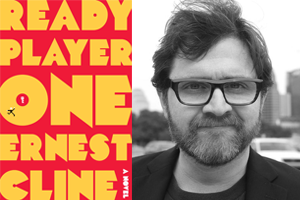
The worst thing about being a kid was that no one told me the truth about my situation. In fact, they did the exact opposite. And, of course, I believed them, because I was just a kid and I didn’t know any better. I mean, Christ, my brain hadn’t even grown to full size yet, so how could I be expected to know when the adults were bullshitting me?

So I swallowed all of the dark ages nonsense they fed me. Some time passed. I grew up a little, and I gradually began to figure out that pretty much everyone had been lying to me about pretty much everything since the moment I emerged from my mother’s womb.

This was an alarming revelation.

It gave me trust issues later in life.

I started to figure out the ugly truth as soon as I began to explore the free OASIS libraries. The facts were right there waiting for me, hidden in old books written by people who weren’t afraid to be honest. Artists and scientists and philosophers and poets, many of them long dead. As I read the words they’d left behind, I finally began to get a grip on the situation. My situation. Our situation. What most people referred to as “the human condition.”

It was not good news.

I wish someone had just told me the truth right up front, as soon as I was old enough to understand it. I wish someone had just said:

“Here’s the deal, Wade. You’re something called a ‘human being.’ That’s a really smart kind of animal. Like every other animal on this planet, we’re descended from a single-celled organism that lived millions of years ago. This happened by a process called evolution, and you’ll learn more about it later. But trust me, that’s really how we all got here. There’s proof of it everywhere, buried in the rocks. That story you heard? About how we were all created by a super-powerful dude named God who lives up in the sky? Total bullshit. The whole God thing is actually an ancient fairy tale that people have been telling one another for thousands of years. We made it all up. Like Santa Claus and the Easter Bunny.

“Oh, and by the way … there’s no Santa Claus or Easter Bunny. Also bullshit. Sorry, kid. Deal with it.

“You’re probably wondering what happened before you got here. An awful lot of stuff, actually. Once we evolved into humans, things got pretty interesting. We figured out how to grow food and domesticate animals so we didn’t have to spend all of our time hunting. Our tribes got much bigger, and we spread across the entire planet like an unstoppable virus. Then, after fighting a bunch of wars with each other over land, resources, and our made-up gods, we eventually got all of our tribes organized into a ‘global civilization.’ But, honestly, it wasn’t all that organized, or civilized, and we continued to fight a lot of wars with each other. But we also figured out how to do science, which helped us develop technology. For a bunch of hairless apes, we’ve actually managed to invent some pretty incredible things. Computers. Medicine. Lasers. Microwave ovens. Artificial hearts. Atomic bombs. We even sent a few guys to the moon and brought them back. We also created a global communications network that lets us all talk to each other, all around the world, all the time. Pretty impressive, right?

“But that’s where the bad news comes in. Our global civilization came at a huge cost. We needed a whole bunch of energy to build it, and we got that energy by burning fossil fuels, which came from dead plants and animals buried deep in the ground. We used up most of this fuel before you got here, and now it’s pretty much all gone. This means that we no longer have enough energy to keep our civilization running like it was before. So we’ve had to cut back. Big-time. We call this the Global Energy Crisis, and it’s been going on for a while now.

“Also, it turns out that burning all of those fossil fuels had some nasty side effects, like raising the temperature of our planet and screwing up the environment. So now the polar ice caps are melting, sea levels are rising, and the weather is all messed up. Plants and animals are dying off in record numbers, and lots of people are starving and homeless. And we’re still fighting wars with each other, mostly over the few resources we have left.

“Basically, kid, what this all means is that life is a lot tougher than it used to be, in the Good Old Days, back before you were born. Things used to be awesome, but now they’re kinda terrifying. To be honest, the future doesn’t look too bright. You were born at a pretty crappy time in history. And it looks like things are only gonna get worse from here on out. Human civilization is in ‘decline.’ Some people even say it’s ‘collapsing.’

“You’re probably wondering what’s going to happen to you. That’s easy. The same thing is going to happen to you that has happened to every other human being who has ever lived. You’re going to die. We all die. That’s just how it is.

“What happens when you die? Well, we’re not completely sure. But the evidence seems to suggest that nothing happens. You’re just dead, your brain stops working, and then you’re not around to ask annoying questions anymore. Those stories you heard? About going to a wonderful place called ‘heaven’ where there is no more pain or death and you live forever in a state of perpetual happiness? Also total bullshit. Just like all that God stuff. There’s no evidence of a heaven and there never was. We made that up too. Wishful thinking. So now you have to live the rest of your life knowing you’re going to die someday and disappear forever.

“Sorry.”

ec_rpo.png

Manadas

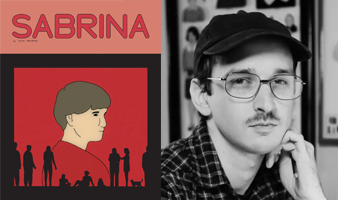
A los hombres les gusta hablar de las mujeres. Así no tienen que hablar sobre sí mismos. ¿Cómo se explica que en los últimos treinta años ningún hombre haya producido un texto innovador sobre la masculinidad? Ellos que son tan locuaces y tan competentes cuando se trata de disertar sobre las mujeres, ¿cómo se explica ese silencio con respecto a sí mismos? Porque sabemos que cuanto más hablan, menos dicen. Sobre lo esencial, lo que tienen realmente en la cabeza. ¿Quizá quieren que seamos ahora nosotras las que hablemos de ellos? ¿Querrán, por ejemplo, que digamos qué es lo que pensamos nosotras, desde fuera, de sus violaciones colectivas? Diremos que ellos quieren verse follando entre ellos, mirarse las pollas los unos a los otros, empalmarse juntos, diremos que tienen ganas de metérsela entre ellos por el culo. Diremos que de lo que tienen ganas, realmente, es de follar entre ellos. A los hombres les gustan los hombres. Nos explican todo el rato cuánto les gustan las mujeres, pero todas sabemos que no son más que palabras. Se quieren entre hombres. Se follan unos a otros a través de las mujeres, muchos de ellos piensan en sus amigos mientras la meten en un coño. Se miran a sí mismos en el cine, se dan los mejores papeles, se sienten potentes, fanfarronean, alucinan de ser tan fuertes, tan guapos y de tener tanto valor. Escriben unos para otros, se felicitan mutuamente, se apoyan. Tienen razón. Pero de tanto escucharles quejarse de que las mujeres no follan bastante, de que no les gusta tanto el sexo como haría falta, de que no entienden nada, acabamos preguntándonos: ¿a qué esperan para darse por el culo los unos a los otros? Venga. Si eso os puede devolver la sonrisa, entonces es que está bien, Pero entre las cosas que les han inculcado bien está el miedo de ser marica, la obligación de que les gusten las mujeres. Así que se comportan. Refunfuñan, pero obedecen. Y de paso, furiosos por tener que someterse, le dan un par de hostias a una o dos chicas.

Class struggle revisited.

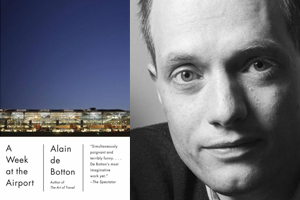
In the rarified air that was pumped into the Concorde Room, there nonetheless hovered a hint of something troubling: the implicit suggestion that the three traditional airline classes represented nothing less than a tripartite division of society according to people’s genuine talents and virtues. Having abolished the caste systems of old and fought to ensure universal access to education and opportunity, it seemed that we might have built up a meritocracy that had introduced an element of true justice into the distribution of wealth as well as poverty. In the modern era, destitution could therefore be regarded as not merely pitiable but deserved. The question of why, if one was in any way talented or adept, one was still unable to earn admittance to an elegant lounge was a conundrum for all economy airline passengers to ponder in the privacy of their own minds as they perched on hard plastic chairs in the overcrowded and chaotic public waiting areas of the world’s airports.

The West once had a powerful and forgiving explanation for exclusion from any sort of lounge: for two thousand years Christianity rejected the notion, inherent in the modern meritocratic system, that virtue must inevitably usher in material success. Jesus was the highest man, the most blessed, and yet throughout his earthly life he was poor, thus by his very example ruling out any direct equation between righteousness and wealth. the Christian story emphasized that, however apparently equitable our educational and commercial infrastructures might seem, random factors and accidents would always conspire to wreck any neat alignment between hierarchies of wealth on the one hand and virtue on the other. According to St Augustine, only God himself knew what each individual was worth, and He would not reveal that assessment before the time of the Last Judgement, to the sound of thunder and the trumpets of angels – a phantasmagorical scenario for non-believers, but helpful nevertheless in reminding us to refrain from judging others on the basis of a casual look at their tax returns.

The Christian story has neither died out nor been forgotten. That it continues even now to scratch away at meritocratic explanations of privilege was made clear to me when, after a copious lunch rounded off by a piece of chocolate cake with passionfruit sorbet, an employee called Reggie described for me the complicated set of circumstance that had brought her to the brutally decorated staff area of the Concorde Room from a shantytown outside Puerto Princesa in the Philippines. Our preference for the meritocratic versus the Christian belief system will in the end determine how we decide to interpret the relative standing of a tracksuited twenty-seven-year-old entrepreneur reading the Wall Street Journal by a stone-effect fireplace while waiting to board his fight to Seattle, against that of a Filipina cleaner whose job it is to tour the bathrooms of an airline’s first-class lounge, swabbing the shower cubicles of their diverse and ever-changing colonies of international bacteria.

Unerring prophecies.

So common is the pattern of the self-fulfilling prophecy that each of us has his favored specimen. Consider the case of the examination neurosis. Convinced that he is destined to fail, the anxious student devotes more time to worry than to stufy and then turns in a poor examination. The initial fallacious anxiety is transformed into an entirely justified fear. Or it is believed that war between two nations is inevitable. Actuated by this conviction, representatives of the two nations become progresively alienated, apprehensively countering each "offensive" move of the other with a "deffensive" move of their own. Stockpiles of armaments, raw materials, and armed men grow larger, and eventually the anticipation of war helps create the actuality.

The self-fulfilling prophecy is, in the beginning, a false definition of the situation evoking a new behavior which makes the originally false conception come true. The specious validity of the self-fulfilling prophecy perpetuates a reign of error. For the prophet will cite the actual course of events as proof that he was right from the very beginning.

(...)

The initial definition of the situation which has set the circle in motion must be abandoned. Only when the original assumption is questioned and a new definition of the situation introduced, does the consequent flow of events give the lie to the assumption. Only then does the belief not father the reality.

Joe Save the Queen.

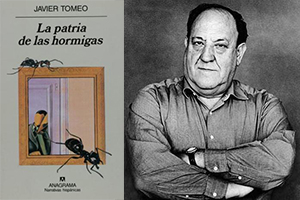
Blas continúa sin oírle y opta por sonreír. Ésa es siempre una respuesta inteligente. Llama a Carmen, que está canturreando en la cocina, y le pide que les traiga otra vez la botella de anís. Juan rechaza la invitación y Blas, que debe de ser un poco brujo, adivina que su joven huésped está pensando en venenos. Se queda un momento en silencio y luego le explica que las hormigas, aparte de tener las mandíbulas muy afiladas, están equipadas con venenos mortales.

Dice también que los hormigueros están siempre en estado de guerra, sobre todo cuando la comida escasea, que las hormigas lo dan todo por la patria y que sólo las reinas están en condiciones de quedar preñadas.

Es la primera vez en su vida que Juan oye decir que las hormigas tienen también una patria y, sobre todo, que pueden quedar preñadas, como si fuesen yeguas. Lo más importante, de todos modos, es que ha entendido lo que Blas ha querido decirle: las reinas son las únicas hembras en todo el hormiguero que pueden asegurar la continuidad de la especie.

-Son también las únicas que tienen alas -añade el viejo.

Se trata de una información muy valiosa que algún día puede serle de utilidad, pero Juan se disculpa con una sonrisa y vuelve a pasarse la mano por la frente, como limpiándose el sudor, para dar a entender al viejo que lo único que le interesa es meterse debajo de la ducha.

Cuando vuelve a su habitación, sin embargo, continúa pensando todavía en las mandíbulas de las hormigas.

Hay algo seguro -piensa, mientras el agua cae con fuerza por el pecho y por la espalda hacia las piernas-. Esas reinas no podrían reproducirse si no fuese por los proletarios que las fecundan.

Raise your left fist!

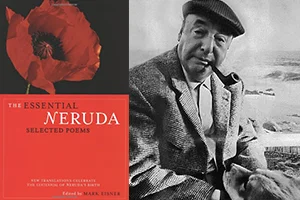
De aquel hombre me acuerdo y no han pasado
sino dos siglos desde que lo vi,
no anduvo ni a caballo ni en carroza:
a puro pie
deshizo
las distancias
y no llevaba espada ni armadura,
sino redes al hombro,
hacha o martillo o pala,
nunca apaleó a ninguno de su especie:
su hazaña fue contra el agua o la tierra,
contra el trigo para que hubiera pan,
contra el árbol gigante para que diera leña,
contra los muros para abrir las puertas,
contra la arena construyendo muros
y contra el mar para hacerlo parir.

Lo conocí y aún no se me borra.

Cayeron en pedazos las carrozas,
la guerra destruyó puertas y muros,
la ciudad fue un puñado de cenizas,
se hicieron polvo todos los vestidos,
y él para mí subsiste,
sobrevive en la arena,
cuando antes parecía
todo imborrable menos él.

En el ir y venir de las familias
a veces fue mi padre o mi pariente
o apenas si era él o si no era
tal vez aquel que no volvió a su casa
porque el agua o la tierra lo tragaron
o lo mató una máquina o un árbol
o fue aquel enlutado carpintero
que iba detrás del ataúd, sin lágrimas,
alguien en fin que no tenía nombre,
que se llamaba metal o madera,
y a quien miraron otros desde arriba
sin ver la hormiga
sino el hormiguero
y que cuando sus pies no se movían,
porque el pobre cansado había muerto,
no vieron nunca que no lo veían:
había ya otros pies en donde estuvo.

Los otros pies eran él mismo,
también las otras manos,
el hombre sucedía:
cuando ya parecía transcurrido
era el mismo de nuevo,
allí estaba otra vez cavando tierra,
cortando tela, pero sin camisa,
allí estaba y no estaba, como entonces,
se había ido y estaba de nuevo,
y como nunca tuvo cementerio,
ni tumba, ni su nombre fue grabado
sobre la piedra que cortó sudando,
nunca sabía nadie que llegaba
y nadie supo cuando se moría,
así es que sólo cuando el pobre pudo
resucitó otra vez sin ser notado.

Era el hombre sin duda, sin herencia,
sin vaca, sin bandera,
y no se distinguía entre los otros,
los otros que eran él,
desde arriba era gris como el subsuelo,
como el cuero era pardo,
era amarillo cosechando trigo,
era negro debajo de la mina,
era color de piedra en el castillo,
en el barco pesquero era color de atún
y color de caballo en la pradera:
cómo podía nadie distinguirlo
si era el inseparable, el elemento,
tierra, carbón o mar vestido de hombre?

Donde vivió crecía
cuanto el hombre tocaba:
la piedra hostil
quebrada
por sus manos,
se convertía en orden
y una a una formaron
la recta claridad del edificio,
hizo el pan con sus manos,
movilizó los trenes,
se poblaron de pueblos las distancias,
otros hombres crecieron,
llegaron las abejas,
y porque el hombre crea y multiplica
la primavera caminó al mercado
entre panaderías y palomas.

El padre de los panes fue olvidado,
él que cortó y anduvo, machacando
y abriendo surcos, acarreando arena,
cuando todo existió ya no existía,
él daba su existencia, eso era todo.
Salió a otra parte a trabajar, y luego
se fue a morir rodando
como piedra del río:
aguas abajo lo llevó la muerte.

Yo, que lo conocí, lo vi bajando
hasta no ser sino lo que dejaba:
calles que apenas pudo conocer,
casas que nunca y nunca habitaría.

Y vuelvo a verlo, y cada día espero.

Lo veo en su ataúd y resurrecto .

Lo distingo entre todos
los que son sus iguales
y me parece que no puede ser,
que así no vamos a ninguna parte,
que suceder así no tiene gloria.
Yo creo que en el trono debe estar
este hombre, bien calzado y coronado.

Creo que los que hicieron tantas cosas
deben ser dueños de todas las cosas.

Y los que hacen el pan deben comer!

Y deben tener luz los de la mina!

Basta ya de encadenados grises!

Basta de pálidos desaparecidos!

Ni un hombre más que pase sin que reine.

Ni una sola mujer sin su diadema.

Para todas las manos guantes de oro.

Frutas del sol a todos lo oscuros!

Yo conocí a aquel hombre y cuando pude,
cuando ya tuve ojos en la cara,
cuando ya tuve la voz en la boca
lo busqué entre las tumbas, y le dije
apretándole un brazo que aún no era polvo:

"Todos se irán, tú quedarás viviente.
Tú encendiste la vida
Tú hiciste lo que es tuyo".

Por eso nadie se moleste cuando
parece que estoy solo y no estoy solo,
no estoy con nadie y hablo para todos:

Alguien me está escuchando y no lo saben
pero aquellos que canto y que lo saben
siguen naciendo y llenarán el mundo.