Petrus has a vision of the future in which people like Lucy have no place. But that need not make an enemy of Petrus. Country life has always been a matter of neighbours scheming against each other, wishing on each other pests, poor crops, financial ruin, yet in a crisis ready to lend a hand.
Framing Rubiales.
5. The final matter to consider bears upon the segregation issue expressed in "tension" and joking. As will be argued throughout, individuals can rather fully constitute what they see in accordance with the framework that officially applies. But there is a limit to this capacity. Certain effects carry over from one perspective in which events could easily be seen to a radically different one, the latter the one which officially applies. The best documented case, perhaps, is the slow development of the easy right of medical people to approach the human naked body with a natural instead of a social perspective. Thus, it was only at the end of the eighteenth century in Britain that childbirth could benefit from an obstetric examination, an undarkened operating room, and delivery—if a male physician was to do it—unencumbered by its having to be performed under covers.₁₆ The gynecological examination is even today a matter of some concern special effort being taken to infuse the procedure with terms and dottons that keep sexual readings in check.₁₇ Another example is the difficulty faced by those who would promote the practice of rescue breathing: mouth-to-mouth contact apparently cannot easily be dissociated from its ritual implications.₁₈ Similarly, we manage to let orthopedists and shoe salesmen touch our feet, but first we make sure to clean what might ritually contaminate. Or consider the Sensel, the instructor at karate, who, when his students take up a proper position, ordinarily can touch crucial points of their bodies instrumentally, as might a physician, to determine directly whether the appropriate tension is present Consider the question of limits to this sort of physicalistlc framing that is introduced by the admission of female students:
When Sensei makes the rounds to test our "stance," by touching the "butt and thigh muscles, he just doesn't touch ours. After three months he finally did touch the fifteen-year-old's "butt," but he sit avoids us older women like the plague. It seems clear that twenty. five-vear-old Sensei cannot see us as other than females who can be touched for one purpose and one purpose only. ₁₉
It should be obvious that the human body and touchings of it will figure in the issue of frame maintenance, just as the body's various waste products and involuntary movements will figure in tensions regarding boundaries.₂₀ For it seems that the body is too constantly present as a resource to be managed in accordance with only one primary framework. It seems inevitable that our interpretive competency will allow us to come to distinguish, say, between an arm waved to signal a car on and an arm waved to greet a friend, and that both wavings will be distinguished from what we are seen as doing when we dispel flies or increase circu-lation. These discernments in turn seem linked to the fact that each kind of event is but one element in a whole idiom of events, each idiom being part of a distinctive framework. And here what is true of Western society is probably also true of all other societies.₂₁
₁₆ Peter Fryer, Mrs. Grundy: Studies in English Prudery (London: Dennis Dobson, 1963), chap. 17, "The Creeping Obstetrician," pp. 167-170. It should not be assumed that in the West individuals have shown a continuously increasing capacity to suffer examination in a naturalistic perspective and treatment in a purely instrumental, "physicalistic" one. We no longer have slaves, and therefore, presumably, no longer do individuals have to suffer the kind of impersonal testing described by Harold Nicolson in Good Behaviour (London: Constable & Co., 1955) :
The slave dealers, whether those of Delos or the mangones who ran the slave-market by the Temple of Castor in Rome, would display their wares in the manner of horse-copers, allowing prospective purchasers to examine the teeth and muscles of the animals, taking them for little runs on a string to show their paces. Slaves were exhibited for sale in a wooden cage, their feet being smeared with white-wash, and tablets stating price and qualifications hung around their necks. [p. 63]
In any case, one should see that allowing ourselves to be treated as objects is a form of conduct, if only a passive one. Persons being made up by stage cosmeticians, measured by their tailors, and palpated by their physicians conduct themselves in much the same way. They respond to requests to assume various positions, may engage in desultory side talk, but the rest follows a widespread understanding as to how to act when we are supposed to be merely bodies.
₁₇ The staging of the gynecological examination so as to sustain non-sexual interpretations is nicely detailed in James M. Henslin and Mae A. Biggs, "Dramaturgical Desexualization: The Sociology of the Vaginal Examination," in James M. Henslin, ed., Studies in the Sociology of Sex (New York: Appleton-Century-Crofts, 1971), pp. 243-272. A useful treatment is also available in Joan P. Emerson, "Behavior in Private Places: Sustaining Definitions of Reality in Gynecological Examinations," in Hans Peter Dreitzel, ed., Recent Sociology No. 2 (New York: Macmillan, 1970), pp. 1-97. Emerson argues that although joking during a gynecological examination may provide too open a reference to what must be inhibited, other more subtle means will allow (and oblige) participants to give nonmedical matters (such as "feminine" modesty) their due. Here see also "A Simultaneous Multiplicity of Selves," in E., pp. 132-143. Emerson's paper provides a useful reminder that when one schema applies, its tenure may shift from moment to moment and may never totally exclude alien readings—and (it is felt) properly so.
₁₈ See, for example, Maurice E. Linden, "Some Psychological Aspects lescue Breathing," American Journal of Nursing, LX (1960): 971-974.
₁₉ Susan Pascalé et al., "Self-Defense for Women," in Robin Morgan, Sisterhood Is Powerful (New York: Random House, Vintage Books, 1970), p. 474.
₂₀ Mary Douglas, Purity and Danger (London: Routledge & Kegan Paul, 1966), provides a text:
But now we are ready to broach the central question. Why should bodily refuse be a symbol of danger and of power? Why should sorcerers be thought to qualify for initiation by shedding blood or committing incest or anthropophagy? Why, when initiated, should their art consist largely of manipulating powers thought to inhere in the margins of the human body? Why should bodily margins be thought to be specially invested with power and danger?
…
Second, all margins are dangerous. If they are pulled this way or that the shape of fundamental experience is altered. Any structure of ideas is vulnerable at its margins. We should expect the orifices of the body to symbolise its specially vulnerable points. Matters issuing from them is marginal stuff of the most obvious kind. Spittle, blood, milk, urine, faces or tears by simply issuing forth have traversed the boundary of the body. So also have bodily parings, skin, nail, hair clippings and sweat. The mistake is to treat bodily margins in isolation from all other margins. There is no reason to assume any primacy for the individual's attitude to his own bodily and emotional experience, any more than for his cultural and social experience. This is the clue which explains the unevenness with which different aspects of the body are treated in the rituals of the world. In some, menstrual pollution is feared as a lethal danger; in others not at all. ... In some, death pollution is a daily preoccupation; in others not at all. In some, excreta is dangerous, in others it is only a joke. In India cooked food and saliva are pollution-prone, but Bushmen collect melon seeds from their mouths for later roasting and eating. [pp. 120-121]
₂₁ A Borneo society might serve to provide an illustration:
The clasping of hands, or throwing an arm about the neck of a friend of the same sex, or a relative beyond the range of defined incestuous relationships, serves to establish boundaries of permitted tactile contacts in social action situations. Lovers regularly denote their status by mutually clasping waists while walking in public. Community members not related, or in the status of special friends, or lovers, are not permitted the familiarity of such forms, since each denotes a meaning of opening another close level of tactile experience. Touching or holding contacts are permitted among non-married adults of opposite sex only during instances of divination and curing relationships between a female ritual specialist and seriously ill persons. In the course of both divination and curing rituals a female specialist in the supernatural seeks out the site of illness through gross palpation of trunk and limb areas. In most in-stances, areas of sexual meaning are avoided. There is no practice of generational transfer of political power through tactile contact, although ritual and magical formula and associated power passage between an aged female ritual specialist and a girl pupil may involve clasping of hands as a symbolic transfer is effected. [Thomas R. Williams, "Cultural Structuring of Tactile Experience in a Borneo Society," American Anthro-pologist, LXVIII (1966): 33-34.]
The Lioness Queen
Since having children of my own, I have become aware of slipping a few places down the hierarchy of people that my own parents want to hang out with. Like a smash hit from a new pop star, the grand. children have entered the charts at number one. But as rewarding as grandparenting may be, their existence is an evolutionary conundrum: why does human female reproduction cease so long before death?
Hardly any other species on Earth has such a prolonged post-reproductive lifespan. In most species - including all of our primate cousins - individuals continue breeding (or try to) until they drop dead. Humans do things differently. Unlike any of the other great. ape species, we have almost no overlap in breeding careers between mothers and daughters. Instead, the period when daughters become reproductively active coincides with the time when their mothers undergo a major physiological transition: menopause. Though we sometimes bemoan this period of life as signifying the start of old age, perhaps feeling as though we are becoming decrepit and defunct, I want to offer an alternative perspective. Menopause is an important switch-point in a woman's life that serves a specific purpose: this is when we change reproductive lanes, going from being breeders to being helpers.
The menopause is not simply an artefact of longer lifespans due to recent improvements in health care and lifestyles. Across most—if not all—societies, menopause occurs at around age fifty and is accompanied by an extended post-reproductive lifespan, even among people who lack access to technology or modern medicine. This includes contemporary hunter-gatherers and even historically high-mortality populations, such as plantation slaves living in Trinidad in the eighteenth century. The age of menopause is also heritable and, as more and more women living in industrialised societies delay having children until later in life, menopause also seems to be getting later.*
* Age at menopause is also influenced by environmental factors, like BMI and smoking. Interestingly, recent evidence finds that frequent sexual activity is associated with a later onset of menopause, suggesting that menopause might come earlier when the body knows' that there is no risk of becoming pregnant.
Taking a closer look at the underlying physiology shows us that menopause is not just part of the normal aging process. Human females are born with around 2 million follicles in situ, each capable of producing an egg. This supply declines steadily throughout life: by the time she is twenty, the average female has around 100,000 follicles remaining, and around 50,000 by the time she is thirty-five. Extrapolating forwards, even with this rate of decline, the average woman should be able to continue reproducing until she is well into her sixties and maybe even seventies. But something strange happens when she is around thirty-eight years old. Now, the number of follicles nose-dives, is going into a much steeper rate of decline. As a consequence, by the time she's fifty or thereabouts, her follicle levels drop below the minimum threshold required for regular menstrual cycles.
This highlights the mechanics of menopause. But it doesn't answer the question of why. Why do women experience this sharp, non-linear decrease in our fertility in our late thirties? And why do we then persist as sterile vessels, when it would seem that we have become reproductive dead ends?
*
To answer these questions, we need to take an evolutionary perspective. Through this lens, we come to realise that menopause is the outcome of an evolutionary battle, played out over millennia, between grandmothers and their daughters-in-law. Poor old mothers-in-law are the butt of a thousand schoolboy jokes but, as the saying goes, a joke is the truth wrapped in a smile.
The science isn't totally resolved on this, but there are good reasons to believe that dispersal in ancestral humans was female-biased. In other words, reproductive-age females tended to move to live with their 'husband' (I use this term loosely, to mean male breeding partner) and his family, rather than the other way around. An important consequence of female-biased dispersal is that the younger females (the wives) are potentially competing with their mothers-in-law over the limited resources needed to successfully raise children. We can make use of historical data sets of pre-industrial humans to get a feel for the effects of this competition. In Finland, the Lutheran church kept meticulous records of marriages, births and deaths from the 1700s until the early 1950s. Originally kept for tax purposes, these records now have a far greater value in helping us understand how selection might have acted upon historical human populations, in a time before inventions like the contraceptive pill and modern medicine could complicate estimates of fitness too much. This data shows that when a grandmother bred alongside her daughter-in-law, all of the children suffered. The costs were heavy: children were less than half as likely to survive to the age of fifteen when there was competition between breeding females. Nevertheless, co-breeding was also exceedingly uncommon, with just thirty or so grandmothers (out of more than 500) being reproductively active at the same time as their daughters-in-law. In most cases, we see a case of what looks like altruism: the older females concede to the younger ones in these reproductive battles. But how might grandmothers possibly benefit from curtailing their own reproduction and allowing younger females to breed unhindered?
This puzzle can be solved by considering the ways in which the younger and older females are related to one another's off. spring. The mother-in-law has a vested genetic interest in any children produced by her son's wife (so long as they are definitely his children*). The wife, on the other hand, has no genetic interest whatsoever in any offspring produced by her mother-in-law.
* Probably quite a safe bet in the Finnish data set, where monogamous marriage was strictly enforced and adultery was severely punished. On average, the median estimate for misattributed paternity worldwide is low, estimated to be about 1-2% - the Finnish data set is likely to be comparable.
This is what's known as a relatedness asymmetry - and it weakens the mother-in-law's hand. A grandmother is disincentivised to breed, if doing so harms her grandchildren. The reverse is not true: the younger female's genes simply don't care about any costs they might impose on those residing in the mother-in-law and her children. As a consequence of this relatedness asymmetry, the grandmother is more likely to concede in any battle over reproduction; her pay-off coming, instead, in the form of grand-children. Once she is committed physiologically to sterility, she can make the best of it by helping to raise her grandchildren. The benefits that grandmothers confer are well documented and can provide the selective impetus needed to favour the increased post-reproductive lifespan. From the ashes of an evolutionary conflict, grandmothers rise up.
When all we have to go on are records of births, deaths and marriages, it is very difficult to infer how, exactly, grandmothers helped their grandchildren to survive. It is likely that these ancient grand. mothers acted as repositories of knowledge, passing vital information on everything from breastfeeding to dealing with infants’ illnesses. In some cultures, grandmothers breastfeed their grandchildren, and are able to produce milk for the child even when their own breeding attempts ended many years earlier. Grandmothers are also an extra pair of hands, someone who is available to help care for any dependent children, which allows mothers to undertake other jobs (foraging and paid labour, for example) that contribute to infant survival.
*
Another broad pattern emerging from these data sets is that not all grandmothers are equal: data from twenty-six historical and contemporary natural fertility populations has shown that maternal, rather than paternal, grandmothers make the most difference to the survival of their grandchildren. This is a bit confusing - we know women tended to have their babies in their husband's household, which might seem to imply that it would be the paternal grandmothers who would be doing the heavy lifting when it came to the childcare. The answer to this evolutionary riddle comes from yet another church database - Canadian this time - documenting the lives of French settlers in and around Quebec in the seventeenth and eighteenth centuries. The data shows that, even when daughters leave home to have their babies, the maternal grandmothers are still able to help out - so long as the daughters don't move too far away. Increased distance between mothers and their daughters corresponded with decreased survivorship of the daughter's off. spring, likely because the maternal grandmother was less able to help out from afar. The general pattern therefore seems to be that conflict among mothers-in-law and daughters-in-law explains the evolution of menopause, but post-reproductive females direct their investments to the grandchildren they are most certain that they are related to: to their daughter's rather than to their son's children.
If women's post-reproductive lifespan has been extended by the benefits they could bestow upon their grandchildren, we might ask why grandmothers don't live for even longer. In fact, why do they have to die at all? Before answering this question, it is important to dispel the seemingly intuitive explanation that people die because they become old and decrepit. Senescence - the process of ageing - is not just a biological inevitability. Instead, it is something that is under the control of natural selection. If there were sufficient fitness advantage to living a bit longer and not being riddled with the ailments of old age, then we probably would have longer healthy lifespan. Ageing is what happens when evolution no longer sees a future for us, and selection becomes less assiduous in maintaining and overseeing basic physiological processes, like cell division. There's no point proofreading a document that no one is going to read.
So why don't grandmothers live forever? A recent analysis of the same Finnish data set indicates that grandmothers are only useful (in an evolutionary sense) for the child's first few years of life. Most of the children a grandmother can expect to help with will have been born by the time she is about seventy-five. Beyond this point, not only are grandmothers unhelpful for child survival, but they actually become a liability: living with one means that any child is less likely to survive into adulthood. This detrimental effect acts as a counterweight to the selective force favouring increased lifespan: in the end, grandmothers are no longer selected to live, but to die.
Victims of their own victimism.
Many are so angry or bewildered that they give up trying to understand what is going on. Many refuse to make a contribution to the emerging universal culture because at some point they decided once and for all that the world around them was incomprehensible, hostile, bloodthirsty, demented or diabolical. Many are tempted to see themselves as mere victims - victims of America, of the West, of capitalism or liberalism, of the new technologies, of the media, of change, and so on. It cannot be denied that such people really do feel wronged and suffer accordingly, but their reaction seems to me inappropriate. To imprison oneself in a victim mentality can do the injured party even more harm than the aggression itself. And this is as true of societies as of individuals. They huddle themselves away, they barricade themselves in, they try to ward off everything, they close their minds, they ruminate, they give up looking for anything new, they don't explore anymore, they don't make any more progress, they are afraid of the future, of the present and of everyone else.

Stockholm Syndrome for The Machine.
Not only do we surrender our work to machines that run almost entirely by themselves, we also sacrifice important parts of our lives to them. Machines tell us what to buy and where, what to eat and drink, whom to date and marry, what to read and what kind of music we should listen to. They give us, unprompted, the latest news and social gossip, and they rush to satisfy what they take to be our intellectual and emotional needs. And, apart from a handful of experts involved in their programming, they don't need us. Machines are a world unto themselves. They feed and maintain themselves- they even teach themselves, learning from their own errors and ours.
Freed from toil and worries, we should be happy at last, hunting in the morning, fishing in the afternoon, cowboys in the evening, as Karl Marx once wanted us to be. But we are far from happy.
We can no longer get away from the machines that make this possible. The machines (from the personal computer and smartphone to the internet itself) have permeated our lives so thoroughly that if, for some reason, we are severed from them, we are no longer ourselves. Our alienation is now complete.
Significantly, we find ourselves in a state more helpless than before we started using the machines. It is not just that, by giving in to them, we have ceased to practice some important skills, lost some of our mental sharpness, or forgotten how to use simpler, yet more demanding tools. It's much worse: we have altered ourselves. Our heavy reliance on automation and artificial intelligence so wot and was and me incroncingly dependent on things over which we have little control—it is making us positively dumber. Surrounded by objects that run by themselves, we encounter little that challenges us to think. Trained and fed and taken care of by algorithms as we increasingly are, our mind is largely jobless. And when thinking is not employed, it atrophies and dies.
Thinking dies like an abused dog: famished and mistreated, all skin and bones, yet absurdly loyal to its abuser, till its last breath. As we become increasingly attached to our machines, we unwittingly start aping them. Eventually, not to be outdone, we tend to develop a whole new "machine self," one that ideally should live up to the machines' commandments: don't take lazy detours, as humans used to, go "straight to the point"; don't waste time with useless things (machines don't do anything useless); don't use ambiguous language (machines are always literal); and, above all, rid yourself of humor (machines don't laugh they have no reason to). Eventually, if we spend enough time in their proximity, we will end up as well-oiled, efficient, and dead inside as the machines themselves. Human automata. If the machines weren't the mindless objects that they are, our over-the-top flattery might embarrass them; but being what they are, they don't mind.
The ultimate irony of course is that, when a tool is fully automated, it's a feat of engineering and a demonstration of human intelligence. When a human being is automated, it becomes stupidity embodied. Artificial intelligence begets the ultimate stultification.
Only a god, or the gift of failure, can save us now.
Love thy product.
As he gets older he finds himself growing more and more crabby about language, about slack usage, falling standards. Falling in love, for instance. "We fell in love with the house," friends of his say. How can you fall in love with a house when the house cannot love you back, he wants to reply? Once you start falling in love with objects, what will be left of real love, love as it used to be? But no one seems to care. People fall in love with tapestries, with old cars.
He would like to dismiss it, this neolo-gism, this novelty, but he cannot. What if something is being revealed to him, some shift in the way people feel? What if the soul, which he had thought was made of timeless substance, is not timeless after all, but is in the process of growing lighter, less serious, accommodating itself to the times? What if falling in love with objects is no oddity any longer, for the soul- child's play, in fact? What if people around him do indeed feel, with the aid of their new, updated souls, in respect of real estate, the ache that he associates with falling in love? What, furthermore, if his own crabbiness expresses not what he tells himself it does- an old-fashioned fastidiousness about language- but on the contrary (he looks the ¡dea squarely in the face) envy, the envy of a man grown too old, too rigid, to ever fall in love again?
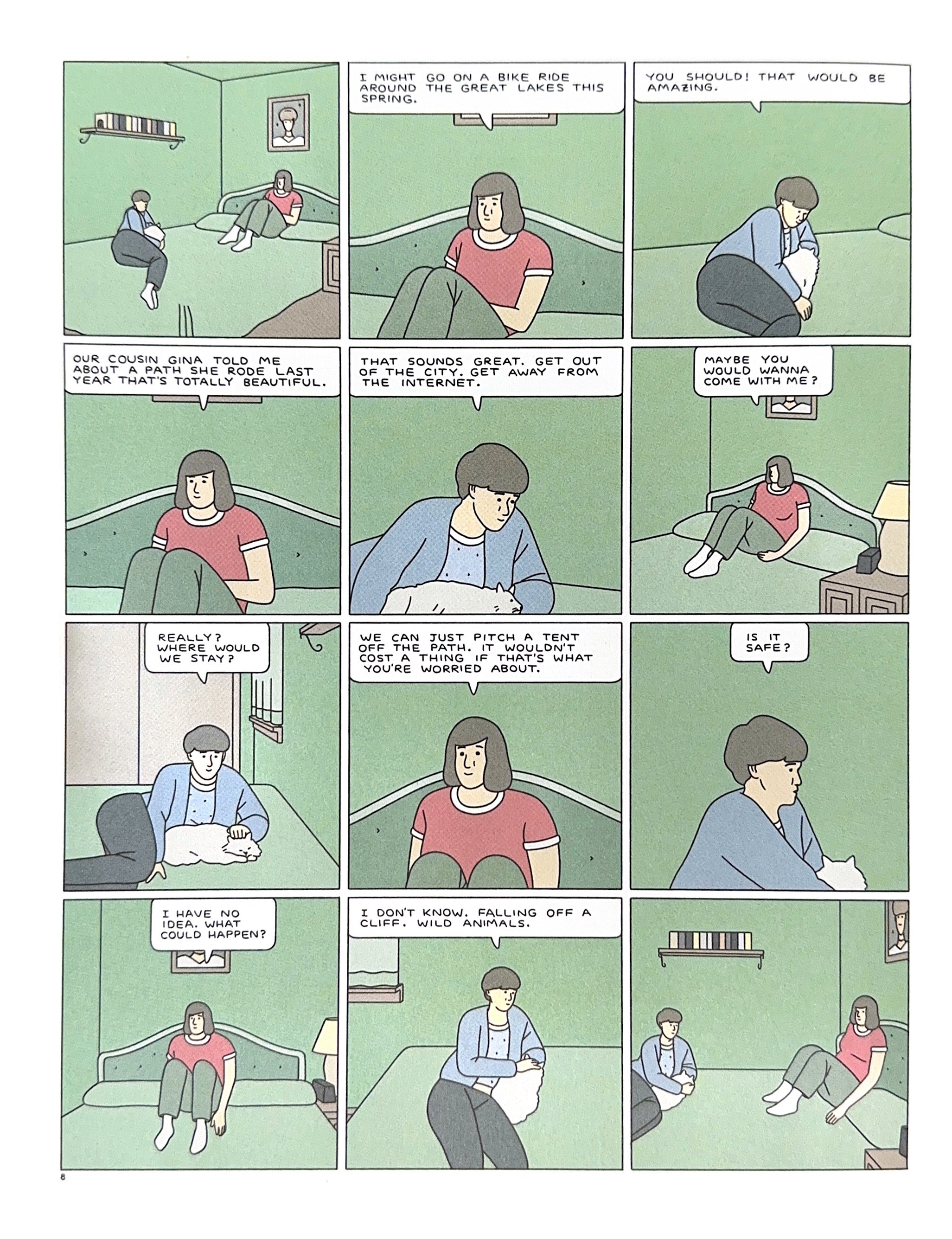
Freedom with a leash.
Lifting up the rock.
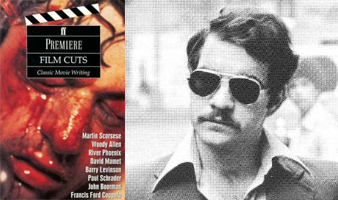
Kevin Jackson: Do you think that the film caught so many people's imaginations because of its strong sense of pent-up anger?
Paul Schrader: Yes. Godard once said that all great movies are successful for the wrong reasons, and there were a lot of wrong reasons why Taxi Driver was successful. The sheer violence of it really brought out the Times Square crowd.
But I have no real quarrel with that. I think that films can be extremely violent provided they understand the root causes of the violence. I think The Wild Bunch is a great film because it understands how deeply sick it is, and lets you know how sick it is; so it not only exploits your vicarious need for violence, but undermines it at the same time. I think films that analyse violence in that way are entirely justified.
KJ: But the violence in Travis is not held up for analysis in a sociological or psychological way, is it? The film seems to have distinct spiritual ambitions.
PS: Yes. Travis's is not a societally imposed loneliness or rage; it's an existential kind of rage. The book I reread just before sitting down to write the script was Sartre's Nausea, and if anything is the model for Taxi Driver, that would be it.
KJ: And there are references to Bresson as well - the line about thinking he has stomach cancer …
PS: And the scene where he makes the gun slide, which is sort of an allusion to Pickpocket. Originally Marty shot that scene so that it lasted ten minutes or more, dwelling on the sensuous mechanics of the process.
I think that what makes the film so vivid is what has made all my collaborations with Scorsese interesting, which is that we both have essentially the same moral background - a kind of closed-society Christian morality, though mine is rural and Protestant and his is urban and Catholic; mine is North European and his is South European. We can basically agree on everything in life, but we don't express it in the same way. I once described the film as the story of a Protestant kid from the snow country who wandered into a cathedral in the middle of New York City. That conflict of sensibilities is what makes it vibrate.
KJ: Presumably there was something about Travis's character that reflected an aspect of your own - the loneliness, the rage, the wish for a kind of purgation?
PS: At the time I wrote it I was very enamoured of guns, I was very suicidal, I was drinking heavily, I was obsessed with pornography in the way a lonely person is, and all those elements are upfront in the script. Obviously some aspects are heightened – the racism of the character, the sexism. Like every kind of underdog, Travis takes out his anger on the guy below him rather than the guy above. When they edited the film for TV I didn't so much mind having to lose the violence, but they had to remove huge sections of narration because of the virulent anti-black and anti-women characterizations. He appeared a very silly kind of guy because there was no edge to his anger; you just wanted to slap him in the face and say, 'Come on, come on.'
In fact, in the draft of the script that I sold, at the end all the people he kills are black. Marty and the Phillipses and everyone said, no, we just can't do this, it's an incitement to riot; but it was true to the character.
KJ: It's curious that he should be so racist, given that your first impulse towards fiction came about because of witnessing racial bullying.
PS: Well, that's really what art is about, you know. I think one is stung into progressive, positive behaviour by an awareness of the great lure of negative thought; it's the awareness of prejudice inside you that spurs you on to rid yourself and others of it. One of the things you should do in art is lift up the rock and look at those things inside you.
Sense obstacles no hi ha llibertat.
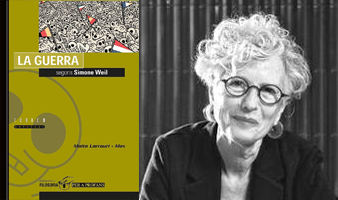
Tan sols la imaginació, que és font d'enganys, ens pot fer creure que l'obstacle ens impedeix ser Iliures. Cadascú de nosaltres, en el seu fur intern, tendeix a considerar-se el centre del món. I quan deixa que la imaginació el domine, el seu jo s'infla de forma desorbitada. Quin límit pot haver en el meu interior per a considerar-me la més llesta, la millor, la més guapa? Què pot impedir que en la meua imaginació anul·le tots els rivals possibles?
Quan se suprimeix realment un obstacle, tot i que s'estiga cometent un crim real, es tracta d'una supressió imaginària, perquè únicament la imaginació pot creure que sense això que anomena "obstacles a la seua Ilibertat" es puga arribar a ser lliure. Com si el vaixell pogués existir sense mar ni sense vent. A Simone Weil li agradava citar en les seues classes de filosofia la frase de Kant: «La coloma lleugera, quan en el seu vol Iliure sent la resistència de l'aire que solca, podria imaginar-se que encara ho faria millor en el buit».
Behind the lines.
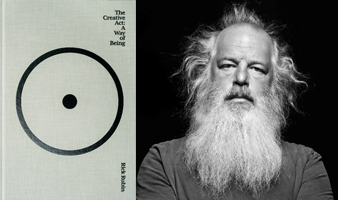
“An intention is more than a conscious purpose, it’s the congruence of that purpose. It requires an alignment of all aspects of one’s self. Of conscious thought and unconscious beliefs, of capabilities and commitment, of actions when working and not. It’s a state of living in harmonic agreement with oneself.
Not all projects take time, but they do take a lifetime. In calligraphy, the work is created in one movement of the brush. All the intention is in that single concentrated movement. The line is a reflection of the energy transfer from the artist’s being, including the entire history of their experiences, thoughts, and apprehensions, into the hand. The creative energy exists in the journey to the making, not in the act of constructing.”
(…)
“Intention is all there is. The work is just a reminder.”
Magic and logic.
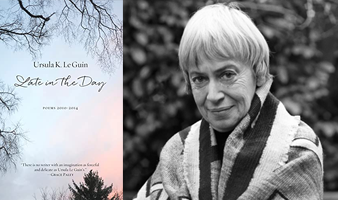
Science describes accurately from outside, poetry describes accurately from inside. Science explicates, poetry implicates. Both celebrate what they describe. We need the languages of both science and poetry to save us from merely stockpiling endless "information" that fails to inform our ignorance or our irresponsibility.
By replacing unfounded, willful opinion, science can increase moral sensitivity; by demonstrating and performing aesthetic order or beauty, poetry can move minds to the sense of fellowship that prevents careless usage and exploitation of our fellow beings, waste and cruelty.
Only a touch away.
That was some time ago. Early autumn, as she recalls, a year in the later 1980s. There were personal computers then, of a lumbering kind. And printers: the paper for them came with the pages joined together at top and bottom, and had holes along the sides, in perforated strips that you had to tear off. No cellphones though, which was why Nell hadn’t been able to text or call Tig and ask him where he was, and also what had caused the blood?
How much waiting we used to do, she thinks. Waiting without knowing. So many blanks we couldn’t fill in, so many mysteries. So little information. Now it’s the first decade of the twenty- first century, space-time is denser, it’s crowded, you can barely move because the air is so packed with this and that. You can’t get away from people: they’re in touch, they’re touching, they’re only a touch away. Is that better, or worse?

Atwood, M. (2023) Old babes in the wood: Stories. New York: Doubleday.
Capitalism in hyperdrive.
Matthew Crawford, in The World Beyond Your Head, contrasts the world of a "peon" airport lounge—saturated in advertising, filled with mesmerizing screens—with the quiet, ad-free world of a business lounge: "To engage in playful, inventive thinking, and possibly create wealth for oneself during those idle hours spent at an airport, requires silence.
But other people's minds, over in the peon lounge (or at the bus stop), can be treated as a resource—a standing reserve of purchasing power." Our digital technologies aren't politically neutral. The young person who cannot or will not be alone, converse with family, go out with friends, attend a lecture, or perform a job without monitoring her smartphone is an emblem of our political economy's leechlike attachment to our very bodies. Digital technology is capitalism in hyperdrive, injecting its logic of consumption and promotion, of monetization and efficiency, into every waking minute.
Reasons to Log Off
The girl who said she could never eat a second slice
of pizza my second year of college is doing really well.
My cousin posts a photo of a loaded gun. Have I ever
heard of the Second Amendment? Have I ever heard
of this new recipe? Cauliflower, a hint of lemon, some
chopped-up ginger root. Hey, do you want to lose
weight in only thirty minutes? Hey, can I have just a
moment of your time? Click here to receive a special
invitation. Click here if you want to believe in God.
Tomorrow there’s a Pride walk to support the right to
marry. One comment says: I will pray for your affliction.
Another says: I hope you trip, fall down, and die.
Swipe up to find my new lip filler. Scroll down to read
why these four girls were horribly afraid. Greg is
asking for your number. Greg wants to send a
big surprise.

Tiempos de latencia cultural negativa.
Según Faris Yakob, “latencia cultural” define la relación que hay entre el tiempo que lleva distribuir algo, y la cantidad de tiempo que tarda en tener efecto en una cultura concreta, y subsiguientemente la cantidad de tiempo que permanece relevante. Por ejemplo, cuando la música se distribuía en partituras (algo bastante laborioso de distribuir a gran escala), la música más escuchada permanecía vigente durante años. Tiempo después, la llegada del gramófono posibilitó una distribución más fácil de esa misma música, reduciendo notablemente el tiempo en que era considerada vigente. Y así sucesivamente con los distintos formatos hasta llegar a este momento presente donde la distribución es prácticamente instantánea a través de una conexión a internet. El tiempo que tienes que esperar para escuchar el nuevo álbum de Rosalía una vez que ha sido publicado es exactamente 0 en cualquier parte del mundo, si cuentas con una conexión a internet y acceso a cualquier servicio de música por streaming. Es por esa razón por la que los artistas de más éxito en reproducciones en Spotify no son aquellos que tienen una carrera más ilustre, sino quienes consiguen lanzar más canciones de forma recurrente para seguir en lo alto de los charts discográficos. Cuando la latencia cultural desciende a 0, la cultura se vuelve globalmente compartida, para bien y para mal. Todo lo que sucede es accesible prácticamente en el mismo momento en que ocurre, y esa cultura compartida por todas las personas conectadas a internet deja a veces en segundo término la cultura local de todos esos lugares donde esas personas residen.