Many are so angry or bewildered that they give up trying to understand what is going on. Many refuse to make a contribution to the emerging universal culture because at some point they decided once and for all that the world around them was incomprehensible, hostile, bloodthirsty, demented or diabolical. Many are tempted to see themselves as mere victims - victims of America, of the West, of capitalism or liberalism, of the new technologies, of the media, of change, and so on. It cannot be denied that such people really do feel wronged and suffer accordingly, but their reaction seems to me inappropriate. To imprison oneself in a victim mentality can do the injured party even more harm than the aggression itself. And this is as true of societies as of individuals. They huddle themselves away, they barricade themselves in, they try to ward off everything, they close their minds, they ruminate, they give up looking for anything new, they don't explore anymore, they don't make any more progress, they are afraid of the future, of the present and of everyone else.
Love thy product.
As he gets older he finds himself growing more and more crabby about language, about slack usage, falling standards. Falling in love, for instance. "We fell in love with the house," friends of his say. How can you fall in love with a house when the house cannot love you back, he wants to reply? Once you start falling in love with objects, what will be left of real love, love as it used to be? But no one seems to care. People fall in love with tapestries, with old cars.
He would like to dismiss it, this neolo-gism, this novelty, but he cannot. What if something is being revealed to him, some shift in the way people feel? What if the soul, which he had thought was made of timeless substance, is not timeless after all, but is in the process of growing lighter, less serious, accommodating itself to the times? What if falling in love with objects is no oddity any longer, for the soul- child's play, in fact? What if people around him do indeed feel, with the aid of their new, updated souls, in respect of real estate, the ache that he associates with falling in love? What, furthermore, if his own crabbiness expresses not what he tells himself it does- an old-fashioned fastidiousness about language- but on the contrary (he looks the ¡dea squarely in the face) envy, the envy of a man grown too old, too rigid, to ever fall in love again?
Götterdämmerung, year 15.
Until the age of thirteen, when I was sent from Bombay to boarding school in faraway England, I was a much more homogeneous self than I am now. I had lived in the same house in the same city all my life, in the bosom of my family, among people whose customs I knew without having to do anything as conscious as ‘know’ them, speaking the languages that people spoke in that city, in that country, in that time. These are the four roots of the self: language, place, community, custom. But in our age, the great age of migration, many of us have at least one of these roots pulled up. We move away from the place we know, away from the community that knows us, to a place where the customs are different and, perhaps, the most commonly spoken language is one we don’t know, or if we speak it, we speak it badly and cannot express in it the subjects of what we think and who we are. In my case, I had been brought up multilingually, so my English was fine, it was the one root still planted in the earth, but the others had all gone. In Norse mythology, the World Tree, the great ash Yggdrasil, has three roots. One falls into the Pool of Knowledge near Valhalla, the pool from which odin drinks, but the others are slowly being destroyed, one gnawed by a monster called the Nidhogg, the other being gradually burned away by the flames of the fire region, Muspelheim. When these two roots are destroyed, the tree falls, and the Götterdämmerung begins. The migrant too is at first a tree standing without roots, trying not to fall. Migration is an existential act, stripping us of our defences, mercilessly exposing us to a world that understands us badly, if at all: as if the earth were stripped of its atmosphere and the sun were to bear down upon it in all its pitiless force.
Wor(l)d.
Every universe, our own included, begins in conversation. Every golem in the history of the world, from Rabbi Hanina's delectable goat to the river-clay Frankenstein of Rabbi Judah Loew ben Bezalel, was summoned into existence through language, through murmuring, recital, and kabbalistic chitchat -- was, literally, talked into life.
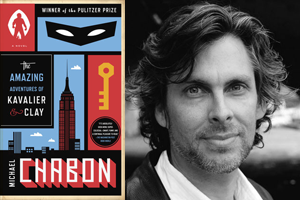
On the conclusion of species.
El professor Jerison ha estudiat en profunditat l'evolució del cervell humà, i s'ha concentrat, sobretot, en els suposats avantatges d'un cervell molt desenvolupat en relació amb la grandària i el pes corporal. Amb tot, els neuròlegs afirmen que la depressió és una malaltia mental que només afecta els éssers que tenen la capacitat de reflexionar sobre si mateixos i de pensar en el seu passat i el seu futur. És a dir, que només es poden deprimir els humans perquè tenen un cervell gros. En aquest sentit, patim potser un excés de cervell?
Segons el famós psiquiatre britànic Tim Crow, hem de buscar l'origen de l'esquizofrènia en l'evolució dels cervells de majors dimensions. Crow afirma que l'esquizofrènia és el preu que paga l'Homo sapiens per tenir la capacitat del llenguatge. Aquesta idea és sens dubte suggeridora, però per a Jerison l'aspecte interessant és l'engrandiment del cervell, que suposa un nou salt evolutiu, d'una magnitud comparable al que va haver-hi fa 200 milions d'anys, quan en passar de rèptils a mamífers els animals van necessitar l'oïda i l'olfacte, a més de la vista.
«En l'evolució de tots els llinatges d'homínids, de l'australopitec en endavant, en un moment determinat va sorgir la necessitat de posseir un "mapa" més precís del territori que ocupaven, constituït ara per uns quants quilòmetres quadrats, i no solament uns quants metres quadrats, com en el cas del rèptil». Aquesta necessitat d'informació es troba en l'origen de l'engrandiment del cervell humà. Segons Jerison, això degué succeir quan el cervell humà tenia la grandària del d'un ximpanzé o una mica més, i l'evolució cap al llenguatge va venir de la necessitat de conèixer, reconèixer, un territori més extens. I del coneixement, i no pas de la grandària, ve la depressió. Perquè, com afirma Jerison no sense una certa ironia, «quan coneixem millor el món també ens coneixem millor a nosaltres amteixos i quan et coneixes a tu mateix, és molt probable que no t'agradis tant». Així, per a ell, l'esquizofrènia, la depressió, fins i tot els desordres bipolars podrien tenir l'origen en el millor coneixement de nosaltres mateixos. Un fet molt complex i en el qual influeixen multiples factors, entre els quals, saber que morirem, la renúncia a la immortalitat que va comportar el canvi del sistema de reproducció. La consciència de la mort ha significat un gran impuls en l'evolució. A excepció de l'home, no hi ha cap animal que la tingui. De manera que, ja ho veieu, quan parlem d'intel·ligència no tot són avantatges.
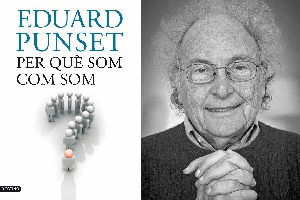
Eduard Punset (2008) Per què som com som
Read between the lines.
The Rosetta Stone survived unread through 2,000 years of further foreign occupations. After the Greeks came Romans, Byzantines, Persians, Muslim Arabs and Otoman Turks – all had stretches of rule in Egypt. At some point the stone was moved from the temple at Sais in the Nile Delta, where it was first erected, to the town of el-Rashid, now known as Rosetta, about forty miles away.
Then, in 1798, Napoleon arrived. The French invasion was of course primarily military (they wanted to cut the British route to India). But with the French army came scholars. Soldiers rebuilding fortifications in Rosetta dug up the stone – and accompanying experts knew immediately that they had found something of great significance.
The French seized the stone as a trophy of war, but it never made it back to Paris. With his fleet destroyed by Nelson at the Battle of the Nile, Napoleon himself returned to France, leaving the French army behind. In 1801 the French surrendered to the British and Egyptian generals. The terms of the Treaty of Alexandria included the handing over of antiquities, among them the Rosetta Stone.
Most books will tell you, as I just have, that there are three languages on the Rosetta Stone, but if you look on the broken side you can see a fourth. There, painted in English, you can read: CAPTURED IN EGYPT BY THE BRITISH ARMY IN 1801 (and elsewhere) PRESENTED BY KING GEORGE III. Nothing could make it clearer that while the text on the front of the stone is about the first European empire in Africa, Alexander the Great's, the finding of the stone stands at the beginning of another European adventure: the bitter rivalry between Britain and France for dominance in the Middle East and Africa, which continued from the time of Napoleon until the Second World War. I asked the Egyptian writer Ahdaf Soueif for his view of this history:
"This stone makes me think of how often Egypt has been the theatre of other people's battles. It's one of the earliest objects through which you can trace Western colonial interest in Egypt. The French and the British argued over it; nobody seems to have considered that it belonged to neither of them. Egypt's foreign rulers, from the Romans to the Turks to the British, have always made free with Egypt's heritage. Egypt had foreign rulers for 2,000 years, and in 1952 much was made of the fact that Nasser was the first Egyptian ruler since the pharaohs."
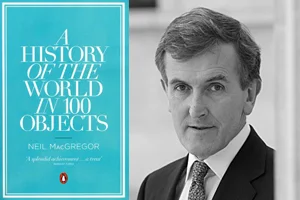
MacGregor, Neil (2010) A History of the World in 100 Objects.