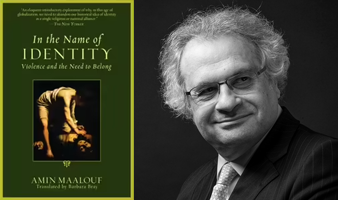
Many are so angry or bewildered that they give up trying to understand what is going on. Many refuse to make a contribution to the emerging universal culture because at some point they decided once and for all that the world around them was incomprehensible, hostile, bloodthirsty, demented or diabolical. Many are tempted to see themselves as mere victims - victims of America, of the West, of capitalism or liberalism, of the new technologies, of the media, of change, and so on. It cannot be denied that such people really do feel wronged and suffer accordingly, but their reaction seems to me inappropriate. To imprison oneself in a victim mentality can do the injured party even more harm than the aggression itself. And this is as true of societies as of individuals. They huddle themselves away, they barricade themselves in, they try to ward off everything, they close their minds, they ruminate, they give up looking for anything new, they don't explore anymore, they don't make any more progress, they are afraid of the future, of the present and of everyone else.
Love thy product.
As he gets older he finds himself growing more and more crabby about language, about slack usage, falling standards. Falling in love, for instance. "We fell in love with the house," friends of his say. How can you fall in love with a house when the house cannot love you back, he wants to reply? Once you start falling in love with objects, what will be left of real love, love as it used to be? But no one seems to care. People fall in love with tapestries, with old cars.
He would like to dismiss it, this neolo-gism, this novelty, but he cannot. What if something is being revealed to him, some shift in the way people feel? What if the soul, which he had thought was made of timeless substance, is not timeless after all, but is in the process of growing lighter, less serious, accommodating itself to the times? What if falling in love with objects is no oddity any longer, for the soul- child's play, in fact? What if people around him do indeed feel, with the aid of their new, updated souls, in respect of real estate, the ache that he associates with falling in love? What, furthermore, if his own crabbiness expresses not what he tells himself it does- an old-fashioned fastidiousness about language- but on the contrary (he looks the ¡dea squarely in the face) envy, the envy of a man grown too old, too rigid, to ever fall in love again?

Magic and logic.
Science describes accurately from outside, poetry describes accurately from inside. Science explicates, poetry implicates. Both celebrate what they describe. We need the languages of both science and poetry to save us from merely stockpiling endless "information" that fails to inform our ignorance or our irresponsibility.
By replacing unfounded, willful opinion, science can increase moral sensitivity; by demonstrating and performing aesthetic order or beauty, poetry can move minds to the sense of fellowship that prevents careless usage and exploitation of our fellow beings, waste and cruelty.