Lifting up the rock.

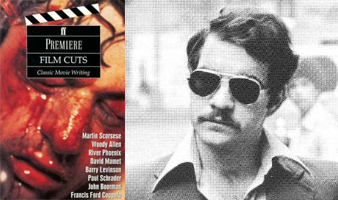
Kevin Jackson: Do you think that the film caught so many people's imaginations because of its strong sense of pent-up anger?

Paul Schrader: Yes. Godard once said that all great movies are successful for the wrong reasons, and there were a lot of wrong reasons why Taxi Driver was successful. The sheer violence of it really brought out the Times Square crowd.

But I have no real quarrel with that. I think that films can be extremely violent provided they understand the root causes of the violence. I think The Wild Bunch is a great film because it understands how deeply sick it is, and lets you know how sick it is; so it not only exploits your vicarious need for violence, but undermines it at the same time. I think films that analyse violence in that way are entirely justified.

KJ: But the violence in Travis is not held up for analysis in a sociological or psychological way, is it? The film seems to have distinct spiritual ambitions.

PS: Yes. Travis's is not a societally imposed loneliness or rage; it's an existential kind of rage. The book I reread just before sitting down to write the script was Sartre's Nausea, and if anything is the model for Taxi Driver, that would be it.

KJ: And there are references to Bresson as well - the line about thinking he has stomach cancer …

PS: And the scene where he makes the gun slide, which is sort of an allusion to Pickpocket. Originally Marty shot that scene so that it lasted ten minutes or more, dwelling on the sensuous mechanics of the process.

I think that what makes the film so vivid is what has made all my collaborations with Scorsese interesting, which is that we both have essentially the same moral background - a kind of closed-society Christian morality, though mine is rural and Protestant and his is urban and Catholic; mine is North European and his is South European. We can basically agree on everything in life, but we don't express it in the same way. I once described the film as the story of a Protestant kid from the snow country who wandered into a cathedral in the middle of New York City. That conflict of sensibilities is what makes it vibrate.

KJ: Presumably there was something about Travis's character that reflected an aspect of your own - the loneliness, the rage, the wish for a kind of purgation?

PS: At the time I wrote it I was very enamoured of guns, I was very suicidal, I was drinking heavily, I was obsessed with pornography in the way a lonely person is, and all those elements are upfront in the script. Obviously some aspects are heightened – the racism of the character, the sexism. Like every kind of underdog, Travis takes out his anger on the guy below him rather than the guy above. When they edited the film for TV I didn't so much mind having to lose the violence, but they had to remove huge sections of narration because of the virulent anti-black and anti-women characterizations. He appeared a very silly kind of guy because there was no edge to his anger; you just wanted to slap him in the face and say, 'Come on, come on.'

In fact, in the draft of the script that I sold, at the end all the people he kills are black. Marty and the Phillipses and everyone said, no, we just can't do this, it's an incitement to riot; but it was true to the character.

KJ: It's curious that he should be so racist, given that your first impulse towards fiction came about because of witnessing racial bullying.

PS: Well, that's really what art is about, you know. I think one is stung into progressive, positive behaviour by an awareness of the great lure of negative thought; it's the awareness of prejudice inside you that spurs you on to rid yourself and others of it. One of the things you should do in art is lift up the rock and look at those things inside you.
Behind the lines.

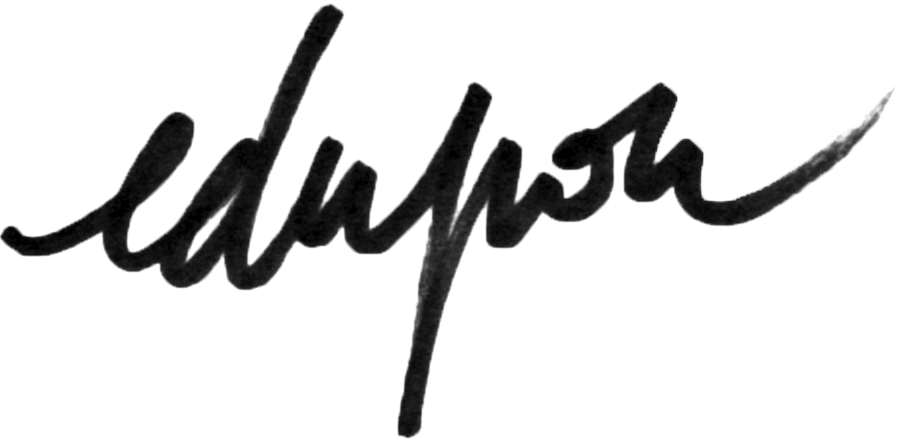
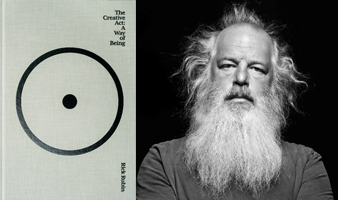
“An intention is more than a conscious purpose, it’s the congruence of that purpose. It requires an alignment of all aspects of one’s self. Of conscious thought and unconscious beliefs, of capabilities and commitment, of actions when working and not. It’s a state of living in harmonic agreement with oneself.

Not all projects take time, but they do take a lifetime. In calligraphy, the work is created in one movement of the brush. All the intention is in that single concentrated movement. The line is a reflection of the energy transfer from the artist’s being, including the entire history of their experiences, thoughts, and apprehensions, into the hand. The creative energy exists in the journey to the making, not in the act of constructing.”

(…)

“Intention is all there is. The work is just a reminder.”

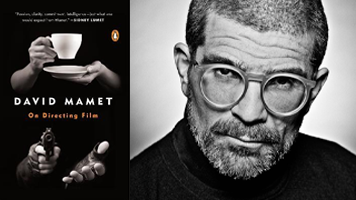
Edit yourself out.

There is a wonderful book called The Profession of the Stage Director, by Georgi Tovstonogov, who writes that a director may fall into one of the deepest pits by rushing immediately to visual or pictorial solutions.

This statement influenced and aided me greatly in my career as a stage director; and, subsequently, in my work as a screenwriter. If one understands what the scene means, and stages that, Mr. Tovstonogov was saying, one will be doing one’s job for both the author and the viewer. If one rushes, first, into a pretty, or pictorial, or even descriptive staging, one may be hard-pressed to integrate that staging into the logical progression of the play. And, further, while so hard-pressed, one while undoubtedly become wedded to its eventual inclusion, to the detriment of the piece as a whole.

This concept as also stated by Hemingway as, “Write the story, take out all the good lines, and see if it still works.”

My experience as a director, and as a dramatist, is this: the piece is moving in proposition to how much the author can leave out.

A good writer gets better only by learning to cut, to remove the ornamental, the descriptive, the narrative, and especially the deeply felt and meaningful. What remains? The story remains. What is the story? The story is the essential progression of incidents that occur to the hero in pursuit of his one goal.

The point, as Aristotle told us, is what happens to the hero … not what happens to the writer.

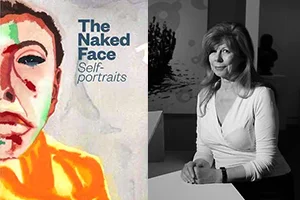
Private. Please come in.

The flourishing of internet applications such as Facebook, Twitter and YouTube and the pervasion of media and celebrity culture has brought a corresponding escalation of the theatrical conditions of everyday life. Self-branding has become mandatory, not just for corporations but for individuals seeking visibility in the public arena. These developments have drastically increased the contrast between private and public. In 1959 the sociologist Erving Goffman published his influential theory for human behavior governed by a theatrical metaphor in which everyday social life was enacted as if on stage in front of an audience, while another self is backstage. This view of the split between public and private protects the vulnerable self yet dooms it to secrecy, hiding behind a performing mask.

There has been continuing debate over the paradoxical exposure of the private sphere, over what Roland Barthes described as ‘the creation of a new social value, which is the publicity of the private’. Concern about the effects of the changing social balance became a recurrent theme for twentieth-century writers such as Hannah Arendt, Jürgen Habermas and Richard Sennett, who believed that the shared public realm was undermined by the increased clamour for attention by private lives.

Exposure is often thought to be a desirable function of self-portraits. But self-portraits also work by concealment, a technique pursued ingeniously by Rembrandt through lighting effects that obscured his face or elaborate costume changes that multiplied his identity. In the twentieth century artists have gone further, replacing the notion of hidden private depths with that of a camouflage or a disappearing self. Most notably Andy Warhol overrode the idea of privacy in favour of an aesthetic of fame. After the hyperactive glamour of his images, depth became less tenable; identity is defined in terms of shifting surface appearances, a development corresponding with the abandonment of a singular model for human identity, characteristic of later twentieth-century art and philosophy.

Yet this emphasis on surface and the underlying disconnect between self and society, public and private, enabled an expansion of selves within societal norms. The performance of self gave cathartic expression to otherwise repressed emotions and created new models for human identity that have fed back into the diversity of human culture.