Lifting up the rock.

Kevin Jackson: Do you think that the film caught so many people's imaginations because of its strong sense of pent-up anger?

Paul Schrader: Yes. Godard once said that all great movies are successful for the wrong reasons, and there were a lot of wrong reasons why Taxi Driver was successful. The sheer violence of it really brought out the Times Square crowd.

But I have no real quarrel with that. I think that films can be extremely violent provided they understand the root causes of the violence. I think The Wild Bunch is a great film because it understands how deeply sick it is, and lets you know how sick it is; so it not only exploits your vicarious need for violence, but undermines it at the same time. I think films that analyse violence in that way are entirely justified.

KJ: But the violence in Travis is not held up for analysis in a sociological or psychological way, is it? The film seems to have distinct spiritual ambitions.

PS: Yes. Travis's is not a societally imposed loneliness or rage; it's an existential kind of rage. The book I reread just before sitting down to write the script was Sartre's Nausea, and if anything is the model for Taxi Driver, that would be it.

KJ: And there are references to Bresson as well - the line about thinking he has stomach cancer …

PS: And the scene where he makes the gun slide, which is sort of an allusion to Pickpocket. Originally Marty shot that scene so that it lasted ten minutes or more, dwelling on the sensuous mechanics of the process.

I think that what makes the film so vivid is what has made all my collaborations with Scorsese interesting, which is that we both have essentially the same moral background - a kind of closed-society Christian morality, though mine is rural and Protestant and his is urban and Catholic; mine is North European and his is South European. We can basically agree on everything in life, but we don't express it in the same way. I once described the film as the story of a Protestant kid from the snow country who wandered into a cathedral in the middle of New York City. That conflict of sensibilities is what makes it vibrate.

KJ: Presumably there was something about Travis's character that reflected an aspect of your own - the loneliness, the rage, the wish for a kind of purgation?

PS: At the time I wrote it I was very enamoured of guns, I was very suicidal, I was drinking heavily, I was obsessed with pornography in the way a lonely person is, and all those elements are upfront in the script. Obviously some aspects are heightened – the racism of the character, the sexism. Like every kind of underdog, Travis takes out his anger on the guy below him rather than the guy above. When they edited the film for TV I didn't so much mind having to lose the violence, but they had to remove huge sections of narration because of the virulent anti-black and anti-women characterizations. He appeared a very silly kind of guy because there was no edge to his anger; you just wanted to slap him in the face and say, 'Come on, come on.'

In fact, in the draft of the script that I sold, at the end all the people he kills are black. Marty and the Phillipses and everyone said, no, we just can't do this, it's an incitement to riot; but it was true to the character.

KJ: It's curious that he should be so racist, given that your first impulse towards fiction came about because of witnessing racial bullying.

PS: Well, that's really what art is about, you know. I think one is stung into progressive, positive behaviour by an awareness of the great lure of negative thought; it's the awareness of prejudice inside you that spurs you on to rid yourself and others of it. One of the things you should do in art is lift up the rock and look at those things inside you.
Behind the lines.

“An intention is more than a conscious purpose, it’s the congruence of that purpose. It requires an alignment of all aspects of one’s self. Of conscious thought and unconscious beliefs, of capabilities and commitment, of actions when working and not. It’s a state of living in harmonic agreement with oneself.

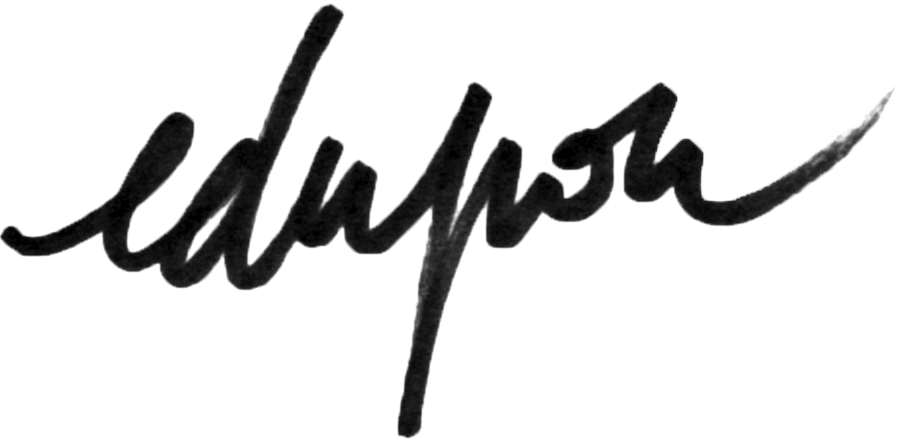
Not all projects take time, but they do take a lifetime. In calligraphy, the work is created in one movement of the brush. All the intention is in that single concentrated movement. The line is a reflection of the energy transfer from the artist’s being, including the entire history of their experiences, thoughts, and apprehensions, into the hand. The creative energy exists in the journey to the making, not in the act of constructing.”

(…)

“Intention is all there is. The work is just a reminder.”

This is the story.

This is the Story

This is the beginning. Here is where the story begins. The character is introduced—we meet the character, her, we’ll call her a her. We begin to learn about her background, or if not so much as that, then her habits. We see her doing what she does every day, in medias res. What she does now foreshadows what will happen to her later. She does the same thing every day, and then something changes. It’s not much, but it’s something, and so it is a story.

This is the middle. The thing that happens, the different thing, happens here. She was safe in her assumptions, but this thing occurs, or something occurs to her, a realization, and she can no longer go on thinking what she thought. Perhaps it has to do with him, someone important to her, someone whom perhaps she loves. And yet he is also her antagonist, the one who stands in the way of what must happen for her to be, if not happy, then consummated, fulfilled. This is when we meet him, when we come to understand the obstacle he presents, when we are allowed to wonder how she will, how she can, proceed.

This is the ending. At this point the situation comes to its crisis. Events build to a climax. We have been expecting this: a conflict, and, through its resolution, change. But then something happens that we had not -expected, a surprise, a twist, which nonetheless feels, now that it has happened, -inevitable. They were at odds in a way that had become familiar, and now we learn that their goals are not so far apart, that perhaps what had seemed a conflict is in fact its own resolution.

Finally there is this, something after the ending, after the climax: the result. It is not at all what we expected. Perhaps one of them—him—is left behind in some way by the events that have transpired. He is lost, and she must suffer a kind of grief, as must he, for he is lost but must go on, as she must, too. So the story comes to its conclusion, open to interpretation, and we find that the only way out, for us as well as for them, is this lyrical finale, a few words, a bit of poetry. This last sentence is beautiful, as though beauty is itself the justification, though it isn’t—not quite.

ct.png

I'll drink to that.

The idea that creative endeavor and mind-altering substances are entwined is one of the great pop-intellectual myths of our time. The four twentieth-century writers whose work is most responsible for it are probably Hemingway, Fitzgerald, Sherwood Anderson, and the poet Dylan Thomas. They are the writers who largely formed our vision of an existential English-speaking wasteland where people have been cut off from one another and live in an atmosphere of emotional strangulation and despair. These concepts are very familiar to most alcoholics; the common reaction to them is amusement. Substance-abusing writers are just substance abusers—common garden-variety drunks and druggies, in other words. Any claims that the drugs and alcohol are necessary to dull a finer sensibility are just the usual self-serving bullshit. I’ve heard alcoholic snowplow drivers make the same claim, that they drink to still the demons. It doesn’t matter if you’re James Jones, John Cheever, or a stewbum snoozing in Penn Station; for an addict, the right to the drink or drug of choice must be preserved at all costs. Hemingway and Fitzgerald didn’t drink because they were creative, alienated, or morally weak. They drank because it’s what alkies are wired up to do. Creative people probably do run a greater risk of alcoholism and addiction than those in some other jobs, but so what? We all look pretty much the same when we’re puking in the gutter.

Laying down the pen

Every sentence has a truth waiting at the end of it and the writer learns how to know it when he finally gets there. On one level this truth is the swing of the sentence, the beat and the poise, but down deeper it's the integrity of the writer as he matches with the language. I've always seen myself in sentences. I begin to recognize myself, word by word, as I work through a sentence. The language of my books has shaped me as a man. There's a moral force in a sentence when it comes out right. It speaks the writer's will to live. The deeper I become entangled in the process of getting a sentence right in its syllables and rhythms, the more I learn about myself. I've worked the sentences of this book long and hard but not long and hard enough because I no longer see myself in the language. The running picture is gone, the code of being that pushed me on and made me trust the world. This book and these years have worn me down. Forgotten my own first rule. Keep it simple, Bill. I've lacked courage and perseverance. Exhausted. Sick of struggling. I've let good enough be good enough. This is someone else's book. It feels all forced and wrong. I've tricked myself into going on, into believing. Can you understand how that can happen? I'm sitting on a book that's dead.

Mao2.jpeg