Brand Africa.

I think I have the same feeling toward the word “brand” as I do toward the word “Africa.” “Africa” is an incredibly problematic word for me. It’s a word used with great frequency to describe an intricately complex area made up of people, countries, and cultures that have no more in common than we do with Uzbekistan.

But because it’s a convenient word, and a well-known word, and a geographically defined continent, we use that word to sum up and generalize everyone who lives within the continent. In a way, it really is unfair. But we’ve inherited that framework, and I think we’d be better off if we banned the word entirely.

Getting back to “brand,” the word has similar implications. Yes, it’s of much smaller consequence—it’s a trivial example of the same problem, but it is a problem. The word gets thrown around so recklessly that I wonder whether we wouldn’t be better off setting it aside. Instead, if we could use more specific words that zero in on what we’re really interested in discussing, it would help the conversation.
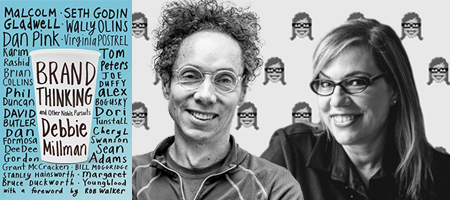
Millman, D. (2013) Brand thinking and other noble pursuits. New York: Allworth Press.
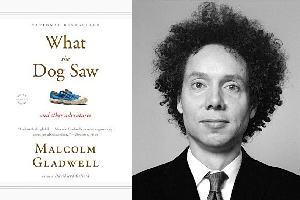
Revolution for sale

If a revolution is not accessible, tangible, and replicable, how on earth can it be a revolution? "Because I'm worth it" and "Does she or doesn't she?" were powerful, then precisely because they were commercials, for commercials come with products attached, and products offer something that songs and poems and political movements and radical ideologies do not, which is an immediate and affordable means of transformation. "We discovered in the first few years of 'Because I'm worth it' campaign that we were getting more than our fair share of new users to the category - women who were just beginning to color their hair," Sennott told me. "And within that group we were getting those undergoing life changes, which usually meant divorce. We had far more women who were getting divorced than Clairol had. Their children had grown, and something had happened, and they were reinventing themselves." They felt different, and Ilon Specht gave them the means to look different - and do we really know which came first, or even how to separate the two? They changed their lives and their hair. But it wasn't one thing or the other. It was both.

MG.png