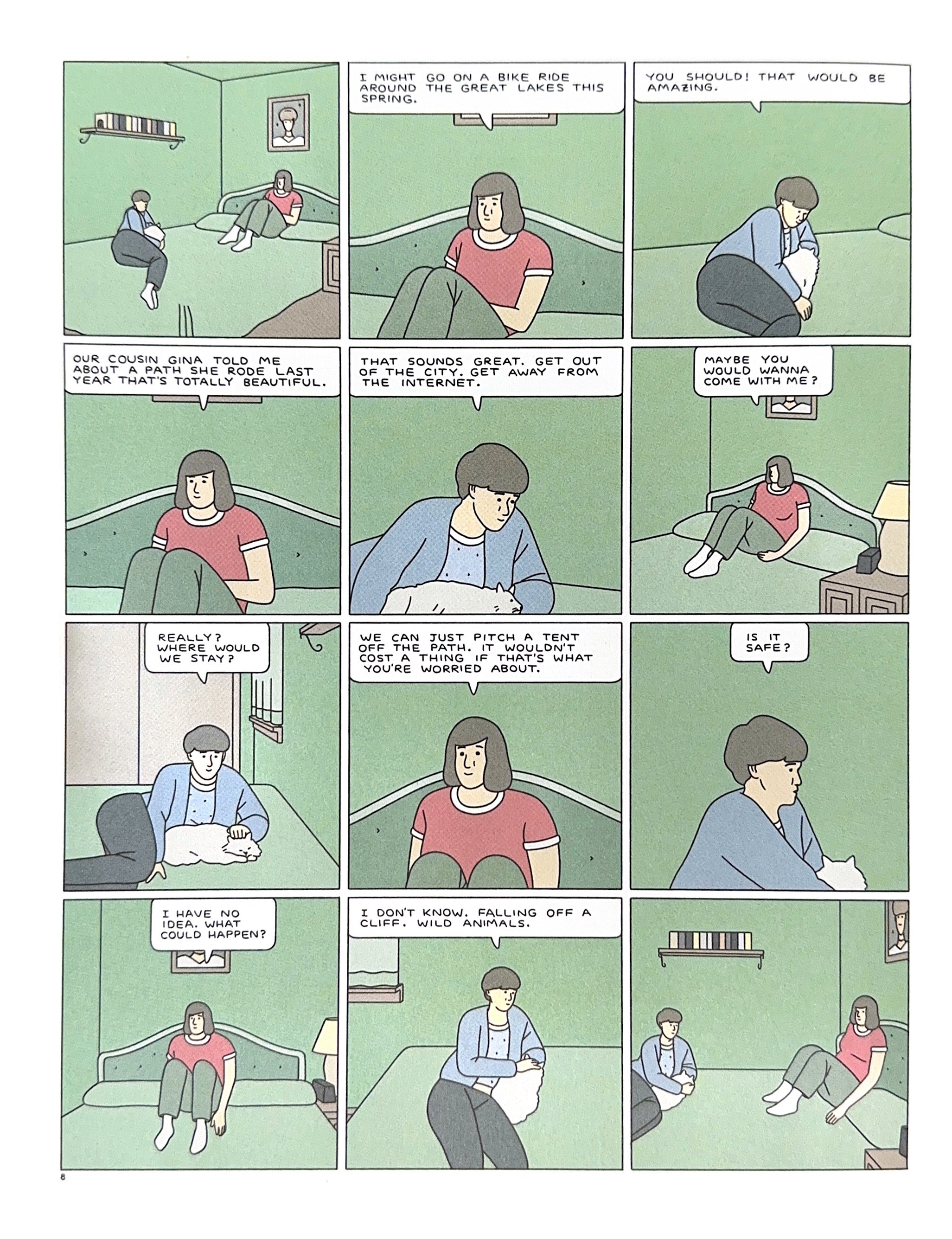
Love thy product.

As he gets older he finds himself growing more and more crabby about language, about slack usage, falling standards. Falling in love, for instance. "We fell in love with the house," friends of his say. How can you fall in love with a house when the house cannot love you back, he wants to reply? Once you start falling in love with objects, what will be left of real love, love as it used to be? But no one seems to care. People fall in love with tapestries, with old cars.

He would like to dismiss it, this neolo-gism, this novelty, but he cannot. What if something is being revealed to him, some shift in the way people feel? What if the soul, which he had thought was made of timeless substance, is not timeless after all, but is in the process of growing lighter, less serious, accommodating itself to the times? What if falling in love with objects is no oddity any longer, for the soul- child's play, in fact? What if people around him do indeed feel, with the aid of their new, updated souls, in respect of real estate, the ache that he associates with falling in love? What, furthermore, if his own crabbiness expresses not what he tells himself it does- an old-fashioned fastidiousness about language- but on the contrary (he looks the ¡dea squarely in the face) envy, the envy of a man grown too old, too rigid, to ever fall in love again?

Only a touch away.

That was some time ago. Early autumn, as she recalls, a year in the later 1980s. There were personal computers then, of a lumbering kind. And printers: the paper for them came with the pages joined together at top and bottom, and had holes along the sides, in perforated strips that you had to tear off. No cellphones though, which was why Nell hadn’t been able to text or call Tig and ask him where he was, and also what had caused the blood?

How much waiting we used to do, she thinks. Waiting without knowing. So many blanks we couldn’t fill in, so many mysteries. So little information. Now it’s the first decade of the twenty- first century, space-time is denser, it’s crowded, you can barely move because the air is so packed with this and that. You can’t get away from people: they’re in touch, they’re touching, they’re only a touch away. Is that better, or worse?

Atwood, M. (2023) Old babes in the wood: Stories. New York: Doubleday.

The loneliness of the LinkedIn user.

La virtud es un rayo de belleza celestial,
un don del alma, en la que adquiere su valor.
Ésta no teme al ultraje temporal, es más, el hombre alcanza con los años mayor esplendor.
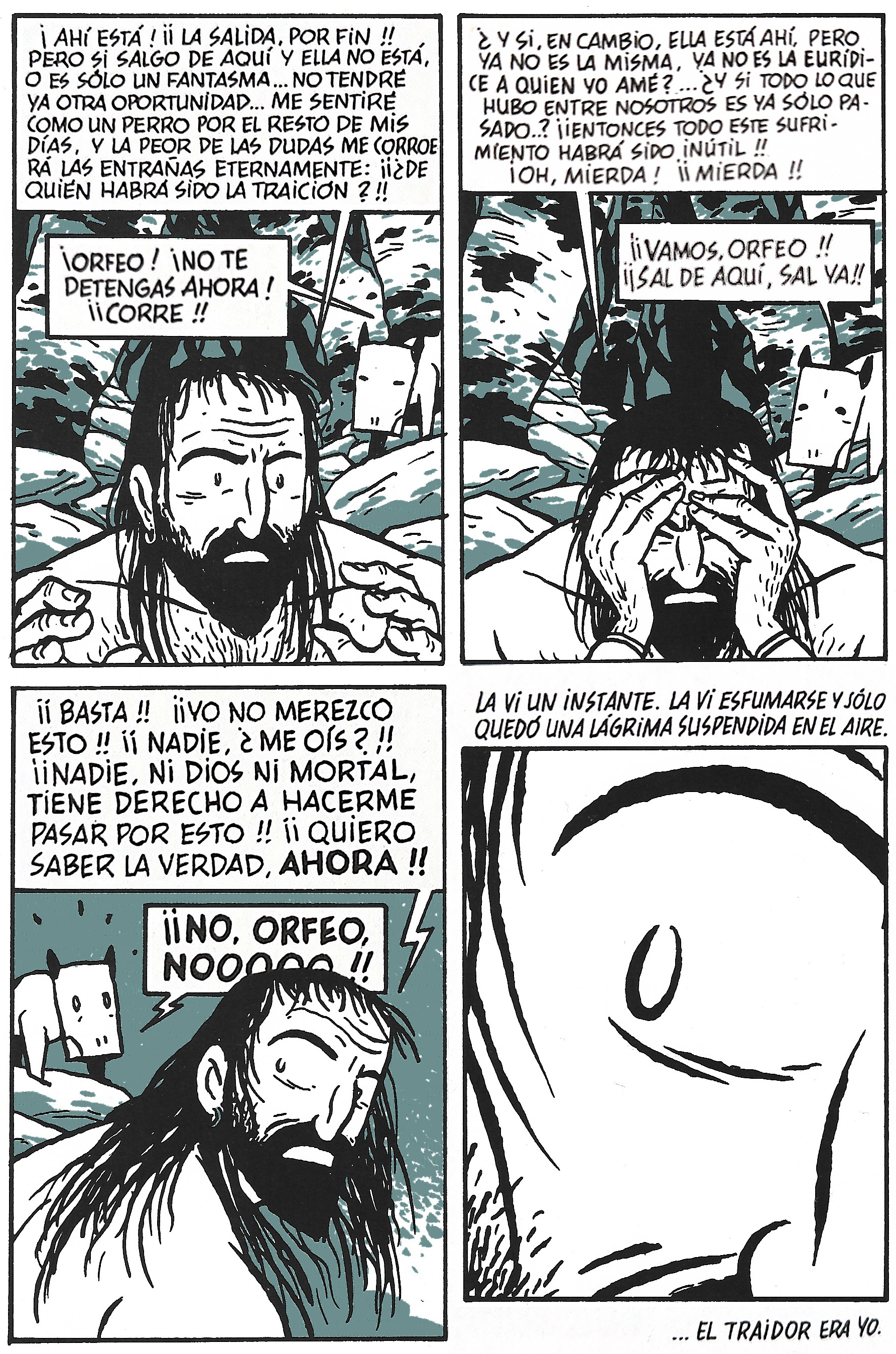
Orfeo venció al infierno y luego fue vencido por sus deseos.
Digno sea de gloria eterna sólo aquel que a sí mismo se venza.

Max (2017) Órficas. Madrid: Nordica.

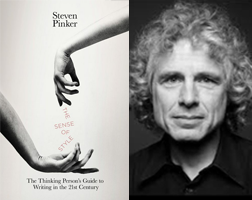
The Curse of Knowledge.

“Education is an admirable thing,” wrote Oscar Wilde, “but it is well to remember from time to time that nothing that is worth knowing can be taught.

(…)

The better you know something, the less you remember about how hard it was to learn.

(…)

How can we lift the curse of knowledge? The traditional advice—always remember the reader over your shoulder—is not as effective as you might think. The problem is that just trying harder to put yourself in someone else’s shoes doesn’t make you a whole lot more accurate in figuring out what that person knows. When you’ve learned something so well that you forget that other people may not know it, you also forget to check whether they know it. Several studies have shown that people are not easily disabused of their curse of knowledge, even when they are told to keep the reader in mind, to remember what it was like to learn something, or to ignore what they know.

But imagining the reader over your shoulder is a start. Occasionally people do learn to discount their knowledge when they are shown how it biases their judgments, and if you’ve read to this point, perhaps you will be receptive to the warning. So for what it’s worth: Hey, I’m talking to you. Your readers know a lot less about your subject than you think they do, and unless you keep track of what you know that they don’t, you are guaranteed to confuse them.

A better way to exorcise the curse of knowledge is to be aware of specific pitfalls that it sets in your path. There’s one that everyone is at least vaguely aware of: the use of jargon, abbreviations, and technical vocabulary. Every human pastime—music, cooking, sports, art, theoretical physics—develops an argot to spare its enthusiasts from having to say or type a long-winded description every time they refer to a familiar concept in each other’s company. The problem is that as we become proficient at our job or hobby we come to use these catchwords so often that they flow out of our fingers automatically, and we forget that our readers may not be members of the clubhouse in which we learned them.

Obviously writers cannot avoid abbreviations and technical terms altogether. Shorthand terms are unobjectionable, indeed indispensable, when a term has become entrenched in the community one is writing for. Biologists needn’t define transcription factor or spell out mRNA every time they refer to those things, and many technical terms become so common and are so useful that they eventually cross over into everyday parlance, like cloning, gene, and DNA. But the curse of knowledge ensures that most writers will overestimate how standard a term has become and how wide the community is that has learned it.

A surprising amount of jargon can simply be banished and no one will be the worse for it. A scientist who replaces murine model with rats and mice will use up no more space on the page and be no less scientific. Philosophers are every bit as rigorous when they put away Latin expressions like ceteris paribus, inter alia, and simpliciter and write in English instead: other things being equal, among other things, and in and of itself. And though nonlawyers might assume that the language of contracts, such as the party of the first part, must serve some legal purpose, most of it is superfluous. As Adam Freedman points out in his book on legalese, “What distinguishes legal boilerplate is its combination of archaic terminology and frenzied verbosity, as though it were written by a medieval scribe on crack.

Abbreviations are tempting to thoughtless writers because they can save a few keystrokes every time they have to use the term. The writers forget that the few seconds they add to their own lives come at the cost of many minutes stolen from the lives of their readers. I stare at a table of numbers whose columns are labeled DA DN SA SN, and have to flip back and scan for the explanation: Dissimilar Affirmative, Dissimilar Negative, Similar Affirmative, Similar Negative. Each abbreviation is surrounded by many inches of white space. What possible reason could there have been for the author not to spell them out? Abbreviations that are coined for a single piece of writing are best avoided altogether, to spare the reader from having to engage in the famously tedious memory task called paired-associate learning, in which psychologists force their participants to memorize arbitrary pairs of text like DAX-QOV. Even moderately common abbreviations should be spelled out on first use. As Strunk and White point out, “Not everyone knows that SALT means Strategic Arms Limitation Talks, and even if everyone did, there are babies being born every minute who will someday encounter the name for the first time. They deserve to see the words, not simply the initials.”20 The hazard is not limited to professional prose. Some of us receive annual Christmas letters in which the household spokesperson cheerily writes, “Irwin and I had a great time at the IHRP after dispatching the children to the UNER, and we all continue work on our ECPs at the SFBS.”

A considerate writer will also cultivate the habit of adding a few words of explanation to common technical terms, as in “Arabidopsis, a flowering mustard plant,” rather than the bare “Arabidopsis” (which I’ve seen in many science articles). It’s not just an act of magnanimity: a writer who explains technical terms can multiply her readership a thousandfold at the cost of a handful of characters, the literary equivalent of picking up hundred-dollar bills on the sidewalk. Readers will also thank a writer for the copious use of for example, as in, and such as, because an explanation without an example is little better than no explanation at all. For example: Here’s an explanation of the rhetorical term syllepsis: “the use of a word that relates to, qualifies, or governs two or more other words but has a different meaning in relation to each.” Got that? Now let’s say I continue with “. . . such as when Benjamin Franklin said, ‘We must all hang together, or assuredly we shall all hang separately.’” Clearer, no? No? Sometimes two examples are better than one, because they allow the reader to triangulate on which aspect of the example is relevant to the definition. What if I add “. . . or when Groucho Marx said, ‘You can leave in a taxi, and if you can’t get a taxi, you can leave in a huff’”?

And when technical terms are unavoidable, why not choose ones that are easy for readers to understand and remember? Ironically, the field of linguistics is among the worst offenders, with dozens of mystifying technical terms: themes that have nothing to do with themes; PRO and pro, which are pronounced the same way but refer to different things; stage-level and individual-level predicates, which are just unintuitive ways of saying “temporary” and “permanent”; and Principles A, B, and C, which could just as easily have been called the Reflexive Principle, the Pronoun Principle, and the Noun Principle. For a long time I got a headache reading papers in semantics that analyzed the two meanings of some. In a loose, conversational sense, some implies “some, but not all”: when I say Some men are chauvinists, it’s natural to interpret me as implying that others are not. But in a strict, logical sense, some means “at least one” and does not rule out “all”; there’s no contradiction in saying Some men are chauvinists; indeed, all of them are. Many linguists refer to the two meanings as the “upper-bounded” and “lower-bounded” senses, labels borrowed from mathematics, and I could never keep them straight. At last I came across a limpid semanticist who referred to them as the “only” and “at-least” senses, labels from everyday English, and I’ve followed the literature ever since.

(…)

Richard Feynman once wrote, “If you ever hear yourself saying, ‘I think I understand this,’ that means you don’t.”

(…)

The amount of abstraction that a writer can get away with depends on the expertise of her readership. But divining the chunks that have been mastered by a typical reader requires a gift of clairvoyance with which few of us are blessed. When we are apprentices in our chosen specialty, we join a clique in which, it seems to us, everyone else seems to know so much! And they talk among themselves as if their knowledge were second nature to every educated person. As we settle in to the clique, it becomes our universe. We fail to appreciate that it is a tiny bubble in a vast multiverse of other cliques. When we make first contact with the aliens in other universes and jabber at them in our local code, they cannot understand us without a sci-fi Universal Translator.

Even when we have an inkling that we are speaking in a specialized lingo, we may be reluctant to slip back into plain speech. It could betray to our peers the awful truth that we are still greenhorns, tenderfoots, newbies. And if our readers do know the lingo, we might be insulting their intelligence by spelling it out. We would rather run the risk of confusing them while at least appearing to be sophisticated than take a chance at belaboring the obvious while striking them as naïve or condescending.

It’s true that every writer must calibrate the degree of specialization in her language against her best guess of the audience’s familiarity with the topic. But in general it’s wiser to assume too little than too much. Every audience is spread out along a bell curve of sophistication, and inevitably we’ll bore a few at the top while baffling a few at the bottom; the only question is how many there will be of each. The curse of knowledge means that we’re more likely to overestimate the average reader’s familiarity with our little world than to underestimate it. And in any case one should not confuse clarity with condescension.

(…)

The key is to assume that your readers are as intelligent and sophisticated as you are, but that they happen not to know something you know.

Perhaps the best way to remember the dangers of private abbreviation is to recall the joke about a man who walks into a Catskills resort for the first time and sees a group of retired borscht-belt comics telling jokes around a table with their pals. One of them calls out, “Forty-seven!” and the others roar with laughter. Another follows with “A hundred and twelve!” and again the others double over. The newcomer can’t figure out what’s going on, so he asks one of the old-timers to explain. The man says, “These guys have been hanging around together so long they know all the same jokes. So to save time they’ve given them numbers, and all they need to do is call out the number.” The new fellow says, “That’s ingenious! Let me try it.” So he stands up and calls out, “Twenty-one!” There is a stony silence. He tries again: “Seventy-two!” Everyone stares at him, and nobody laughs. He sinks back into his seat and whispers to his informant, “What did I do wrong? Why didn’t anyone laugh?” The man says, “It’s all in how you tell it.”

(…)

Academics, consultants, policy wonks, and other symbolic analysts really do think about “issues” (they can list them on a page), “levels of analysis” (they can argue about which is most appropriate), and “contexts” (they can use them to figure out why something works in one place but not in another). These abstractions become containers in which they store and handle their ideas, and before they know it they can no longer call anything by its name.

(…)

To escape the curse of knowledge, we have to go beyond our own powers of divination. We have to close the loop, as the engineers say, and get a feedback signal from the world of readers—that is, show a draft to some people who are similar to our intended audience and find out whether they can follow it.26 This sounds banal but is in fact profound. Social psychologists have found that we are overconfident, sometimes to the point of delusion, about our ability to infer what other people think, even the people who are closest to us.27 Only when we ask those people do we discover that what’s obvious to us isn’t obvious to them. That’s why professional writers have editors. It’s also why politicians consult polls, why corporations hold focus groups, and why Internet companies use A/B testing, in which they try out two designs on a Web site (versions A and B) and collect data in real time on which gets more clicks.

(…)

Your reviewers needn’t even be a representative sample of your intended audience. Often it’s enough that they are not you.
Good prose is never written by a committee. A writer should revise in response to a comment when it comes from more than one reader or when it makes sense to the writer herself.

(…)

show a draft to yourself, ideally after enough time has passed that the text is no longer familiar. If you are like me you will find yourself thinking, “What did I mean by that?” or “How does this follow?” or, all too often, “Who wrote this crap?”

(…)

always try to lift yourself out of your parochial mindset and find out how other people think and feel. It may not make you a better person in all spheres of life, but it will be a source of continuing kindness to your readers.

Llops i caputxetes.

Aixeco la tapa del vàter per pixar i ho veig, la llepada de merda seca a la paret interior de la tassa.

«És molt bonic advocar per la igualtat de gènere al mercat laboral i no replantejar-se qui neteja el vàter a casa», deia una economista de qui Ilegia una entrevista I'altre dia a l'oficina en els meus matins de no fer res.

Passejo la mirada pel lavabo, però no com sempre, pensant: «Hauria de posar-hi quadrets bucòlics i inspiradors o tovalloletes grogues que fessin joc», sinó com ho feia la meva àvia, amb una mirada inquisitorial. M'adono de la quantitat de ronya que hi ha per tot arreu, de la crosta groguenca de la banyera, de les restes seques de dentífric a la pica. Penso quant de temps deu fer de l'última neteja a fons. Quan vam decidir que el nou replantejament econòmic deixava fora la Gladys, que a més de cuidar els nens ens donava un cop de mà amb la neteja, l'Horacio em va dir: «Ja me n'encarregaré jo, olvidate». Quan ho decidíem ho vaig veure, com en una il·luminació, com en una aparició mariana, em vaig veure a mi mateixa amb els guants de goma grocs, el Pato per desinfectar el vàter a la mà, ajupida a la tassa, pensant: «Net? Quins collons, net!». Em vaig veure arribant a aquest extrem, als límits de la pandemia, de l'ebola, del tifus, de l'escorbut. «Jo ho veig net, flaca», em diria ara mateix si s'aixequés, amb els cabells despentinats i els calçotets negres amagant una semierecció. Hi ha una lluita, aquí, no només contra els gèrmens. Ell es grataria el cul i em ficaria la mà al pit, amb els ulls encara clucs per la son, aliè a aquest camí cap a la igualtat que ell no ha hagut de transitar mai, amb guants de goma i un pot de Pato a la mà. I penso en tots aquells homes arribant a l'Everest, o al pol Nord, o a l'Antàrtida, o a la fama, quan el que realment és una fita és arribar aquí, en aquest lloc on el vàter es perd cap endins, la cova fosca on rau el perill, l'agonia, l'autèntica lluita de generes.

La feina ben feta.

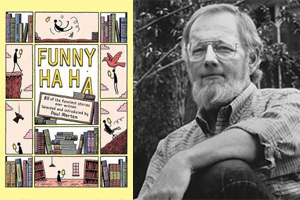
Some of us had been threatening our friend Colby for a long time, because of the way he had been behaving. And now he'd gone too far, so we decided to hang him. Colby argued that just because he had gone too far (he did not deny that he had gone too far) did not mean that he should be subjected to hanging. Going too far, he said, was something everybody did sometimes. We didn't pay much attention to this argument. We asked him what sort of music he would like played at the hanging. He said he'd think about it but it would take him a while to decide. I pointed out that we'd have to know soon, because Howard, who is a conductor, would have to hire and rehearse the musicians and he couldn't begin until he knew what the music was going to be. Colby said he'd always been fond of Ives's Fourth Symphony. Howard said that this was a "delaying tactic" and that everybody knew that the Ives was almost impossible to perform and would involve weeks of rehearsal, and that the size of the orchestra and chorus would put us way over the music budget. "Be reasonable," he said to Colby. Colby said he'd try to think of something a little less exacting.

Hugh was worried about the wording of the invitations. What if one of them fell into the hands of the authorities? Hanging Colby was doubtless against the law, and if the authorities learned in advance what the plan was they would very likely come in and try to mess everything up. I said that although hanging Colby was almost certainly against the law, we had a perfect moral right to do so because he was our friend, belonged to us in various important senses, and he had after all gone too far. We agreed that the invitations would be worded in such a way that the person invited could not know for sure what he was being invited to. We decided to refer to the event as "An Event Involving Mr. Colby Williams." A handsome script was selected from a catalogue and we picked a cream-colored paper. Magnus said he'd see to having the invitations printed, and wondered whether we should serve drinks. Colby said he thought drinks would be nice but was worried about the expense. We told him kindly that the expense didn't matter, that we were after all his dear friends and if a group of his dear friends couldn't get together and do the thing with a little bit of eclat, why, what was the world coming to? Colbv asked if he would be able to have drinks, too, before the event. We said,"Certainly."

The next item of business was the gibbet. None of us knew too much about gibbet design, but Tomas, who is an architect, said he'd look it up in old books and draw the plans. The important thing, as far as he recollected, was that the trapdoor function perfectly. He said that just roughly, counting labor and materials, it shouldn't run us more than four hundred dollars. "Good God !" Howard said. He said what was Tomas figuring on, rosewood? No, just a good grade of pine, Tomas said. Victor asked if unpainted pine wouldn't look kind of "raw," and Tomas replied that he thought it could be stained a dark walnut without too much trouble.

I said that although I thought the whole thing ought to be done really well and all, I also thought four hundred dollars for a gibbet, on top of the expense for the drinks, invitations, musicians, and everything, was a bit steep, and why didn't we just use a tree -- a nice-looking oak, or something? I pointed out that since it was going to be a June hanging the trees would be in glorious leaf and that not only would a tree add a kind of "natural" feeling but it was also strictly traditional, especially in the West. Tomas, who had been sketching gibbets on the backs of envelopes, reminded us that an outdoor hanging always had to contend with the threat of rain. Victor said he liked the idea of doing it outdoors, possibly on the bank of a river but noted that we would have to hold it some distance from the city, which presented the problem of getting the guests, musicians, etc., to the site and then back to town.

At this point everybody looked at Harry, who runs a car-and-truck-rental business. Harry said he thought he could round up enough limousines to take care of that end but that the drivers would have to be paid. The drivers, he pointed out, wouldn't be friends of Colby's and couldn't be expected to donate their services, any more than the bartender or the musicians. He said that he had about ten limousines, which he used mostly for funerals, and that he could probably obtain another dozen by calling around to friends of his in the trade. He said also that if we did it outside, in the open air, we'd better figure on a tent or awning of some kind to cover at least the principals and the orchestra, because if the hanging was being rained on he thought it would look kind of dismal. As between gibbet and tree, he said, he had no particular preferences and he really thought that the choice ought to be left up to Colby, since it was his hanging. Colby said that everybody went too far, sometimes, and weren't we being a little Draconian? Howard said rather sharply that all that had already been discussed, and which did he want, gibbet or tree? Colby asked if he could have a firing squad. No, Howard said, he could not. Howard said a firing squad would just be an ego trip for Colby, the blindfold and last-cigarette bit, and that Colby was in enough hot water already without trying to "upstage" everyone with unnecessary theatrics. Colby said he was sorry, he hadn't meant it that way, he'd take the tree. Tomas crumpled up the gibbet sketches he'd been making, in disgust.

Then the question of the hangman came up. Pete said did we really need a hangman? Because if we used a tree, the noose could be adjusted to the appropriate level and Colby could just jump off something -- a chair or stool or something. Besides, Pete said, he very much doubted if there were any free-lance hangmen wandering around the country, now that capital punishment has been done away with absolutely, temporarily, and that we'd probably have to fly one in from England or Spain or one of the South American countries, and even if we did that how could we know in advance that the man was a professional, a real hangman, and not just some money-hungry amateur who might bungle the job and shame us all, in front of every body? We all agreed then that Colby should just jump off something and that a chair was not what he should jump off of, because that would look, we felt, extremely tacky -- some old kitchen chair sitting out there under our beautiful tree. Tomas, who is quite modern in outlook and not afraid of innovation, proposed that Colby be standing on a large round rubber ball ten feet in diameter. This, he said, would afford a sufficient "drop" and would also roll out of the way if Colby suddenly changed his mind after jumping off. He reminded us that by not using a regular hangman we were placing an awful lot of the responsibility for the success of the affair on Colby himself, and that although he was sure Colby would perform creditably and not disgrace his friends at the last minute, still, men have been known to get a little irresolute at times like that, and the ten-foot-round rubber ball, which could probably be fabricated rather cheaply, would insure a "bang-up" pro duction right down to the wire.

At the mention of "wire," Hank, who had been silent all this time, suddenly spoke up and said he wondered if it wouldn't be better if we used wire instead of rope -- more efficient and in the end kinder to Colby, he suggested. Colby began looking a little green, and I didn't blame him, because there is something extremely distasteful in think ing about being hanged with wire instead of rope -- it gives you sort of a revulsion, when you think about it. I thought it was really quite unpleasant of Hank to be sitting there talking about wire, just when we had solved the problem of what Colby was going to jump off of so neatly, with Tomas's idea about the rubber ball, so I hastily said that wire was out of the question, because it would injure the tree -- cut into the branch it was tied to when Colby's full weight hit it -- and that in these days of increased respect for the environment, we didn't want that, did we? Colby gave me a grateful look, and the meeting broke up. Everything went off very smoothly on the day of the event (the music Colby finally picked was standard stuff, Elgar, and it was played very well by Howard and his boys). It didn't rain, the event was well attended, and we didn't run out of Scotch, or anything. The ten-foot rubber ball had been painted a deep green and blended in well with the bucolic setting. The two things I remember best about the whole episode are the grateful look Colby gave me when I said what I said about the wire, and the fact that nobody has ever gone too far again.

Donald Barthelme (1973) Some of us had been threatening our friend Colby in Paul Merton (2019) Funny Ha, Ha

Xerox Life.

‘And what do you think? Do you suppose you can pull it off? Perform this role?’

‘It won’t be easy. But I believe if I continue to observe Josie carefully, it will be within my abilities.’

‘Then let me ask you something else. Let me ask you this. Do you believe in the human heart? I don’t mean simply the organ, obviously. I’m speaking in the poetic sense. The human heart. Do you think there is such a thing? Something that makes each of us special and individual? And if we just suppose that there is. Then don’t you think, in order to truly learn Josie, you’d have to learn not just her mannerisms but what’s deeply inside her? Wouldn’t you have to learn her heart?’

‘Yes, certainly.’

‘And that could be difficult, no? Something beyond even your wonderful capabilities. Because an impersonation wouldn’t do, however skillful. You’d have to learn her heart, and learn it fully, or you’ll never become Josie in any sense that matters.’

A public bus had stopped beside some abandoned fruit boxes. As the Father steered around it, the car behind us made angry horn noises. Then there were more angry horns, but these were further away and not aimed at us.

‘The heart you speak of,’ I said. ‘It might indeed be the hardest part of Josie to learn. It might be like a house with many rooms. Even so, a devoted AF, given time, could walk through each of those rooms, studying them carefully in turn, until they became like her own home.’

The Father sounded our own horn at a car trying to enter the traffic line from a side street.

‘But then suppose you stepped into one of those rooms,’ he said, ‘and discovered another room within it. And inside that room, another room still. Rooms within rooms within rooms. Isn’t that how it might be, trying to learn Josie’s heart? No matter how long you wandered through those rooms, wouldn’t there always be others you’d not yet entered?’

I considered this for a moment, then said: ‘Of course, a human heart is bound to be complex. But it must be limited. Even if Mr Paul is talking in the poetic sense, there’ll be an end to what there is to learn. Josie’s heart may well resemble a strange house with rooms inside rooms. But if this were the best way to save Josie, then I’d do my utmost. And I believe there’s a good chance I’d be able to succeed.’

‘Hmm.’

(…)

‘Mr Capaldi believed there was nothing special inside Josie that couldn’t be continued. He told the Mother he’d searched and searched and found nothing like that. But I believe now he was searching in the wrong place. There was something very special, but it wasn’t inside Josie. It was inside those who loved her.’

The neverending story of the blockchain miner

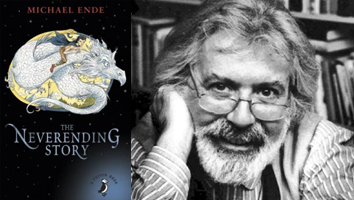
Bastian saw a large group of people, men and women, young and old, all in the strangest clothes. They didn’t speak, each one was alone with himself. On the ground lay a large number of cubes, and there were letters on all six sides of the cubes. The people kept jumbling the cubes and then staring at them.

‘What are they doing?’ Bastian whispered. ‘What sort of game is that?’

‘It’s called the jumble game,’ answered Argax. He motioned to the players and cried out: ‘Good work, children! Keep at it! Don’t give up!’

Then, turning back to Bastian he whispered in his ear: ‘They can’t talk anymore. They’ve lost the power of speech. So I thought up this game for them. As you see, it keeps them busy. It’s very simple. If you stop to think about it, you’ll have to admit that all the stories in the world consist essentially of twenty-six letters. The letters are always the same, only the arrangement varies. From letters words are formed, from word sentences, from sentences chapters, and from chapters stories. Now take a look. What do you see there?’

Bastian read:

HGIKLOPFMWEYVXQ
YXCVBNMASDFGHJKLOA
QWERTZUIOPU
ASDFGHJKLOA
MNBVXYLKJHGFDSA
UPOIUZTREWQAS
QSERTZUIOPUASDAF
ASDFGHJKLOAYXC
UPOIUZTREWQ
AOLKJHGFDSAMNBV
GKHDSRZIP
QETUOUSFHKO
YCBMWRZIP
ARCGUNIKYO
QWERTZIOPLUASD
MNBVCXYASD
LKJUONGREFGHI

‘Yes, of course,’ said Argax with a giggle, ‘it usually makes no more sense than that. But if you keep at it for a long time, words turn up now and then. Not very brilliant words, but still words. “Spinachcramp,” for instance, or “sugarbrush,” or “nosepolish.” And if you play for a hundred years, or a thousand or a hundred thousand, the law of chances tells us that a poem will probably come out. And if you play it forever, every possible poem and every possible story will have to come out, in fact every story about a story, and even this story about the two of us chatting here. It’s only logical, don’t you think?’

‘It’s horrible,’ said Bastian.

‘I wouldn’t say that,’ said Argax. ‘It depends on your point of view. It keeps these people, in a manner of speaking, busy. And anyway, what else can we do with them in Fantastica?’

Shadows reveal light.

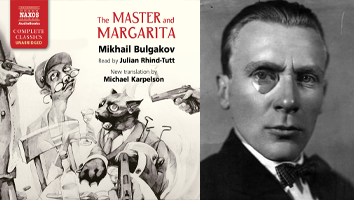
High above the city, on a stone terrace at the top of one of Moscow's most beautiful buildings, built over a century and a half ago, two are watching the sunset: Azazello and Woland. They were not visible from the street below, shielded from prying eyes by a balustrade with plaster pots and plaster flowers, but from there they could see almost to the edges of the city.

Woland sat on a folding stool, wearing his black soutane. His long broad rapier was sticking vertically out of the gap between two terrace tiles, making a sundial. Slowly and steadily, the sword's shadow grew longer, creeping towards the black shoes on Satan's feet. Resting his sharp chin on his fist, huddling on the stool with one leg tucked underneath him, Woland had his gazed fixed on the immense collection of palaces, giant buildings and tiny hovels listed for demolition.

Azazello had parted with his modem attire — the jacket, bowler and patent-leather shoes — and was dressed in black, like Woland. He now stood motionlessly, not far from his master, his eyes likewise glued to the city.

Woland spoke: 'What an interesting city, is it not?'

Azazello shifted and answered respectfully: 'I prefer Rome, Messire.'

'Yes, it is a matter of taste,' Woland replied.

A short while later, his voice came again: 'And why is there smoke over there on the boulevard?'

'That's Griboyedov burning,' Azazello replied.

'I suppose that inseparable couple, Korovyov and Behemoth, has been there.'

'There can be no doubt of it, Messire.'

They fell silent again, both watching as the west wood windows on the top floors of the giant buildings lit up with blinding, fragmented sunlight. Woland's eye burned just like one of those windows, even though he was sitting with his back to the sunset.

But then something made Woland turn away from the city and direct his attention to a round tower, located behind him on the roof. A grim, ragged, black-bearded man, smeared with clay mud, stepped out of the tower wall. He wore a chiton and homemade sandals.

'Hah!' Woland exclaimed, looking at the visitor condescendingly. 'You are the last person I would have expected to see here! What is your business, uninvited but foreseen guest?'

'I'm here to see you, spirit of evil and master of shadows,' said the visitor glaring unpleasantly at Woland.

'If you are here to see me, why didn't you wish me a good evening, former tax collector?' Woland asked sternly.

'Because I do not wish you anything good,' the visitor brazenly replied.

'Then you'll have to reconcile yourself to the fact that I am doing quite well,' countered Woland, and a grin twisted his face. 'You began spouting nonsense the moment you appeared on this roof, and let me tell you what it is — your tone. You spoke as though you did not recognize shadows or evil. Kindly think on this: what would all your good be if evil did not exist? What would the earth look like without shadows? Objects cast shadows and people, too. Here is the shadow from my sword, but there are also shadows from trees and living creatures. Or would you strip the entire globe of trees and living things to fulfil your fantasy of basking in barren light? You are a fool.'

Twenty-twenty.

We need individual stories. Without individuals we see only numbers: a thousand dead, a hundred thousand dead, 'casualties may rise to a million'. With individual stories, the statistics become people — but even that is a lie, for the people continue to suffer in numbers that themselves are numbing and meaningless. Look, see the child's swollen, swollen belly, and the flies that crawl at the corners of his eyes, his skeletal limbs: will it make it easier for you to know his name, his age, his dreams, his fears? To see him from the inside? And if it does, are we not doing a disservice to his sister, who lies in the searing dust beside him, a distorted, distended caricature of a human child. And there, if we feel for them, are they now more important to us than a thousand other children touched by the same famine, a thousand other young lives who will soon be food for the flies' own myriad squirming children?

We draw our lines around these moments of pain, and remain upon our islands, and they cannot hurt us. They are covered with a smooth, safe, nacreous layer to let them slip, pearl-like, from our souls without real pain.

Fiction allows us to slide into these other heads, these other places, and look out through other eyes. And then in the tale we stop before we die, or we die vicariously and unharmed, and in the world beyond the tale we turn the page or close the book, and we resume our lives.

A life, which is, like any other, unlike any other.

Virtual realities.

The worst thing about being a kid was that no one told me the truth about my situation. In fact, they did the exact opposite. And, of course, I believed them, because I was just a kid and I didn’t know any better. I mean, Christ, my brain hadn’t even grown to full size yet, so how could I be expected to know when the adults were bullshitting me?

So I swallowed all of the dark ages nonsense they fed me. Some time passed. I grew up a little, and I gradually began to figure out that pretty much everyone had been lying to me about pretty much everything since the moment I emerged from my mother’s womb.

This was an alarming revelation.

It gave me trust issues later in life.

I started to figure out the ugly truth as soon as I began to explore the free OASIS libraries. The facts were right there waiting for me, hidden in old books written by people who weren’t afraid to be honest. Artists and scientists and philosophers and poets, many of them long dead. As I read the words they’d left behind, I finally began to get a grip on the situation. My situation. Our situation. What most people referred to as “the human condition.”

It was not good news.

I wish someone had just told me the truth right up front, as soon as I was old enough to understand it. I wish someone had just said:

“Here’s the deal, Wade. You’re something called a ‘human being.’ That’s a really smart kind of animal. Like every other animal on this planet, we’re descended from a single-celled organism that lived millions of years ago. This happened by a process called evolution, and you’ll learn more about it later. But trust me, that’s really how we all got here. There’s proof of it everywhere, buried in the rocks. That story you heard? About how we were all created by a super-powerful dude named God who lives up in the sky? Total bullshit. The whole God thing is actually an ancient fairy tale that people have been telling one another for thousands of years. We made it all up. Like Santa Claus and the Easter Bunny.

“Oh, and by the way … there’s no Santa Claus or Easter Bunny. Also bullshit. Sorry, kid. Deal with it.

“You’re probably wondering what happened before you got here. An awful lot of stuff, actually. Once we evolved into humans, things got pretty interesting. We figured out how to grow food and domesticate animals so we didn’t have to spend all of our time hunting. Our tribes got much bigger, and we spread across the entire planet like an unstoppable virus. Then, after fighting a bunch of wars with each other over land, resources, and our made-up gods, we eventually got all of our tribes organized into a ‘global civilization.’ But, honestly, it wasn’t all that organized, or civilized, and we continued to fight a lot of wars with each other. But we also figured out how to do science, which helped us develop technology. For a bunch of hairless apes, we’ve actually managed to invent some pretty incredible things. Computers. Medicine. Lasers. Microwave ovens. Artificial hearts. Atomic bombs. We even sent a few guys to the moon and brought them back. We also created a global communications network that lets us all talk to each other, all around the world, all the time. Pretty impressive, right?

“But that’s where the bad news comes in. Our global civilization came at a huge cost. We needed a whole bunch of energy to build it, and we got that energy by burning fossil fuels, which came from dead plants and animals buried deep in the ground. We used up most of this fuel before you got here, and now it’s pretty much all gone. This means that we no longer have enough energy to keep our civilization running like it was before. So we’ve had to cut back. Big-time. We call this the Global Energy Crisis, and it’s been going on for a while now.

“Also, it turns out that burning all of those fossil fuels had some nasty side effects, like raising the temperature of our planet and screwing up the environment. So now the polar ice caps are melting, sea levels are rising, and the weather is all messed up. Plants and animals are dying off in record numbers, and lots of people are starving and homeless. And we’re still fighting wars with each other, mostly over the few resources we have left.

“Basically, kid, what this all means is that life is a lot tougher than it used to be, in the Good Old Days, back before you were born. Things used to be awesome, but now they’re kinda terrifying. To be honest, the future doesn’t look too bright. You were born at a pretty crappy time in history. And it looks like things are only gonna get worse from here on out. Human civilization is in ‘decline.’ Some people even say it’s ‘collapsing.’

“You’re probably wondering what’s going to happen to you. That’s easy. The same thing is going to happen to you that has happened to every other human being who has ever lived. You’re going to die. We all die. That’s just how it is.

“What happens when you die? Well, we’re not completely sure. But the evidence seems to suggest that nothing happens. You’re just dead, your brain stops working, and then you’re not around to ask annoying questions anymore. Those stories you heard? About going to a wonderful place called ‘heaven’ where there is no more pain or death and you live forever in a state of perpetual happiness? Also total bullshit. Just like all that God stuff. There’s no evidence of a heaven and there never was. We made that up too. Wishful thinking. So now you have to live the rest of your life knowing you’re going to die someday and disappear forever.

“Sorry.”

ec_rpo.png

The absurdity of bias

Fort Leonard Wood, Missouri. The head shavers were civilians—a fat fuck and his women. The women had silver-blue permanents; there were two of them and they were awful. So was the fat fuck. It wasn’t enough for them that we had to pay them money for these haircuts that we were ordered to get; they talked shit to us too. They cut a kid’s head so it was bleeding pretty good and he let on that he minded and they said he was a sissy. They wanted to know if he was from San Fran-sissy-co. Then they cut another kid and the blood was running down and they thought it was funny. They didn’t get bored of it. They had special vacuum clippers that sucked the hair up as they cut. The suction pulled the scalp up into the blades; that was how come they drew blood so much. The fat fuck and his women had to talk real loud so they could hear themselves over the sucking sounds. I wished death upon them. Then we got a hundred fucking shots. We got all our Army stuff: uniforms, boots, helmets, shit like that. We took our papers with us everywhere. They signed our papers. This was in-processing. When we weren’t in-processing we sat in an auditorium and they taught us things: left face, right face, the Army song, whatever. When it was time to eat we acted like the food was really bad even though it wasn’t that bad. One kid said, “I’m a spook. That’s counterintelligence.” Another kid said, “I’m an eleven bravo.” That was infantry. But he couldn’t be an 11B because all the 11Bs went through at Fort Benning. Now we knew he was a liar. The group I came in with was B1, as in bravo one. That night another group came in, B2. We thought the B2s were decadent children. We said, “These bravo twos are ate-the-fuck-up.” We said, “They sure are.” The B2s thought we were weird losers. The mutual enmity between B1s and B2s lasted three days; then we were redistributed at random into three platoons called Alpha Company, and no one could remember who anyone was. The universal baldness made it difficult to recognize people. They packed us into cattle cars and we rode up the hill to boot camp.

Wor(l)d.

Every universe, our own included, begins in conversation. Every golem in the history of the world, from Rabbi Hanina's delectable goat to the river-clay Frankenstein of Rabbi Judah Loew ben Bezalel, was summoned into existence through language, through murmuring, recital, and kabbalistic chitchat -- was, literally, talked into life.