Crime and Entertainment.

HARRIS: (…) Given what we've just said, we know that every person is essentially a force of nature. And in this corner of the universe, the laws of physics are playing out perfectly. Whether the universe is purely deterministic or there's an added factor of randomness doesn't matter; that still gives us no basis to believe in free will. Every person is a puppet who didn't pick his own strings, and the strings reach back to the Big Bang.

But people often do modify their behavior because of what we say or do. That process can be fraught with frustration, of course. But these influences are real. You're doing something I want to discourage, and I know that you, as another primate, are susceptible to being influenced by disincentives—or punishments, in the extreme case. And it becomes totally rational to invoke all the usual means of influencing another person's behavior without attributing free will to whomever you're trying to influence.

SAPOLSKY: I agree. Whether in Eric Kandel's classic work with Aplysia (a sea slug) and all the way up to us, nervous systems can be conditioned by positive and negative reinforcement. We understand that down to the molecular level. Yes, nervous systems can be changed by inputs. They abundantly are, and the inputs sometimes take the form of what we might call punishment, when it may be necessary to change somebody's behavior. If a child gets a "time out" for doing something rotten to another kid, the penalty is going to affect his frontal cortical neurons and strengthen the synapses that tell him not to do that next time. It's a mechanistic thing—and nonetheless it's punitive. What we need to do is use punishment instrumentally, when we know it will accomplish something within a biological framework. But don't stand there and preach while you're doing it, and don't take pleasure from a sense of justice being served.

HARRIS: The wrinkle here is that the pleasure of justice, and even a lust for vengeance, runs so deep in us. The free-will illusion is so compelling that people argue (or at least feel) that the criminal justice system should acknowledge it in some way. Justice isn't satisfying if we medicalize human evil—saying, basically, that every criminal is not guilty by reason of insanity, and we'll either cure them or warehouse those we can't cure, without any moralizing about it. How do you think about the moral improvement of our species in light of the fact that so many people find retribution, and even vengeance, morally compelling, and in some cases psychologically necessary?

SAPOLSKY: This is obviously very powerful, challenging stuff. Neurobiologically, justice is pleasurable. It activates mesolimbic dopamine systems. It feels good. It has an evolutionary logic to it: Third-party punishment (carried out by an objective bystander, rather than by the person who has been wronged) is costly. It costs to have a police department, it costs to have judges, it costs to give dental insurance to prison guards. So there has to have evolved a certain pleasure, a certain reward, in having done the right punitive thing.

But take the historical perspective. There was a time when society's worst people would have been set upon by a mob and beaten to death. And at some point, governmental authorities said, "Yes, yes, we know that's pleasurable, but from now on you have to turn the person oner to us so that we can beat them to death, and tou can watch:" And people had to adjust to that. And then at some lafer point they'd say, "Yes, but now we’re going to do something more humane. We’re going to hang people. You can come and see it and bring your picnic baskets. We’re going to have a public hanging. But you'll have to ger your pleasures in some other way than watching the person being slowly beaten to death." And people adjust to that, and then you don't have crowds at executions anymore. Then we have people designing machines that do lethal injections.

At every step of the way, what essentially has been said is, 'Yes, yes, there's a certain visceral sense of pleasurable vengeance in having it done this way. But we're not doing that anymore, and you're going to have to get used to it." And people have gotten used to it at each one of those steps. People will have to get used to the idea that a damaging act by a human is like a bear attack or a hurricane. We already think that way when it's clear the damaging act was unintentional, purely accidental, and the perpetrator is crippled with remorse. We simply will have to expand that recognition further. At each one of those steps, there's a cultural shift as to what punishments we don't impose anymore, and it's just going to keep happening. Yet at any point where the line is currently drawn, it still seems inconceivable: "My God, if somebody did that to my loved one and they then got to spend the rest of their life enjoying three meals a day, that would just consume me."
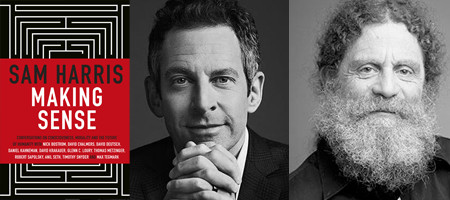
Harris, Sam, and Robert Sapolsky. “The Biology of Good and Evil.” Making Sense, Bantam Press, Ealing, UK, 2020, pp. 270–272.
La feina ben feta.

Some of us had been threatening our friend Colby for a long time, because of the way he had been behaving. And now he'd gone too far, so we decided to hang him. Colby argued that just because he had gone too far (he did not deny that he had gone too far) did not mean that he should be subjected to hanging. Going too far, he said, was something everybody did sometimes. We didn't pay much attention to this argument. We asked him what sort of music he would like played at the hanging. He said he'd think about it but it would take him a while to decide. I pointed out that we'd have to know soon, because Howard, who is a conductor, would have to hire and rehearse the musicians and he couldn't begin until he knew what the music was going to be. Colby said he'd always been fond of Ives's Fourth Symphony. Howard said that this was a "delaying tactic" and that everybody knew that the Ives was almost impossible to perform and would involve weeks of rehearsal, and that the size of the orchestra and chorus would put us way over the music budget. "Be reasonable," he said to Colby. Colby said he'd try to think of something a little less exacting.

Hugh was worried about the wording of the invitations. What if one of them fell into the hands of the authorities? Hanging Colby was doubtless against the law, and if the authorities learned in advance what the plan was they would very likely come in and try to mess everything up. I said that although hanging Colby was almost certainly against the law, we had a perfect moral right to do so because he was our friend, belonged to us in various important senses, and he had after all gone too far. We agreed that the invitations would be worded in such a way that the person invited could not know for sure what he was being invited to. We decided to refer to the event as "An Event Involving Mr. Colby Williams." A handsome script was selected from a catalogue and we picked a cream-colored paper. Magnus said he'd see to having the invitations printed, and wondered whether we should serve drinks. Colby said he thought drinks would be nice but was worried about the expense. We told him kindly that the expense didn't matter, that we were after all his dear friends and if a group of his dear friends couldn't get together and do the thing with a little bit of eclat, why, what was the world coming to? Colbv asked if he would be able to have drinks, too, before the event. We said,"Certainly."

The next item of business was the gibbet. None of us knew too much about gibbet design, but Tomas, who is an architect, said he'd look it up in old books and draw the plans. The important thing, as far as he recollected, was that the trapdoor function perfectly. He said that just roughly, counting labor and materials, it shouldn't run us more than four hundred dollars. "Good God !" Howard said. He said what was Tomas figuring on, rosewood? No, just a good grade of pine, Tomas said. Victor asked if unpainted pine wouldn't look kind of "raw," and Tomas replied that he thought it could be stained a dark walnut without too much trouble.

I said that although I thought the whole thing ought to be done really well and all, I also thought four hundred dollars for a gibbet, on top of the expense for the drinks, invitations, musicians, and everything, was a bit steep, and why didn't we just use a tree -- a nice-looking oak, or something? I pointed out that since it was going to be a June hanging the trees would be in glorious leaf and that not only would a tree add a kind of "natural" feeling but it was also strictly traditional, especially in the West. Tomas, who had been sketching gibbets on the backs of envelopes, reminded us that an outdoor hanging always had to contend with the threat of rain. Victor said he liked the idea of doing it outdoors, possibly on the bank of a river but noted that we would have to hold it some distance from the city, which presented the problem of getting the guests, musicians, etc., to the site and then back to town.

At this point everybody looked at Harry, who runs a car-and-truck-rental business. Harry said he thought he could round up enough limousines to take care of that end but that the drivers would have to be paid. The drivers, he pointed out, wouldn't be friends of Colby's and couldn't be expected to donate their services, any more than the bartender or the musicians. He said that he had about ten limousines, which he used mostly for funerals, and that he could probably obtain another dozen by calling around to friends of his in the trade. He said also that if we did it outside, in the open air, we'd better figure on a tent or awning of some kind to cover at least the principals and the orchestra, because if the hanging was being rained on he thought it would look kind of dismal. As between gibbet and tree, he said, he had no particular preferences and he really thought that the choice ought to be left up to Colby, since it was his hanging. Colby said that everybody went too far, sometimes, and weren't we being a little Draconian? Howard said rather sharply that all that had already been discussed, and which did he want, gibbet or tree? Colby asked if he could have a firing squad. No, Howard said, he could not. Howard said a firing squad would just be an ego trip for Colby, the blindfold and last-cigarette bit, and that Colby was in enough hot water already without trying to "upstage" everyone with unnecessary theatrics. Colby said he was sorry, he hadn't meant it that way, he'd take the tree. Tomas crumpled up the gibbet sketches he'd been making, in disgust.

Then the question of the hangman came up. Pete said did we really need a hangman? Because if we used a tree, the noose could be adjusted to the appropriate level and Colby could just jump off something -- a chair or stool or something. Besides, Pete said, he very much doubted if there were any free-lance hangmen wandering around the country, now that capital punishment has been done away with absolutely, temporarily, and that we'd probably have to fly one in from England or Spain or one of the South American countries, and even if we did that how could we know in advance that the man was a professional, a real hangman, and not just some money-hungry amateur who might bungle the job and shame us all, in front of every body? We all agreed then that Colby should just jump off something and that a chair was not what he should jump off of, because that would look, we felt, extremely tacky -- some old kitchen chair sitting out there under our beautiful tree. Tomas, who is quite modern in outlook and not afraid of innovation, proposed that Colby be standing on a large round rubber ball ten feet in diameter. This, he said, would afford a sufficient "drop" and would also roll out of the way if Colby suddenly changed his mind after jumping off. He reminded us that by not using a regular hangman we were placing an awful lot of the responsibility for the success of the affair on Colby himself, and that although he was sure Colby would perform creditably and not disgrace his friends at the last minute, still, men have been known to get a little irresolute at times like that, and the ten-foot-round rubber ball, which could probably be fabricated rather cheaply, would insure a "bang-up" pro duction right down to the wire.

At the mention of "wire," Hank, who had been silent all this time, suddenly spoke up and said he wondered if it wouldn't be better if we used wire instead of rope -- more efficient and in the end kinder to Colby, he suggested. Colby began looking a little green, and I didn't blame him, because there is something extremely distasteful in think ing about being hanged with wire instead of rope -- it gives you sort of a revulsion, when you think about it. I thought it was really quite unpleasant of Hank to be sitting there talking about wire, just when we had solved the problem of what Colby was going to jump off of so neatly, with Tomas's idea about the rubber ball, so I hastily said that wire was out of the question, because it would injure the tree -- cut into the branch it was tied to when Colby's full weight hit it -- and that in these days of increased respect for the environment, we didn't want that, did we? Colby gave me a grateful look, and the meeting broke up. Everything went off very smoothly on the day of the event (the music Colby finally picked was standard stuff, Elgar, and it was played very well by Howard and his boys). It didn't rain, the event was well attended, and we didn't run out of Scotch, or anything. The ten-foot rubber ball had been painted a deep green and blended in well with the bucolic setting. The two things I remember best about the whole episode are the grateful look Colby gave me when I said what I said about the wire, and the fact that nobody has ever gone too far again.

Donald Barthelme (1973) Some of us had been threatening our friend Colby in Paul Merton (2019) Funny Ha, Ha

The Mythmaker

On the benches of the Paris school where I wore out my first pair of jeans I made friends with a skinny red-faced boy named Olivier, whose runaway mythomania made his company irresistible. With him around, there was no need to go to the movies. Olivier’s friends had the best seats in the house, and the film was a miracle of invention. On Monday he would amaze us with a weekend saga straight out of the Thousand and One Nights. If he had not spent Sunday with Johnny Hallyday it was because he had gone to London to see the new James Bond, unless he had been driving the latest Honda. (Japanese motorbikes, just then arriving in France, were all the rage in schoolyard discussions.) From morning to night our friend fed us small lies and gross fabrications, brazenly inventing new stories even when they contradicted preceding ones. An orphan at 10 a.m., an only son at noon, he could dig up four sisters by mid-afternoon, one of them a figure-skating champion. As for his father - in reality a sober civil servant - he became, depending on the day, the inventor of the atom bomb, the Beatles’ manager, or General de Gaulle’s unacknowledged son. Since Olivier himself neglected to give coherence to the dishes he served up, we would have been the last to expect consistency of him. When he came out with some utterly outlandish fable we would voice tentative doubts, but he defended his good faith with such indignant protest of ‘I swear!’ that we would swiftly back down.

When I last checked, Olivier was neither a fighter pilot nor a secret agent nor adviser to an Emir (careers he once considered). Fairly predictably, it is in the advertising world that he wields his inexhaustible faculty for gilding every lily.

Unplan.

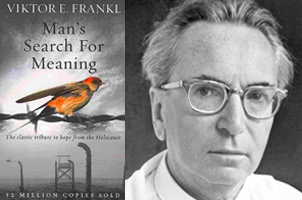
Don’t aim at success — the more you aim at it and make it a target, the more you are going to miss it. For success, like happiness, cannot be pursued; it must ensue, and it only does so as the unintended side-effect of one’s dedication to a cause greater than oneself or as the by-product of one’s surrender to a person other than oneself. Happiness must happen, and the same holds for success: you have to let it happen by not caring about it. I want you to listen to what your conscience commands you to do and go on to carry it out to the best of your knowledge. Then you will live to see that in the long run—in the long run, I say!—success will follow you precisely because you had forgotten to think of it.

Twenty-twenty.

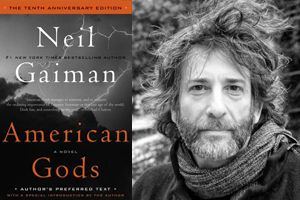
We need individual stories. Without individuals we see only numbers: a thousand dead, a hundred thousand dead, 'casualties may rise to a million'. With individual stories, the statistics become people — but even that is a lie, for the people continue to suffer in numbers that themselves are numbing and meaningless. Look, see the child's swollen, swollen belly, and the flies that crawl at the corners of his eyes, his skeletal limbs: will it make it easier for you to know his name, his age, his dreams, his fears? To see him from the inside? And if it does, are we not doing a disservice to his sister, who lies in the searing dust beside him, a distorted, distended caricature of a human child. And there, if we feel for them, are they now more important to us than a thousand other children touched by the same famine, a thousand other young lives who will soon be food for the flies' own myriad squirming children?

We draw our lines around these moments of pain, and remain upon our islands, and they cannot hurt us. They are covered with a smooth, safe, nacreous layer to let them slip, pearl-like, from our souls without real pain.

Fiction allows us to slide into these other heads, these other places, and look out through other eyes. And then in the tale we stop before we die, or we die vicariously and unharmed, and in the world beyond the tale we turn the page or close the book, and we resume our lives.

A life, which is, like any other, unlike any other.

On the conclusion of species.

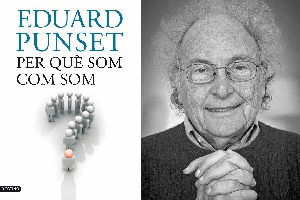
El professor Jerison ha estudiat en profunditat l'evolució del cervell humà, i s'ha concentrat, sobretot, en els suposats avantatges d'un cervell molt desenvolupat en relació amb la grandària i el pes corporal. Amb tot, els neuròlegs afirmen que la depressió és una malaltia mental que només afecta els éssers que tenen la capacitat de reflexionar sobre si mateixos i de pensar en el seu passat i el seu futur. És a dir, que només es poden deprimir els humans perquè tenen un cervell gros. En aquest sentit, patim potser un excés de cervell?

Segons el famós psiquiatre britànic Tim Crow, hem de buscar l'origen de l'esquizofrènia en l'evolució dels cervells de majors dimensions. Crow afirma que l'esquizofrènia és el preu que paga l'Homo sapiens per tenir la capacitat del llenguatge. Aquesta idea és sens dubte suggeridora, però per a Jerison l'aspecte interessant és l'engrandiment del cervell, que suposa un nou salt evolutiu, d'una magnitud comparable al que va haver-hi fa 200 milions d'anys, quan en passar de rèptils a mamífers els animals van necessitar l'oïda i l'olfacte, a més de la vista.

«En l'evolució de tots els llinatges d'homínids, de l'australopitec en endavant, en un moment determinat va sorgir la necessitat de posseir un "mapa" més precís del territori que ocupaven, constituït ara per uns quants quilòmetres quadrats, i no solament uns quants metres quadrats, com en el cas del rèptil». Aquesta necessitat d'informació es troba en l'origen de l'engrandiment del cervell humà. Segons Jerison, això degué succeir quan el cervell humà tenia la grandària del d'un ximpanzé o una mica més, i l'evolució cap al llenguatge va venir de la necessitat de conèixer, reconèixer, un territori més extens. I del coneixement, i no pas de la grandària, ve la depressió. Perquè, com afirma Jerison no sense una certa ironia, «quan coneixem millor el món també ens coneixem millor a nosaltres amteixos i quan et coneixes a tu mateix, és molt probable que no t'agradis tant». Així, per a ell, l'esquizofrènia, la depressió, fins i tot els desordres bipolars podrien tenir l'origen en el millor coneixement de nosaltres mateixos. Un fet molt complex i en el qual influeixen multiples factors, entre els quals, saber que morirem, la renúncia a la immortalitat que va comportar el canvi del sistema de reproducció. La consciència de la mort ha significat un gran impuls en l'evolució. A excepció de l'home, no hi ha cap animal que la tingui. De manera que, ja ho veieu, quan parlem d'intel·ligència no tot són avantatges.

EP.png

Eduard Punset (2008) Per què som com som

"Life is very unpopular here."

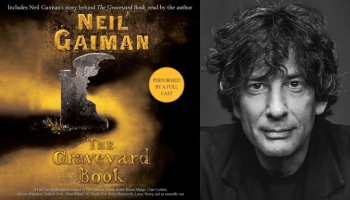
The most horrible hypocrisy or the most terrifying hypocrisy or the most tragic hypocrisy at the center of life, I think, which no one dares mention, is that human beings don't like life. Bertrand Russell skirted that, and many psychoanalysts have too, in talking about people lusting for death. But I think that at least half the people alive, and maybe nine-tenths of them, really do not like this ordeal at all. They pretend to like it some, to smile at strangers, and to get up each morning in order to survive, in order to somehow get through it. But life is, for most people, a very terrible ordeal. They would just as soon end it at any time. And I think that is more of a problem really than greed or machismo or anything like that. You know, you talk about the dark side of life: that's really it. Most people don't want to be alive. They're too embarrassed, they're disgraced, they're frightened. I think that's the fundamental thing that's going on. Those of you with your devotion to peace and all that are actually facing people perhaps as brave and determined and resourceful and thoughtful as you are on some level. And what they really want to do is to have the whole thing turned off like a light switch.

(...)

When I'm engaged in any action I have to take into consideration that many of the people on either side of me don't care what happens next. I am mistrustful of most people as custodians Of life and so I'm pessimistic on that account. I think that there are not many people who want life to go on. And I'm just a bearer of bad tidings really. You know, I just got born myself and this is what I found on this particular planet. But life is very unpopular here, and maybe it will be different on the next one. 

(...)

It seems to me the whole world is living like Alcoholics Anonymous now, which is one day at a time, and it seems to me that President Carter is living that way too. Every night when he goes to bed he cackles, "By God, we made it through another day! Everybody said I was a lousy President, and here we've survived another day. That's not bad." We are living day by day by day now, but there seems to be very little restraint in the world. What an alcoholic does every day is not take a drink, and only not take a drink for a day. But I see no real restraint with regard to warlike actions. If we were truly interested in surviving, and having sobriety, each day we would congratulate ourselves not for merely having gotten through another day but for making it without a warlike gesture. But there is no such restraint. More weapons are manufactured every day and more arguments are gladly entered into and more enormous, dangerous lies are told, so there is no restraint. It would be truly wonderful if we could live as alcoholics do, to be unwarlike for just another day. We don't. We're totally warlike, and sooner or later something's going to go wrong. The book I'm working on now is about a kid, he's grown now, grown and in his 40s and his father was a gun nut. It was a house with dozens of guns in it. At the age of 11 this kid was playing with one of his father's guns, which he wasn't supposed to do, put a cartridge into a 30-06 rifle and fired out a goddamn attic window and killed a housewife, you know, eighteen blocks away, just drilled her right between the eyes. And this has colored his whole life, and made his reputation. And of course this weapon should not have existed. He was brought into a planet where this terribly unstable device existed, and all he had to do was sneeze near it. I mean, it wanted to be fired; it was built to be fired. It had no other purpose than to be fired and the existence of such an unstable device within the reach of any sort of human being is intolerable. 

rm.png

Fictions and facts.

A picture hung on the wall of our parlor. In it, a woman was taking a shirt from a clothesline. She had clothespins in her teeth and it was windy and a boy was tugging at her dress. The woman looked like she was in a hurry and the whole scene gave me the idea that, just outside the frame, full, dark clouds were gathering. But that was not what it was. It was paint. So I decided right then and there to see the picture as it really was. I stared at the thing long and hard, trying to only see the paint. But it was no use. All my eyes would allow me to see was the lie. In fact, the longer I gazed at the paint, the more false detail I began to imagine. The boy was crying, as if afraid, and the woman was weaker than I had first believed. I finally gave up. I understood then that it takes a powerful imagination to see a thing for what it really is.

(...)

Death is a funny thing. Not funny haha, like a Woody Allen movie, but funny strange, like a Woody Allen marriage. When it’s unexpected, death comes fast like a ravenous wolf and tears open your throat with a merciful fury. But when it’s expected, it comes slow and patient like a snake, and the doctor tells you how far away it is and when, exactly, it will be at your door. And when it will be at the foot of your bed. And when it will be on your flesh. It’s all right there on their clipboards.

nm.png

Casual casualties.

The School

Well, we had all these children out planting trees, see, because we figured that ... that was part of their education, to see how, you know, the root systems ... and also the sense of responsibility, taking care of things, being individually responsible. You know what I mean. And the trees all died. They were orange trees. I don’t know why they died, they just died. Something wrong with the soil possibly or maybe the stuff we got from the nursery wasn’t the best. We complained about it. So we’ve got thirty kids there, each kid had his or her own little tree to plant and we’ve got these thirty dead trees. All these kids looking at these little brown sticks, it was depressing.

It wouldn’t have been so bad except that just a couple of weeks before the thing with the trees, the snakes all died. But I think that the snakes – well, the reason that the snakes kicked off was that ... you remember, the boiler was shut off for four days because of the strike, and that was explicable. It was something you could explain to the kids because of the strike. I mean, none of their parents would let them cross the picket line and they knew there was a strike going on and what it meant. So when things got started up again and we found the snakes they weren’t too disturbed.

With the herb gardens it was probably a case of overwatering, and at least now they know not to overwater. The children were very conscientious with the herb gardens and some of them probably ... you know, slipped them a little extra water when we weren’t looking. Or maybe ... well, I don’t like to think about sabotage, although it did occur to us. I mean, it was something that crossed our minds. We were thinking that way probably because before that the gerbils had died, and the white mice had died, and the salamander ... well, now they know not to carry them around in plastic bags.

Of course we expected the tropical fish to die, that was no surprise. Those numbers, you look at them crooked and they’re belly-up on the surface. But the lesson plan called for a tropical fish input at that point, there was nothing we could do, it happens every year, you just have to hurry past it.

We weren’t even supposed to have a puppy.

We weren’t even supposed to have one, it was just a puppy the Murdoch girl found under a Gristede’s truck one day and she was afraid the truck would run over it when the driver had finished making his delivery, so she stuck it in her knapsack and brought it to the school with her. So we had this puppy. As soon as I saw the puppy I thought, Oh Christ, I bet it will live for about two weeks and then... And that’s what it did. It wasn’t supposed to be in the classroom at all, there’s some kind of regulation about it, but you can’t tell them they can’t have a puppy when the puppy is already there, right in front of them, running around on the floor and yap yap yapping. They named it Edgar – that is, they named it after me. They had a lot of fun running after it and yelling, “Here, Edgar! Nice Edgar!” Then they’d laugh like hell. They enjoyed the ambiguity. I enjoyed it myself. I don’t mind being kidded. They made a little house for it in the supply closet and all that. I don’t know what it died of. Distemper, I guess. It probably hadn’t had any shots. I got it out of there before the kids got to school. I checked the supply closet each morning, routinely, because I knew what was going to happen. I gave it to the custodian.

And then there was this Korean orphan that the class adopted through the Help the Children program, all the kids brought in a quarter a month, that was the idea. It was an unfortunate thing, the kid’s name was Kim and maybe we adopted him too late or something. The cause of death was not stated in the letter we got, they suggested we adopt another child instead and sent us some interesting case histories, but we didn’t have the heart. The class took it pretty hard, they began (I think, nobody ever said anything to me directly) to feel that maybe there was something wrong with the school. But I don’t think there’s anything wrong with the school, particularly, I’ve seen better and I’ve seen worse. It was just a run of bad luck. We had an extraordinary number of parents passing away, for instance. There were I think two heart attacks and two suicides, one drowning, and four killed together in a car accident. One stroke. And we had the usual heavy mortality rate among the grandparents, or maybe it was heavier this year, it seemed so. And finally the tragedy.

The tragedy occurred when Matthew Wein and Tony Mavrogordo were playing over where they’re excavating for the new federal office building. There were all these big wooden beams stacked, you know, at the edge of the excavation. There’s a court case coming out of that, the parents are claiming that the beams were poorly stacked. I don’t know what’s true and what’s not. It’s been a strange year. I forgot to mention Billy Brandt’s father who was knifed fatally when he grappled with a masked intruder in his home.

One day, we had a discussion in class. They asked me, where did they go? The trees, the salamander, the tropical fish, Edgar, the poppas and mommas, Matthew and Tony, where did they go? And I said, I don’t know, I don’t know. And they said, who knows? and I said, nobody knows. And they said, is death that which gives meaning to life? And I said no, life is that which gives meaning to life. Then they said, but isn’t death, considered as a fundamental datum, the means by which the taken-for-granted mundanity of the everyday may be transcended in the direction of – 
I said, yes, maybe. 
They said, we don’t like it. 
I said, that’s sound. 
They said, it’s a bloody shame! 
I said, it is. 
They said, will you make love now with Helen (our teaching assistant) so that we can see how it is done? We know you like Helen. 
I do like Helen but I said that I would not. 
We’ve heard so much about it, they said, but we’ve never seen it. 
I said I would be fired and that it was never, or almost never, done as a demonstration. Helen looked out the window. 
They said, please, please make love with Helen, we require an assertion of value, we are frightened.

I said that they shouldn’t be frightened (although I am often frightened) and that there was value everywhere. Helen came and embraced me. I kissed her a few times on the brow. We held each other. The children were excited. Then there was a knock on the door, I opened the door, and the new gerbil walked in. The children cheered wildly.