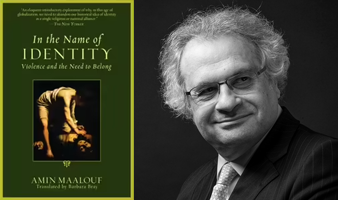
Many are so angry or bewildered that they give up trying to understand what is going on. Many refuse to make a contribution to the emerging universal culture because at some point they decided once and for all that the world around them was incomprehensible, hostile, bloodthirsty, demented or diabolical. Many are tempted to see themselves as mere victims - victims of America, of the West, of capitalism or liberalism, of the new technologies, of the media, of change, and so on. It cannot be denied that such people really do feel wronged and suffer accordingly, but their reaction seems to me inappropriate. To imprison oneself in a victim mentality can do the injured party even more harm than the aggression itself. And this is as true of societies as of individuals. They huddle themselves away, they barricade themselves in, they try to ward off everything, they close their minds, they ruminate, they give up looking for anything new, they don't explore anymore, they don't make any more progress, they are afraid of the future, of the present and of everyone else.
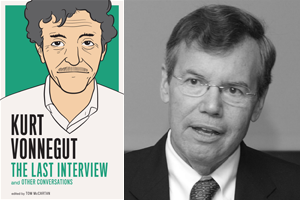
"Life is very unpopular here."
The most horrible hypocrisy or the most terrifying hypocrisy or the most tragic hypocrisy at the center of life, I think, which no one dares mention, is that human beings don't like life. Bertrand Russell skirted that, and many psychoanalysts have too, in talking about people lusting for death. But I think that at least half the people alive, and maybe nine-tenths of them, really do not like this ordeal at all. They pretend to like it some, to smile at strangers, and to get up each morning in order to survive, in order to somehow get through it. But life is, for most people, a very terrible ordeal. They would just as soon end it at any time. And I think that is more of a problem really than greed or machismo or anything like that. You know, you talk about the dark side of life: that's really it. Most people don't want to be alive. They're too embarrassed, they're disgraced, they're frightened. I think that's the fundamental thing that's going on. Those of you with your devotion to peace and all that are actually facing people perhaps as brave and determined and resourceful and thoughtful as you are on some level. And what they really want to do is to have the whole thing turned off like a light switch.
(...)
When I'm engaged in any action I have to take into consideration that many of the people on either side of me don't care what happens next. I am mistrustful of most people as custodians Of life and so I'm pessimistic on that account. I think that there are not many people who want life to go on. And I'm just a bearer of bad tidings really. You know, I just got born myself and this is what I found on this particular planet. But life is very unpopular here, and maybe it will be different on the next one.
(...)
It seems to me the whole world is living like Alcoholics Anonymous now, which is one day at a time, and it seems to me that President Carter is living that way too. Every night when he goes to bed he cackles, "By God, we made it through another day! Everybody said I was a lousy President, and here we've survived another day. That's not bad." We are living day by day by day now, but there seems to be very little restraint in the world. What an alcoholic does every day is not take a drink, and only not take a drink for a day. But I see no real restraint with regard to warlike actions. If we were truly interested in surviving, and having sobriety, each day we would congratulate ourselves not for merely having gotten through another day but for making it without a warlike gesture. But there is no such restraint. More weapons are manufactured every day and more arguments are gladly entered into and more enormous, dangerous lies are told, so there is no restraint. It would be truly wonderful if we could live as alcoholics do, to be unwarlike for just another day. We don't. We're totally warlike, and sooner or later something's going to go wrong. The book I'm working on now is about a kid, he's grown now, grown and in his 40s and his father was a gun nut. It was a house with dozens of guns in it. At the age of 11 this kid was playing with one of his father's guns, which he wasn't supposed to do, put a cartridge into a 30-06 rifle and fired out a goddamn attic window and killed a housewife, you know, eighteen blocks away, just drilled her right between the eyes. And this has colored his whole life, and made his reputation. And of course this weapon should not have existed. He was brought into a planet where this terribly unstable device existed, and all he had to do was sneeze near it. I mean, it wanted to be fired; it was built to be fired. It had no other purpose than to be fired and the existence of such an unstable device within the reach of any sort of human being is intolerable.
Read between the lines.
The Rosetta Stone survived unread through 2,000 years of further foreign occupations. After the Greeks came Romans, Byzantines, Persians, Muslim Arabs and Otoman Turks – all had stretches of rule in Egypt. At some point the stone was moved from the temple at Sais in the Nile Delta, where it was first erected, to the town of el-Rashid, now known as Rosetta, about forty miles away.
Then, in 1798, Napoleon arrived. The French invasion was of course primarily military (they wanted to cut the British route to India). But with the French army came scholars. Soldiers rebuilding fortifications in Rosetta dug up the stone – and accompanying experts knew immediately that they had found something of great significance.
The French seized the stone as a trophy of war, but it never made it back to Paris. With his fleet destroyed by Nelson at the Battle of the Nile, Napoleon himself returned to France, leaving the French army behind. In 1801 the French surrendered to the British and Egyptian generals. The terms of the Treaty of Alexandria included the handing over of antiquities, among them the Rosetta Stone.
Most books will tell you, as I just have, that there are three languages on the Rosetta Stone, but if you look on the broken side you can see a fourth. There, painted in English, you can read: CAPTURED IN EGYPT BY THE BRITISH ARMY IN 1801 (and elsewhere) PRESENTED BY KING GEORGE III. Nothing could make it clearer that while the text on the front of the stone is about the first European empire in Africa, Alexander the Great's, the finding of the stone stands at the beginning of another European adventure: the bitter rivalry between Britain and France for dominance in the Middle East and Africa, which continued from the time of Napoleon until the Second World War. I asked the Egyptian writer Ahdaf Soueif for his view of this history:
"This stone makes me think of how often Egypt has been the theatre of other people's battles. It's one of the earliest objects through which you can trace Western colonial interest in Egypt. The French and the British argued over it; nobody seems to have considered that it belonged to neither of them. Egypt's foreign rulers, from the Romans to the Turks to the British, have always made free with Egypt's heritage. Egypt had foreign rulers for 2,000 years, and in 1952 much was made of the fact that Nasser was the first Egyptian ruler since the pharaohs."

MacGregor, Neil (2010) A History of the World in 100 Objects.