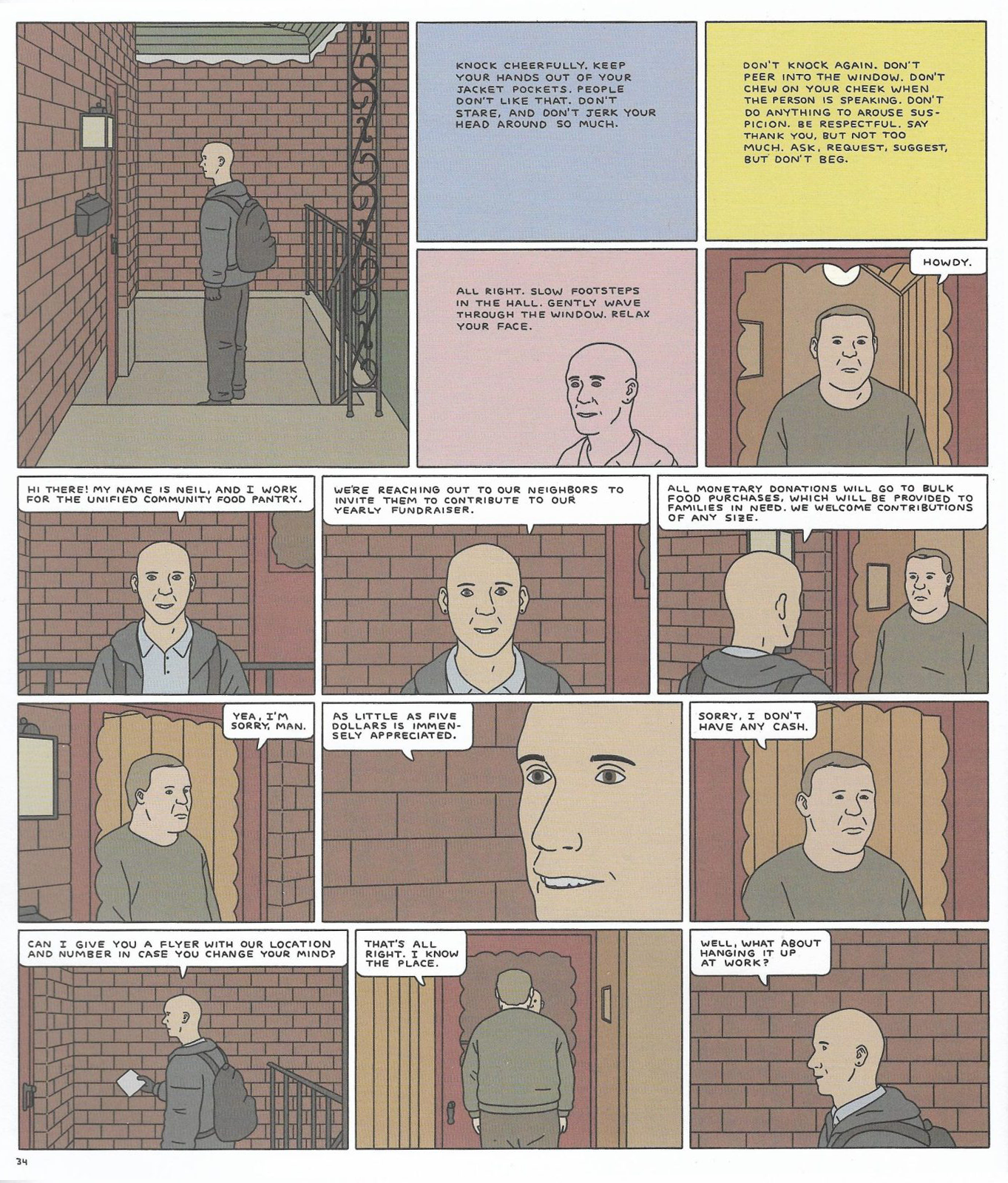
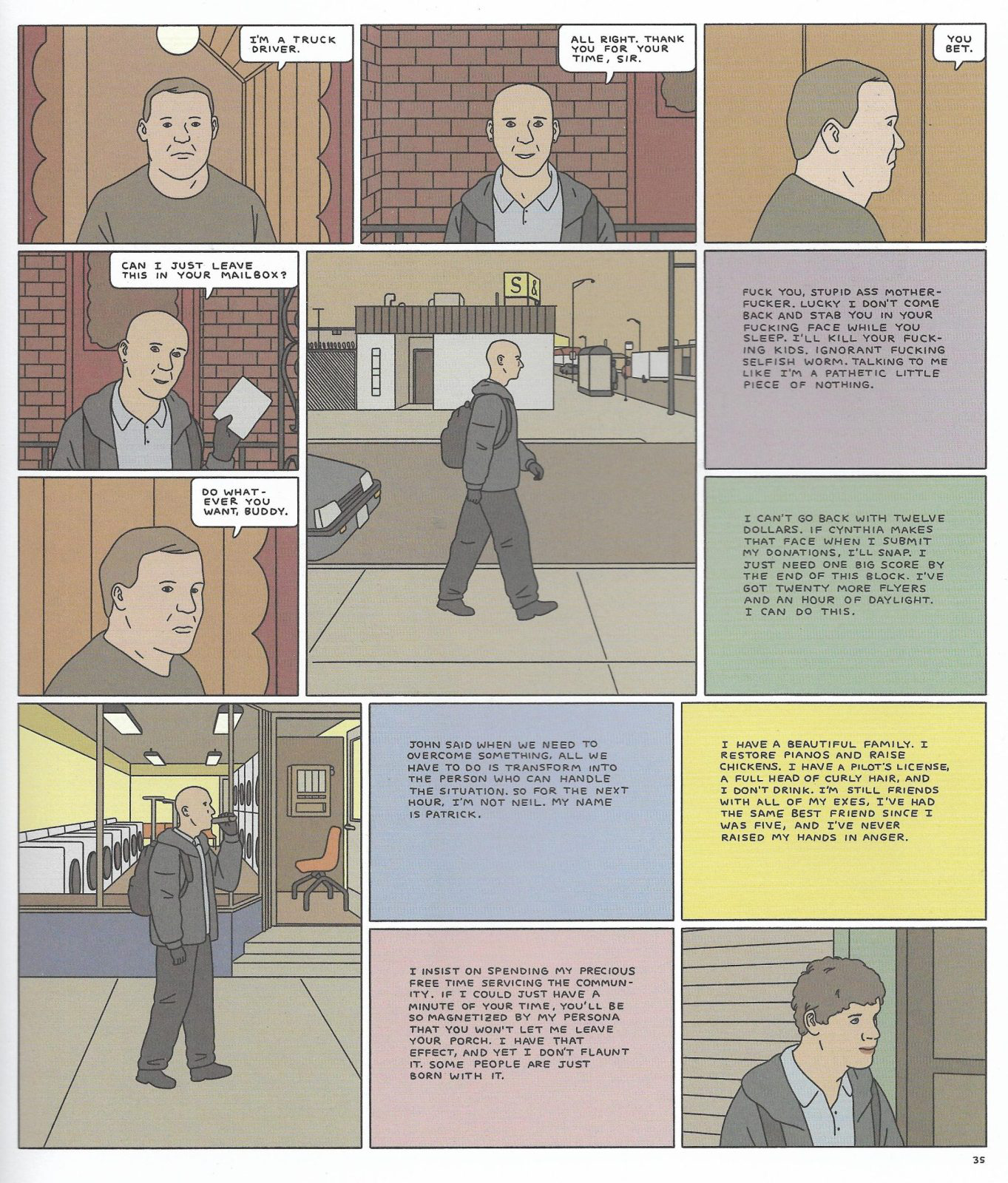
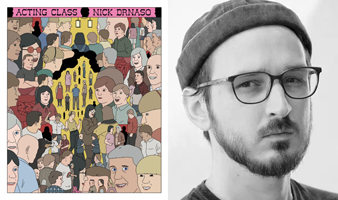
Drnaso, N. (2022) Acting class. Montréal: Drawn & Quarterly.
Brand Africa.
I think I have the same feeling toward the word “brand” as I do toward the word “Africa.” “Africa” is an incredibly problematic word for me. It’s a word used with great frequency to describe an intricately complex area made up of people, countries, and cultures that have no more in common than we do with Uzbekistan.
But because it’s a convenient word, and a well-known word, and a geographically defined continent, we use that word to sum up and generalize everyone who lives within the continent. In a way, it really is unfair. But we’ve inherited that framework, and I think we’d be better off if we banned the word entirely.
Getting back to “brand,” the word has similar implications. Yes, it’s of much smaller consequence—it’s a trivial example of the same problem, but it is a problem. The word gets thrown around so recklessly that I wonder whether we wouldn’t be better off setting it aside. Instead, if we could use more specific words that zero in on what we’re really interested in discussing, it would help the conversation.
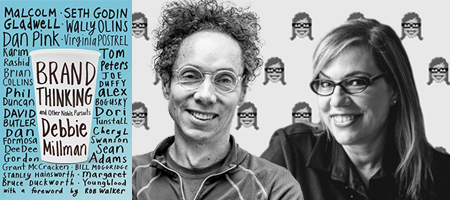
Millman, D. (2013) Brand thinking and other noble pursuits. New York: Allworth Press.
Dr Stranger Love: How I Learned to Stop Worrying and Love the Singularity
The true future of humanity lies not just in our species bidding farewell to Earth and expanding outward into space, but also in slipping the bonds of the “real world” and expanding inward into countless strange and strangely rewarding virtual worlds of our own design. If all of reality can plausibly be designed by computers and artificial intelligence, and if a simulated mode of reality can theoretically become more real than natural reality, then we owe it to ourselves and our society to delve as deeply as possible into those digital frontiers.
(…)
Perhaps this scenario reminds you of The Matrix, and those films’ visions of endless fields of humans kept alive in pods, unaware that their brains are connected to a computer simulation. But I would submit that the dystopian thing about this premise isn’t that trillions of humans might live their lives wholly inside cyberspace, but that they were forced there by hostile robots that had designed the simulation as a control mechanism. I believe that, in the future, plenty of people will choose to connect directly to a simulation as a means of pursuing peak fulfillment. Why does that seem like a bad thing?
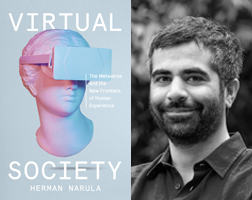
Narula, H. (2022) Virtual society: The metaverse and the new frontiers of human experience. London, UK: Penguin Business.
The loneliness of the LinkedIn user.
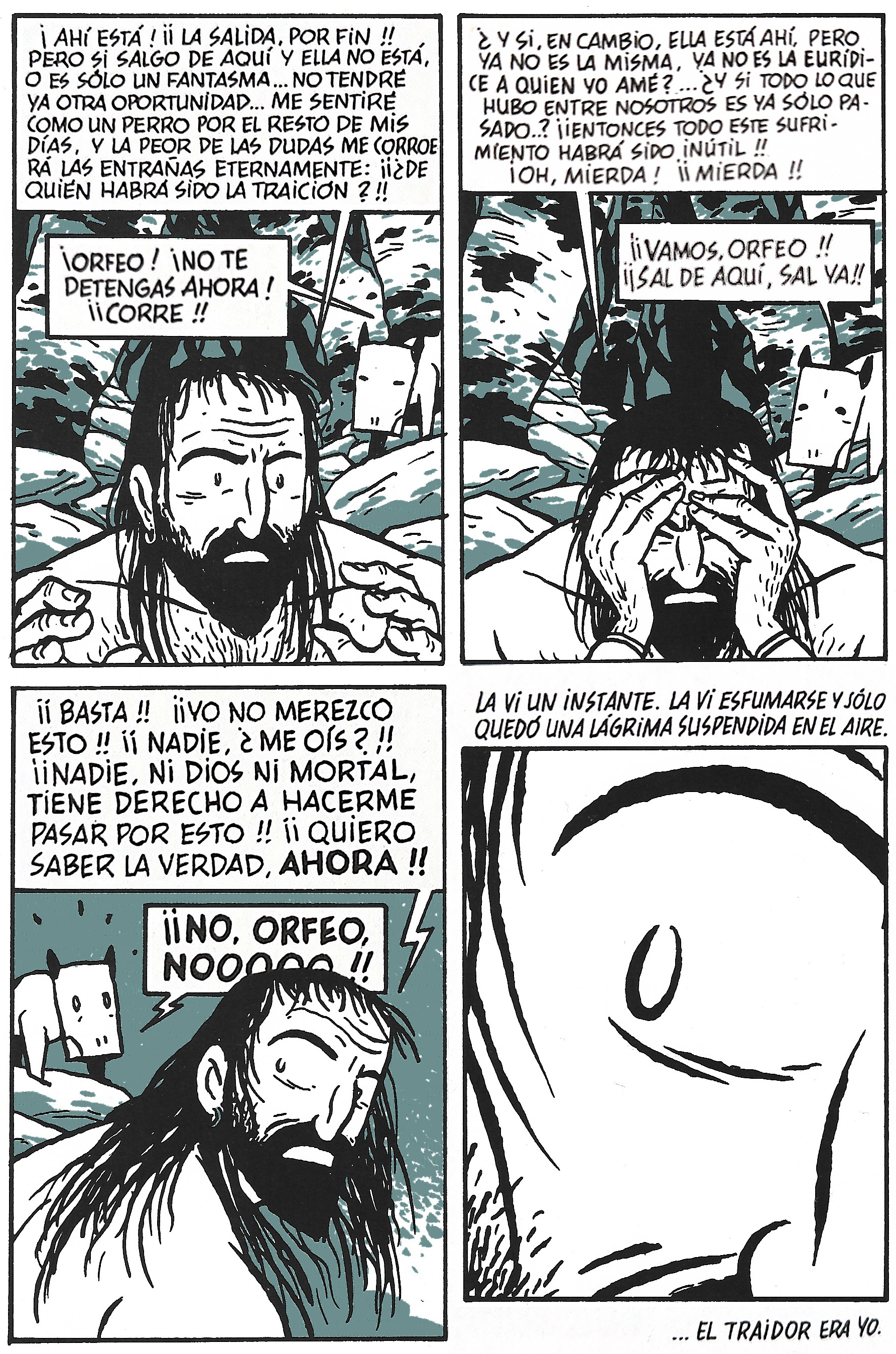
La virtud es un rayo de belleza celestial,
un don del alma, en la que adquiere su valor.
Ésta no teme al ultraje temporal, es más, el hombre alcanza con los años mayor esplendor.
Orfeo venció al infierno y luego fue vencido por sus deseos.
Digno sea de gloria eterna sólo aquel que a sí mismo se venza.
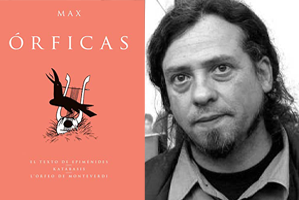
Max (2017) Órficas. Madrid: Nordica.
The Curse of Knowledge.
“Education is an admirable thing,” wrote Oscar Wilde, “but it is well to remember from time to time that nothing that is worth knowing can be taught.
(…)
The better you know something, the less you remember about how hard it was to learn.
(…)
How can we lift the curse of knowledge? The traditional advice—always remember the reader over your shoulder—is not as effective as you might think. The problem is that just trying harder to put yourself in someone else’s shoes doesn’t make you a whole lot more accurate in figuring out what that person knows. When you’ve learned something so well that you forget that other people may not know it, you also forget to check whether they know it. Several studies have shown that people are not easily disabused of their curse of knowledge, even when they are told to keep the reader in mind, to remember what it was like to learn something, or to ignore what they know.
But imagining the reader over your shoulder is a start. Occasionally people do learn to discount their knowledge when they are shown how it biases their judgments, and if you’ve read to this point, perhaps you will be receptive to the warning. So for what it’s worth: Hey, I’m talking to you. Your readers know a lot less about your subject than you think they do, and unless you keep track of what you know that they don’t, you are guaranteed to confuse them.
A better way to exorcise the curse of knowledge is to be aware of specific pitfalls that it sets in your path. There’s one that everyone is at least vaguely aware of: the use of jargon, abbreviations, and technical vocabulary. Every human pastime—music, cooking, sports, art, theoretical physics—develops an argot to spare its enthusiasts from having to say or type a long-winded description every time they refer to a familiar concept in each other’s company. The problem is that as we become proficient at our job or hobby we come to use these catchwords so often that they flow out of our fingers automatically, and we forget that our readers may not be members of the clubhouse in which we learned them.
Obviously writers cannot avoid abbreviations and technical terms altogether. Shorthand terms are unobjectionable, indeed indispensable, when a term has become entrenched in the community one is writing for. Biologists needn’t define transcription factor or spell out mRNA every time they refer to those things, and many technical terms become so common and are so useful that they eventually cross over into everyday parlance, like cloning, gene, and DNA. But the curse of knowledge ensures that most writers will overestimate how standard a term has become and how wide the community is that has learned it.
A surprising amount of jargon can simply be banished and no one will be the worse for it. A scientist who replaces murine model with rats and mice will use up no more space on the page and be no less scientific. Philosophers are every bit as rigorous when they put away Latin expressions like ceteris paribus, inter alia, and simpliciter and write in English instead: other things being equal, among other things, and in and of itself. And though nonlawyers might assume that the language of contracts, such as the party of the first part, must serve some legal purpose, most of it is superfluous. As Adam Freedman points out in his book on legalese, “What distinguishes legal boilerplate is its combination of archaic terminology and frenzied verbosity, as though it were written by a medieval scribe on crack.
Abbreviations are tempting to thoughtless writers because they can save a few keystrokes every time they have to use the term. The writers forget that the few seconds they add to their own lives come at the cost of many minutes stolen from the lives of their readers. I stare at a table of numbers whose columns are labeled DA DN SA SN, and have to flip back and scan for the explanation: Dissimilar Affirmative, Dissimilar Negative, Similar Affirmative, Similar Negative. Each abbreviation is surrounded by many inches of white space. What possible reason could there have been for the author not to spell them out? Abbreviations that are coined for a single piece of writing are best avoided altogether, to spare the reader from having to engage in the famously tedious memory task called paired-associate learning, in which psychologists force their participants to memorize arbitrary pairs of text like DAX-QOV. Even moderately common abbreviations should be spelled out on first use. As Strunk and White point out, “Not everyone knows that SALT means Strategic Arms Limitation Talks, and even if everyone did, there are babies being born every minute who will someday encounter the name for the first time. They deserve to see the words, not simply the initials.”20 The hazard is not limited to professional prose. Some of us receive annual Christmas letters in which the household spokesperson cheerily writes, “Irwin and I had a great time at the IHRP after dispatching the children to the UNER, and we all continue work on our ECPs at the SFBS.”
A considerate writer will also cultivate the habit of adding a few words of explanation to common technical terms, as in “Arabidopsis, a flowering mustard plant,” rather than the bare “Arabidopsis” (which I’ve seen in many science articles). It’s not just an act of magnanimity: a writer who explains technical terms can multiply her readership a thousandfold at the cost of a handful of characters, the literary equivalent of picking up hundred-dollar bills on the sidewalk. Readers will also thank a writer for the copious use of for example, as in, and such as, because an explanation without an example is little better than no explanation at all. For example: Here’s an explanation of the rhetorical term syllepsis: “the use of a word that relates to, qualifies, or governs two or more other words but has a different meaning in relation to each.” Got that? Now let’s say I continue with “. . . such as when Benjamin Franklin said, ‘We must all hang together, or assuredly we shall all hang separately.’” Clearer, no? No? Sometimes two examples are better than one, because they allow the reader to triangulate on which aspect of the example is relevant to the definition. What if I add “. . . or when Groucho Marx said, ‘You can leave in a taxi, and if you can’t get a taxi, you can leave in a huff’”?
And when technical terms are unavoidable, why not choose ones that are easy for readers to understand and remember? Ironically, the field of linguistics is among the worst offenders, with dozens of mystifying technical terms: themes that have nothing to do with themes; PRO and pro, which are pronounced the same way but refer to different things; stage-level and individual-level predicates, which are just unintuitive ways of saying “temporary” and “permanent”; and Principles A, B, and C, which could just as easily have been called the Reflexive Principle, the Pronoun Principle, and the Noun Principle. For a long time I got a headache reading papers in semantics that analyzed the two meanings of some. In a loose, conversational sense, some implies “some, but not all”: when I say Some men are chauvinists, it’s natural to interpret me as implying that others are not. But in a strict, logical sense, some means “at least one” and does not rule out “all”; there’s no contradiction in saying Some men are chauvinists; indeed, all of them are. Many linguists refer to the two meanings as the “upper-bounded” and “lower-bounded” senses, labels borrowed from mathematics, and I could never keep them straight. At last I came across a limpid semanticist who referred to them as the “only” and “at-least” senses, labels from everyday English, and I’ve followed the literature ever since.
(…)
Richard Feynman once wrote, “If you ever hear yourself saying, ‘I think I understand this,’ that means you don’t.”
(…)
The amount of abstraction that a writer can get away with depends on the expertise of her readership. But divining the chunks that have been mastered by a typical reader requires a gift of clairvoyance with which few of us are blessed. When we are apprentices in our chosen specialty, we join a clique in which, it seems to us, everyone else seems to know so much! And they talk among themselves as if their knowledge were second nature to every educated person. As we settle in to the clique, it becomes our universe. We fail to appreciate that it is a tiny bubble in a vast multiverse of other cliques. When we make first contact with the aliens in other universes and jabber at them in our local code, they cannot understand us without a sci-fi Universal Translator.
Even when we have an inkling that we are speaking in a specialized lingo, we may be reluctant to slip back into plain speech. It could betray to our peers the awful truth that we are still greenhorns, tenderfoots, newbies. And if our readers do know the lingo, we might be insulting their intelligence by spelling it out. We would rather run the risk of confusing them while at least appearing to be sophisticated than take a chance at belaboring the obvious while striking them as naïve or condescending.
It’s true that every writer must calibrate the degree of specialization in her language against her best guess of the audience’s familiarity with the topic. But in general it’s wiser to assume too little than too much. Every audience is spread out along a bell curve of sophistication, and inevitably we’ll bore a few at the top while baffling a few at the bottom; the only question is how many there will be of each. The curse of knowledge means that we’re more likely to overestimate the average reader’s familiarity with our little world than to underestimate it. And in any case one should not confuse clarity with condescension.
(…)
The key is to assume that your readers are as intelligent and sophisticated as you are, but that they happen not to know something you know.
Perhaps the best way to remember the dangers of private abbreviation is to recall the joke about a man who walks into a Catskills resort for the first time and sees a group of retired borscht-belt comics telling jokes around a table with their pals. One of them calls out, “Forty-seven!” and the others roar with laughter. Another follows with “A hundred and twelve!” and again the others double over. The newcomer can’t figure out what’s going on, so he asks one of the old-timers to explain. The man says, “These guys have been hanging around together so long they know all the same jokes. So to save time they’ve given them numbers, and all they need to do is call out the number.” The new fellow says, “That’s ingenious! Let me try it.” So he stands up and calls out, “Twenty-one!” There is a stony silence. He tries again: “Seventy-two!” Everyone stares at him, and nobody laughs. He sinks back into his seat and whispers to his informant, “What did I do wrong? Why didn’t anyone laugh?” The man says, “It’s all in how you tell it.”
(…)
Academics, consultants, policy wonks, and other symbolic analysts really do think about “issues” (they can list them on a page), “levels of analysis” (they can argue about which is most appropriate), and “contexts” (they can use them to figure out why something works in one place but not in another). These abstractions become containers in which they store and handle their ideas, and before they know it they can no longer call anything by its name.
(…)
To escape the curse of knowledge, we have to go beyond our own powers of divination. We have to close the loop, as the engineers say, and get a feedback signal from the world of readers—that is, show a draft to some people who are similar to our intended audience and find out whether they can follow it.26 This sounds banal but is in fact profound. Social psychologists have found that we are overconfident, sometimes to the point of delusion, about our ability to infer what other people think, even the people who are closest to us.27 Only when we ask those people do we discover that what’s obvious to us isn’t obvious to them. That’s why professional writers have editors. It’s also why politicians consult polls, why corporations hold focus groups, and why Internet companies use A/B testing, in which they try out two designs on a Web site (versions A and B) and collect data in real time on which gets more clicks.
(…)
Your reviewers needn’t even be a representative sample of your intended audience. Often it’s enough that they are not you.
Good prose is never written by a committee. A writer should revise in response to a comment when it comes from more than one reader or when it makes sense to the writer herself.
(…)
show a draft to yourself, ideally after enough time has passed that the text is no longer familiar. If you are like me you will find yourself thinking, “What did I mean by that?” or “How does this follow?” or, all too often, “Who wrote this crap?”
(…)
always try to lift yourself out of your parochial mindset and find out how other people think and feel. It may not make you a better person in all spheres of life, but it will be a source of continuing kindness to your readers.
Surt i torna a entrar
To establish a fresh start, people used two types of temporal landmarks — social and personal. The social landmarks were those that everyone shared: Mondays, the beginning of a new month, national holidays. The personal ones were unique to the individual: birthdays, anniversaries, job changes. But whether social or personal, these time markers served two purposes.
First, they allowed people to open “new mental accounts” in the same way that a business closes the books at the end of one fiscal year and opens a fresh ledger for the new year. This new period offers a chance to start again by relegating our old selves to the past. It disconnects us from that past self’s mistakes and imperfections, and leaves us confident about our new, superior selves. Fortified by that confidence, we “behave better than we have in the past and strive with enhanced fervour to achieve our aspirations.” In January advertisers often use the phrase “New Year, New You.” When we apply temporal landmarks, that’s what’s going on in our heads. Old Me never flossed. But New Me, reborn on the first day back from summer vacation, will be a fiend about oral hygiene.
The second purpose of these time markers is to shake us out of the tree so we can glimpse the forest. “Temporal landmarks interrupt attention to day-to-day minutiae, causing people to take a big picture view of their lives and thus focus on achieving their goals.” Think about those spatial landmarks again. You might drive for miles and barely notice your surroundings. But that glowing Shell station on the corner makes you pay attention. It’s the same with fresh start dates. Daniel Kahneman draws a distinction between thinking fast (making decisions anchored in instinct and distorted by cognitive biases) and thinking slow (making decisions rooted in reason and guided by careful deliberation). Temporal landmarks slow our thinking, allowing us to deliberate at a higher level and make better decisions.
The implications of the fresh start effect, like the forces that propel it, are also personal and social. Individuals who get off to a stumbling start — at a new job, on an important project, or in trying to improve their health — can alter their course by using a temporal landmark to start again. People can, as the Wharton researchers write, “strategically [create] turning points in their personal histories.”
Take Isabel Allende, the Chilean-American novelist. On Jan. 8, 1981, she wrote a letter to her deathly ill grandfather. That letter formed the foundation of her first novel, The House of the Spirits. Since then, she has started each subsequent novel on that same date, using Jan. 8 as a temporal landmark to make a fresh start on a new project.
In later research, Dai, Milkman and Riis found that imbuing an otherwise ordinary day with personal meaning generates the power to activate new beginnings. For instance, when they framed March 20 as the first day of spring, the date offered a more effective fresh start than simply identifying it as the third Thursday in March. For Jewish participants in their study, reframing Oct. 5 as the first day after Yom Kippur was more motivating than thinking of it as the 278th day of the year. Identifying one’s own personally meaningful days — a child’s birthday or the anniversary of your first date with your partner — can erase a false start and help us begin anew.
Real Free Speech.
Cooperating instead of competing. Telling instead of lecturing. Listening instead of eavesdropping. Compassion not judgment. Acceptance not censorship. Celebrating identities not shaming. Risking exposure, not hiding. Paying attention instead of zoning out.
That is what makes community storytelling unique and transformational. But what makes it radical?
For one thing, the pure democracy of it all. The essential structure provides all storytellers an equal opportunity to take to the stage and tell about real things that happened to them, things they saw and did, things that they want to share with a roomful of strangers. It’s a place where everyday folks, with different life experiences, joys and sorrows, have a voice. Providing a venue and audience for this sort of activity could be seen as downright subversive. Nothing is canned, predictable or especially polite. It can be raw. mean or sugary sweet depending on who is brave enough to commit to a rehearsal, have their name and bio go out over social media, and show up for the event.
The structure inspires honesty and confessional tales. Intimacy emerges from the bare bones of a stage, a mic, a teller and listeners. One night at an Odyssey Storytelling show a woman, whose mother sat in the audience, confessed to sneaking out of her second story bedroom window, undetected, when she was a teenager. Twenty years later, Mom laughed at the story along with everyone else.
Stories about shame, triumph, and prejudice; love, revenge, and greed; all presented on a neutral stage, inviting deep respect and listening. I’ve never seen nor heard anyone being confrontational, although sometimes people are shocked or confused. If you weren’t expecting to hear about the sex life of a transman, it might take a moment or two to adjust your expectations and relax into serious appreciation.
Exposure = understanding = acceptance = true connection
Radically changing minds and hearts is just one of many advantages of community storytelling. Shaking people out of their insular lives and dropping them into another reality is radical. Community Storytelling is a place where diversity is celebrated and lessons are learned in the best possible le way—from people who are different from us. By listening fiercely and intensely, we allow ourselves to be amused or scared or made joyful; we open up to new possibilities. As the Tucson Meet Yourself 40th Anniversary Commemorative Magazine so aptly put it, “The messiness of cultures bumping into each other is the messiness of democracy—the elusive aspiration of equality, justice, and respect.”
Infusing storytellers with self-confidence and the knowledge that their stories matter is radical. Exposing tellers to nonjudgmental witnesses who validate their experience by offering kindness in exchange for honesty/trust subverts the paradigm of separateness and competition. For two hours, the length of a show, a community is created. And there is spillover—friendships are forged, connections happen, overlapping social networks will amaze and make us say, “But, of course.”

Edit yourself out.
There is a wonderful book called The Profession of the Stage Director, by Georgi Tovstonogov, who writes that a director may fall into one of the deepest pits by rushing immediately to visual or pictorial solutions.
This statement influenced and aided me greatly in my career as a stage director; and, subsequently, in my work as a screenwriter. If one understands what the scene means, and stages that, Mr. Tovstonogov was saying, one will be doing one’s job for both the author and the viewer. If one rushes, first, into a pretty, or pictorial, or even descriptive staging, one may be hard-pressed to integrate that staging into the logical progression of the play. And, further, while so hard-pressed, one while undoubtedly become wedded to its eventual inclusion, to the detriment of the piece as a whole.
This concept as also stated by Hemingway as, “Write the story, take out all the good lines, and see if it still works.”
My experience as a director, and as a dramatist, is this: the piece is moving in proposition to how much the author can leave out.
A good writer gets better only by learning to cut, to remove the ornamental, the descriptive, the narrative, and especially the deeply felt and meaningful. What remains? The story remains. What is the story? The story is the essential progression of incidents that occur to the hero in pursuit of his one goal.
The point, as Aristotle told us, is what happens to the hero … not what happens to the writer.
Llops i caputxetes.
Aixeco la tapa del vàter per pixar i ho veig, la llepada de merda seca a la paret interior de la tassa.
«És molt bonic advocar per la igualtat de gènere al mercat laboral i no replantejar-se qui neteja el vàter a casa», deia una economista de qui Ilegia una entrevista I'altre dia a l'oficina en els meus matins de no fer res.
Passejo la mirada pel lavabo, però no com sempre, pensant: «Hauria de posar-hi quadrets bucòlics i inspiradors o tovalloletes grogues que fessin joc», sinó com ho feia la meva àvia, amb una mirada inquisitorial. M'adono de la quantitat de ronya que hi ha per tot arreu, de la crosta groguenca de la banyera, de les restes seques de dentífric a la pica. Penso quant de temps deu fer de l'última neteja a fons. Quan vam decidir que el nou replantejament econòmic deixava fora la Gladys, que a més de cuidar els nens ens donava un cop de mà amb la neteja, l'Horacio em va dir: «Ja me n'encarregaré jo, olvidate». Quan ho decidíem ho vaig veure, com en una il·luminació, com en una aparició mariana, em vaig veure a mi mateixa amb els guants de goma grocs, el Pato per desinfectar el vàter a la mà, ajupida a la tassa, pensant: «Net? Quins collons, net!». Em vaig veure arribant a aquest extrem, als límits de la pandemia, de l'ebola, del tifus, de l'escorbut. «Jo ho veig net, flaca», em diria ara mateix si s'aixequés, amb els cabells despentinats i els calçotets negres amagant una semierecció. Hi ha una lluita, aquí, no només contra els gèrmens. Ell es grataria el cul i em ficaria la mà al pit, amb els ulls encara clucs per la son, aliè a aquest camí cap a la igualtat que ell no ha hagut de transitar mai, amb guants de goma i un pot de Pato a la mà. I penso en tots aquells homes arribant a l'Everest, o al pol Nord, o a l'Antàrtida, o a la fama, quan el que realment és una fita és arribar aquí, en aquest lloc on el vàter es perd cap endins, la cova fosca on rau el perill, l'agonia, l'autèntica lluita de generes.
Crime and Entertainment.
HARRIS: (…) Given what we've just said, we know that every person is essentially a force of nature. And in this corner of the universe, the laws of physics are playing out perfectly. Whether the universe is purely deterministic or there's an added factor of randomness doesn't matter; that still gives us no basis to believe in free will. Every person is a puppet who didn't pick his own strings, and the strings reach back to the Big Bang.
But people often do modify their behavior because of what we say or do. That process can be fraught with frustration, of course. But these influences are real. You're doing something I want to discourage, and I know that you, as another primate, are susceptible to being influenced by disincentives—or punishments, in the extreme case. And it becomes totally rational to invoke all the usual means of influencing another person's behavior without attributing free will to whomever you're trying to influence.
SAPOLSKY: I agree. Whether in Eric Kandel's classic work with Aplysia (a sea slug) and all the way up to us, nervous systems can be conditioned by positive and negative reinforcement. We understand that down to the molecular level. Yes, nervous systems can be changed by inputs. They abundantly are, and the inputs sometimes take the form of what we might call punishment, when it may be necessary to change somebody's behavior. If a child gets a "time out" for doing something rotten to another kid, the penalty is going to affect his frontal cortical neurons and strengthen the synapses that tell him not to do that next time. It's a mechanistic thing—and nonetheless it's punitive. What we need to do is use punishment instrumentally, when we know it will accomplish something within a biological framework. But don't stand there and preach while you're doing it, and don't take pleasure from a sense of justice being served.
HARRIS: The wrinkle here is that the pleasure of justice, and even a lust for vengeance, runs so deep in us. The free-will illusion is so compelling that people argue (or at least feel) that the criminal justice system should acknowledge it in some way. Justice isn't satisfying if we medicalize human evil—saying, basically, that every criminal is not guilty by reason of insanity, and we'll either cure them or warehouse those we can't cure, without any moralizing about it. How do you think about the moral improvement of our species in light of the fact that so many people find retribution, and even vengeance, morally compelling, and in some cases psychologically necessary?
SAPOLSKY: This is obviously very powerful, challenging stuff. Neurobiologically, justice is pleasurable. It activates mesolimbic dopamine systems. It feels good. It has an evolutionary logic to it: Third-party punishment (carried out by an objective bystander, rather than by the person who has been wronged) is costly. It costs to have a police department, it costs to have judges, it costs to give dental insurance to prison guards. So there has to have evolved a certain pleasure, a certain reward, in having done the right punitive thing.
But take the historical perspective. There was a time when society's worst people would have been set upon by a mob and beaten to death. And at some point, governmental authorities said, "Yes, yes, we know that's pleasurable, but from now on you have to turn the person oner to us so that we can beat them to death, and tou can watch:" And people had to adjust to that. And then at some lafer point they'd say, "Yes, but now we’re going to do something more humane. We’re going to hang people. You can come and see it and bring your picnic baskets. We’re going to have a public hanging. But you'll have to ger your pleasures in some other way than watching the person being slowly beaten to death." And people adjust to that, and then you don't have crowds at executions anymore. Then we have people designing machines that do lethal injections.
At every step of the way, what essentially has been said is, 'Yes, yes, there's a certain visceral sense of pleasurable vengeance in having it done this way. But we're not doing that anymore, and you're going to have to get used to it." And people have gotten used to it at each one of those steps. People will have to get used to the idea that a damaging act by a human is like a bear attack or a hurricane. We already think that way when it's clear the damaging act was unintentional, purely accidental, and the perpetrator is crippled with remorse. We simply will have to expand that recognition further. At each one of those steps, there's a cultural shift as to what punishments we don't impose anymore, and it's just going to keep happening. Yet at any point where the line is currently drawn, it still seems inconceivable: "My God, if somebody did that to my loved one and they then got to spend the rest of their life enjoying three meals a day, that would just consume me."
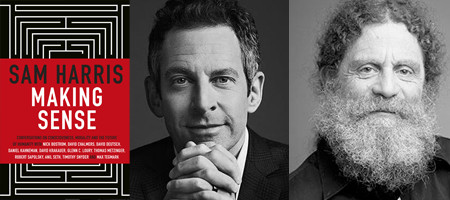
Harris, Sam, and Robert Sapolsky. “The Biology of Good and Evil.” Making Sense, Bantam Press, Ealing, UK, 2020, pp. 270–272.
Losses that wear winning skins.
Let me give you an example of what I mean, drawn from the business I know best. In animation, we have many story, art, budget, technology, finance, constituencies: production, marketing, and consumer products. The people within each constituency have priorities that are important—and often opposing. The writer and director want to tell the most affecting story possible; the production designer wants the film to look beautiful; the technical directors want flawless effects; finance wants to keep the budgets within limits; marketing wants a hook that is easily sold to potential viewers; the consumer products people want appealing characters to turn into plush toys and to plaster on lunchboxes and T-shirts; the production managers try to keep everyone happy—and to keep the whole enterprise from spiraling out of control. And so on. Each group is focused on its own needs, which means that no one has a clear view of how their decisions impact other groups; each group is under pressure to perform well, which means achieving stated goals.
Particularly in the early months of a project, these goals— which are subgoals, really, in the making of a film—are often easier to articulate and explain than the film itself. But if the director is able to get everything he or she wants, we Will likely end up with a film that's too long. If the marketing people get their way, we Will only make a film that mimics those that have already been "proven" to succeed—in other words, familiar to viewers but in all likelihood a creative failure. Each group, then, is trying to do the right thing, but they're pulling in different directions.
If any one of those groups "wins," we lose.
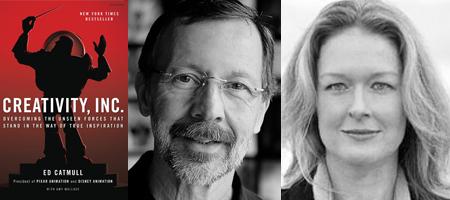
La feina ben feta.
Some of us had been threatening our friend Colby for a long time, because of the way he had been behaving. And now he'd gone too far, so we decided to hang him. Colby argued that just because he had gone too far (he did not deny that he had gone too far) did not mean that he should be subjected to hanging. Going too far, he said, was something everybody did sometimes. We didn't pay much attention to this argument. We asked him what sort of music he would like played at the hanging. He said he'd think about it but it would take him a while to decide. I pointed out that we'd have to know soon, because Howard, who is a conductor, would have to hire and rehearse the musicians and he couldn't begin until he knew what the music was going to be. Colby said he'd always been fond of Ives's Fourth Symphony. Howard said that this was a "delaying tactic" and that everybody knew that the Ives was almost impossible to perform and would involve weeks of rehearsal, and that the size of the orchestra and chorus would put us way over the music budget. "Be reasonable," he said to Colby. Colby said he'd try to think of something a little less exacting.
Hugh was worried about the wording of the invitations. What if one of them fell into the hands of the authorities? Hanging Colby was doubtless against the law, and if the authorities learned in advance what the plan was they would very likely come in and try to mess everything up. I said that although hanging Colby was almost certainly against the law, we had a perfect moral right to do so because he was our friend, belonged to us in various important senses, and he had after all gone too far. We agreed that the invitations would be worded in such a way that the person invited could not know for sure what he was being invited to. We decided to refer to the event as "An Event Involving Mr. Colby Williams." A handsome script was selected from a catalogue and we picked a cream-colored paper. Magnus said he'd see to having the invitations printed, and wondered whether we should serve drinks. Colby said he thought drinks would be nice but was worried about the expense. We told him kindly that the expense didn't matter, that we were after all his dear friends and if a group of his dear friends couldn't get together and do the thing with a little bit of eclat, why, what was the world coming to? Colbv asked if he would be able to have drinks, too, before the event. We said,"Certainly."
The next item of business was the gibbet. None of us knew too much about gibbet design, but Tomas, who is an architect, said he'd look it up in old books and draw the plans. The important thing, as far as he recollected, was that the trapdoor function perfectly. He said that just roughly, counting labor and materials, it shouldn't run us more than four hundred dollars. "Good God !" Howard said. He said what was Tomas figuring on, rosewood? No, just a good grade of pine, Tomas said. Victor asked if unpainted pine wouldn't look kind of "raw," and Tomas replied that he thought it could be stained a dark walnut without too much trouble.
I said that although I thought the whole thing ought to be done really well and all, I also thought four hundred dollars for a gibbet, on top of the expense for the drinks, invitations, musicians, and everything, was a bit steep, and why didn't we just use a tree -- a nice-looking oak, or something? I pointed out that since it was going to be a June hanging the trees would be in glorious leaf and that not only would a tree add a kind of "natural" feeling but it was also strictly traditional, especially in the West. Tomas, who had been sketching gibbets on the backs of envelopes, reminded us that an outdoor hanging always had to contend with the threat of rain. Victor said he liked the idea of doing it outdoors, possibly on the bank of a river but noted that we would have to hold it some distance from the city, which presented the problem of getting the guests, musicians, etc., to the site and then back to town.
At this point everybody looked at Harry, who runs a car-and-truck-rental business. Harry said he thought he could round up enough limousines to take care of that end but that the drivers would have to be paid. The drivers, he pointed out, wouldn't be friends of Colby's and couldn't be expected to donate their services, any more than the bartender or the musicians. He said that he had about ten limousines, which he used mostly for funerals, and that he could probably obtain another dozen by calling around to friends of his in the trade. He said also that if we did it outside, in the open air, we'd better figure on a tent or awning of some kind to cover at least the principals and the orchestra, because if the hanging was being rained on he thought it would look kind of dismal. As between gibbet and tree, he said, he had no particular preferences and he really thought that the choice ought to be left up to Colby, since it was his hanging. Colby said that everybody went too far, sometimes, and weren't we being a little Draconian? Howard said rather sharply that all that had already been discussed, and which did he want, gibbet or tree? Colby asked if he could have a firing squad. No, Howard said, he could not. Howard said a firing squad would just be an ego trip for Colby, the blindfold and last-cigarette bit, and that Colby was in enough hot water already without trying to "upstage" everyone with unnecessary theatrics. Colby said he was sorry, he hadn't meant it that way, he'd take the tree. Tomas crumpled up the gibbet sketches he'd been making, in disgust.
Then the question of the hangman came up. Pete said did we really need a hangman? Because if we used a tree, the noose could be adjusted to the appropriate level and Colby could just jump off something -- a chair or stool or something. Besides, Pete said, he very much doubted if there were any free-lance hangmen wandering around the country, now that capital punishment has been done away with absolutely, temporarily, and that we'd probably have to fly one in from England or Spain or one of the South American countries, and even if we did that how could we know in advance that the man was a professional, a real hangman, and not just some money-hungry amateur who might bungle the job and shame us all, in front of every body? We all agreed then that Colby should just jump off something and that a chair was not what he should jump off of, because that would look, we felt, extremely tacky -- some old kitchen chair sitting out there under our beautiful tree. Tomas, who is quite modern in outlook and not afraid of innovation, proposed that Colby be standing on a large round rubber ball ten feet in diameter. This, he said, would afford a sufficient "drop" and would also roll out of the way if Colby suddenly changed his mind after jumping off. He reminded us that by not using a regular hangman we were placing an awful lot of the responsibility for the success of the affair on Colby himself, and that although he was sure Colby would perform creditably and not disgrace his friends at the last minute, still, men have been known to get a little irresolute at times like that, and the ten-foot-round rubber ball, which could probably be fabricated rather cheaply, would insure a "bang-up" pro duction right down to the wire.
At the mention of "wire," Hank, who had been silent all this time, suddenly spoke up and said he wondered if it wouldn't be better if we used wire instead of rope -- more efficient and in the end kinder to Colby, he suggested. Colby began looking a little green, and I didn't blame him, because there is something extremely distasteful in think ing about being hanged with wire instead of rope -- it gives you sort of a revulsion, when you think about it. I thought it was really quite unpleasant of Hank to be sitting there talking about wire, just when we had solved the problem of what Colby was going to jump off of so neatly, with Tomas's idea about the rubber ball, so I hastily said that wire was out of the question, because it would injure the tree -- cut into the branch it was tied to when Colby's full weight hit it -- and that in these days of increased respect for the environment, we didn't want that, did we? Colby gave me a grateful look, and the meeting broke up. Everything went off very smoothly on the day of the event (the music Colby finally picked was standard stuff, Elgar, and it was played very well by Howard and his boys). It didn't rain, the event was well attended, and we didn't run out of Scotch, or anything. The ten-foot rubber ball had been painted a deep green and blended in well with the bucolic setting. The two things I remember best about the whole episode are the grateful look Colby gave me when I said what I said about the wire, and the fact that nobody has ever gone too far again.
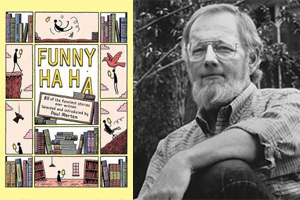
Donald Barthelme (1973) Some of us had been threatening our friend Colby in Paul Merton (2019) Funny Ha, Ha
Xerox Life.
‘And what do you think? Do you suppose you can pull it off? Perform this role?’
‘It won’t be easy. But I believe if I continue to observe Josie carefully, it will be within my abilities.’
‘Then let me ask you something else. Let me ask you this. Do you believe in the human heart? I don’t mean simply the organ, obviously. I’m speaking in the poetic sense. The human heart. Do you think there is such a thing? Something that makes each of us special and individual? And if we just suppose that there is. Then don’t you think, in order to truly learn Josie, you’d have to learn not just her mannerisms but what’s deeply inside her? Wouldn’t you have to learn her heart?’
‘Yes, certainly.’
‘And that could be difficult, no? Something beyond even your wonderful capabilities. Because an impersonation wouldn’t do, however skillful. You’d have to learn her heart, and learn it fully, or you’ll never become Josie in any sense that matters.’
A public bus had stopped beside some abandoned fruit boxes. As the Father steered around it, the car behind us made angry horn noises. Then there were more angry horns, but these were further away and not aimed at us.
‘The heart you speak of,’ I said. ‘It might indeed be the hardest part of Josie to learn. It might be like a house with many rooms. Even so, a devoted AF, given time, could walk through each of those rooms, studying them carefully in turn, until they became like her own home.’
The Father sounded our own horn at a car trying to enter the traffic line from a side street.
‘But then suppose you stepped into one of those rooms,’ he said, ‘and discovered another room within it. And inside that room, another room still. Rooms within rooms within rooms. Isn’t that how it might be, trying to learn Josie’s heart? No matter how long you wandered through those rooms, wouldn’t there always be others you’d not yet entered?’
I considered this for a moment, then said: ‘Of course, a human heart is bound to be complex. But it must be limited. Even if Mr Paul is talking in the poetic sense, there’ll be an end to what there is to learn. Josie’s heart may well resemble a strange house with rooms inside rooms. But if this were the best way to save Josie, then I’d do my utmost. And I believe there’s a good chance I’d be able to succeed.’
‘Hmm.’
(…)
‘Mr Capaldi believed there was nothing special inside Josie that couldn’t be continued. He told the Mother he’d searched and searched and found nothing like that. But I believe now he was searching in the wrong place. There was something very special, but it wasn’t inside Josie. It was inside those who loved her.’

The neverending story of the blockchain miner
Bastian saw a large group of people, men and women, young and old, all in the strangest clothes. They didn’t speak, each one was alone with himself. On the ground lay a large number of cubes, and there were letters on all six sides of the cubes. The people kept jumbling the cubes and then staring at them.
‘What are they doing?’ Bastian whispered. ‘What sort of game is that?’
‘It’s called the jumble game,’ answered Argax. He motioned to the players and cried out: ‘Good work, children! Keep at it! Don’t give up!’
Then, turning back to Bastian he whispered in his ear: ‘They can’t talk anymore. They’ve lost the power of speech. So I thought up this game for them. As you see, it keeps them busy. It’s very simple. If you stop to think about it, you’ll have to admit that all the stories in the world consist essentially of twenty-six letters. The letters are always the same, only the arrangement varies. From letters words are formed, from word sentences, from sentences chapters, and from chapters stories. Now take a look. What do you see there?’
Bastian read:
HGIKLOPFMWEYVXQ
YXCVBNMASDFGHJKLOA
QWERTZUIOPU
ASDFGHJKLOA
MNBVXYLKJHGFDSA
UPOIUZTREWQAS
QSERTZUIOPUASDAF
ASDFGHJKLOAYXC
UPOIUZTREWQ
AOLKJHGFDSAMNBV
GKHDSRZIP
QETUOUSFHKO
YCBMWRZIP
ARCGUNIKYO
QWERTZIOPLUASD
MNBVCXYASD
LKJUONGREFGHI
‘Yes, of course,’ said Argax with a giggle, ‘it usually makes no more sense than that. But if you keep at it for a long time, words turn up now and then. Not very brilliant words, but still words. “Spinachcramp,” for instance, or “sugarbrush,” or “nosepolish.” And if you play for a hundred years, or a thousand or a hundred thousand, the law of chances tells us that a poem will probably come out. And if you play it forever, every possible poem and every possible story will have to come out, in fact every story about a story, and even this story about the two of us chatting here. It’s only logical, don’t you think?’
‘It’s horrible,’ said Bastian.
‘I wouldn’t say that,’ said Argax. ‘It depends on your point of view. It keeps these people, in a manner of speaking, busy. And anyway, what else can we do with them in Fantastica?’
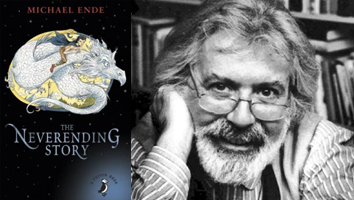
Götterdämmerung, year 15.
Until the age of thirteen, when I was sent from Bombay to boarding school in faraway England, I was a much more homogeneous self than I am now. I had lived in the same house in the same city all my life, in the bosom of my family, among people whose customs I knew without having to do anything as conscious as ‘know’ them, speaking the languages that people spoke in that city, in that country, in that time. These are the four roots of the self: language, place, community, custom. But in our age, the great age of migration, many of us have at least one of these roots pulled up. We move away from the place we know, away from the community that knows us, to a place where the customs are different and, perhaps, the most commonly spoken language is one we don’t know, or if we speak it, we speak it badly and cannot express in it the subjects of what we think and who we are. In my case, I had been brought up multilingually, so my English was fine, it was the one root still planted in the earth, but the others had all gone. In Norse mythology, the World Tree, the great ash Yggdrasil, has three roots. One falls into the Pool of Knowledge near Valhalla, the pool from which odin drinks, but the others are slowly being destroyed, one gnawed by a monster called the Nidhogg, the other being gradually burned away by the flames of the fire region, Muspelheim. When these two roots are destroyed, the tree falls, and the Götterdämmerung begins. The migrant too is at first a tree standing without roots, trying not to fall. Migration is an existential act, stripping us of our defences, mercilessly exposing us to a world that understands us badly, if at all: as if the earth were stripped of its atmosphere and the sun were to bear down upon it in all its pitiless force.