Edit yourself out.

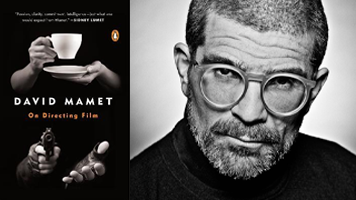
There is a wonderful book called The Profession of the Stage Director, by Georgi Tovstonogov, who writes that a director may fall into one of the deepest pits by rushing immediately to visual or pictorial solutions.

This statement influenced and aided me greatly in my career as a stage director; and, subsequently, in my work as a screenwriter. If one understands what the scene means, and stages that, Mr. Tovstonogov was saying, one will be doing one’s job for both the author and the viewer. If one rushes, first, into a pretty, or pictorial, or even descriptive staging, one may be hard-pressed to integrate that staging into the logical progression of the play. And, further, while so hard-pressed, one while undoubtedly become wedded to its eventual inclusion, to the detriment of the piece as a whole.

This concept as also stated by Hemingway as, “Write the story, take out all the good lines, and see if it still works.”

My experience as a director, and as a dramatist, is this: the piece is moving in proposition to how much the author can leave out.

A good writer gets better only by learning to cut, to remove the ornamental, the descriptive, the narrative, and especially the deeply felt and meaningful. What remains? The story remains. What is the story? The story is the essential progression of incidents that occur to the hero in pursuit of his one goal.

The point, as Aristotle told us, is what happens to the hero … not what happens to the writer.
I'll drink to that.

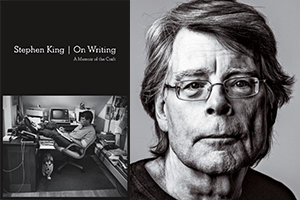
The idea that creative endeavor and mind-altering substances are entwined is one of the great pop-intellectual myths of our time. The four twentieth-century writers whose work is most responsible for it are probably Hemingway, Fitzgerald, Sherwood Anderson, and the poet Dylan Thomas. They are the writers who largely formed our vision of an existential English-speaking wasteland where people have been cut off from one another and live in an atmosphere of emotional strangulation and despair. These concepts are very familiar to most alcoholics; the common reaction to them is amusement. Substance-abusing writers are just substance abusers—common garden-variety drunks and druggies, in other words. Any claims that the drugs and alcohol are necessary to dull a finer sensibility are just the usual self-serving bullshit. I’ve heard alcoholic snowplow drivers make the same claim, that they drink to still the demons. It doesn’t matter if you’re James Jones, John Cheever, or a stewbum snoozing in Penn Station; for an addict, the right to the drink or drug of choice must be preserved at all costs. Hemingway and Fitzgerald didn’t drink because they were creative, alienated, or morally weak. They drank because it’s what alkies are wired up to do. Creative people probably do run a greater risk of alcoholism and addiction than those in some other jobs, but so what? We all look pretty much the same when we’re puking in the gutter.