Sense obstacles no hi ha llibertat.

Tan sols la imaginació, que és font d'enganys, ens pot fer creure que l'obstacle ens impedeix ser Iliures. Cadascú de nosaltres, en el seu fur intern, tendeix a considerar-se el centre del món. I quan deixa que la imaginació el domine, el seu jo s'infla de forma desorbitada. Quin límit pot haver en el meu interior per a considerar-me la més llesta, la millor, la més guapa? Què pot impedir que en la meua imaginació anul·le tots els rivals possibles?

Quan se suprimeix realment un obstacle, tot i que s'estiga cometent un crim real, es tracta d'una supressió imaginària, perquè únicament la imaginació pot creure que sense això que anomena "obstacles a la seua Ilibertat" es puga arribar a ser lliure. Com si el vaixell pogués existir sense mar ni sense vent. A Simone Weil li agradava citar en les seues classes de filosofia la frase de Kant: «La coloma lleugera, quan en el seu vol Iliure sent la resistència de l'aire que solca, podria imaginar-se que encara ho faria millor en el buit».

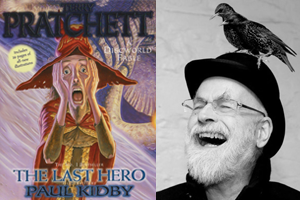
Man created God in his own image and likeness, on Halloween.

The gods play games with the fate of men. Not complex ones obviously, because gods lack patience. Cheating is part of the rules. And gods play hard. To lose all believers is, for a god, the end. But a believer who survives the game gains honour and extra belief. Who wins with the most believers, lives.

Believers can include other gods, of course. Gods believe in belief.

There were always many games going on in Dunmanifestin, the abode of die gods on Cori Celesti. It looked, from outside, like a crowded city.* Not all gods lived there, many of them being bound to a particular country or in the case of the smaller ones, even one tree. But it was a Good Address. It was where you hung your metaphysical equivalent of the shiny brass plate, like those small discreet buildings in the smarter areas of major cities which nevertheless appear to house one hundred and fifty lawyers and accountants, presumably on some sort of shelving.

The city's domestic appearance was because, while people are influenced by gods, so gods are influenced by people.

Most gods were people-shaped: people don't have much imagination, on the whole. Even Offler the Crocodile God was only crocodile-headed. Ask people to imagine an annual god and they will, basically, come up with the idea of someone in a really bad mask. Men have been much better at inventing demons, which is why there are so many. 

*Few religions are definite about the size of Heaven, but on the planet Earth the Book of Revelation (ch. XXI, v.l6) gives it as a cube 12,000 furlongs on a side. This is somewhat less than 500,000,000.000,000,000,000 cubic feet. Even allowing that the Heavenly Host and other essential services take up at least two thirds of this spate, this leaves about one million cubic feet of space for each human occupant-assuming that every creature that could be called 'human' is allowed in, and that the human race eventually totals a thousand times the number of humans alive up until now. This is such a generous amount of space that it suggests that room has also been provided for some alien races or - a happy thought - that pets are allowed.


tp.png

Fictions and facts.

A picture hung on the wall of our parlor. In it, a woman was taking a shirt from a clothesline. She had clothespins in her teeth and it was windy and a boy was tugging at her dress. The woman looked like she was in a hurry and the whole scene gave me the idea that, just outside the frame, full, dark clouds were gathering. But that was not what it was. It was paint. So I decided right then and there to see the picture as it really was. I stared at the thing long and hard, trying to only see the paint. But it was no use. All my eyes would allow me to see was the lie. In fact, the longer I gazed at the paint, the more false detail I began to imagine. The boy was crying, as if afraid, and the woman was weaker than I had first believed. I finally gave up. I understood then that it takes a powerful imagination to see a thing for what it really is.

(...)

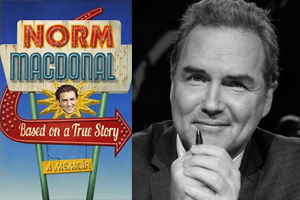
Death is a funny thing. Not funny haha, like a Woody Allen movie, but funny strange, like a Woody Allen marriage. When it’s unexpected, death comes fast like a ravenous wolf and tears open your throat with a merciful fury. But when it’s expected, it comes slow and patient like a snake, and the doctor tells you how far away it is and when, exactly, it will be at your door. And when it will be at the foot of your bed. And when it will be on your flesh. It’s all right there on their clipboards.

nm.png

Reality generates data. Or is it the other way around?

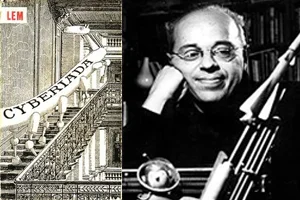
Everyone knows that dragons don’t exist. But while this simplistic formulation may satisfy the layman, it does not suffice for the scientific mind. The School of Higher Neantical Nillity is in fact wholly unconcerned with what does exist. Indeed, the banality of existence has been so amply demonstrated, there is no need for us to discuss it any further here. The brilliant Cerebron, attacking the problem analytically, probability theory to this area and, in so doing, created the field of statistical draconics, which says that dragons are thermodynamically impossible only in the probabilistic sense, as are elves, fairies, gnomes, witches, pixies and the like. Using the general equation of improbability, the two constructors obtained the coefficients of pixation, elfinity, kobolding, etc. They found that for the spontaneous manifestation of an average dragon, one would have to wait a good sixteen quintoquadrillion heptillion years. In other words, the whole problem would have remained a mathematical curiosity had it not been for that famous tinkering passion of Trurl, who decided to examine the nonphenomenon empirically. First, as he was dealing with the highly improbable, he invented a probability amplifier and ran tests in his basement – then later at the Dracogenic Proving Grounds established and funded by the probability theory to this area and, in so doing, created the field of statistical draconics, which says that dragons are thermodynamically impossible only in the probabilistic sense, as are elves, fairies, gnomes, witches, pixies and the like. Using the general equation of improbability, the two constructors obtained the coefficients of pixation, elfinity, kobolding, etc. They found that for the spontaneous manifestation of an average dragon, one would have to wait a good sixteen quintoquadrillion heptillion years. In other words, the whole problem would have remained a mathematical curiosity had it not been for that famous tinkering passion of Trurl, who decided to examine the nonphenomenon empirically. First, as he was dealing with the highly improbable, he invented a probability amplifier and ran tests in his basement – then later at the Dracogenic Proving Grounds established and funded by the Academy. To this day those who (sadly enough) have no knowledge of the General Theory of Improbability ask why Trurl probabilized a dragon and not an elf or goblin. The answer is simply that dragons are more probable than elves or goblins to begin with. True, Trurl might have gone further with his amplifying experiments, had not the first been so discouraging – discouraging in that the materialized dragon tried to make a meal of him. Fortunately, Klapaucius was nearby and lowered the probability, and the monster vanished.