Losses that wear winning skins.

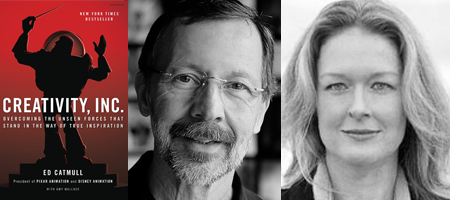
Let me give you an example of what I mean, drawn from the business I know best. In animation, we have many story, art, budget, technology, finance, constituencies: production, marketing, and consumer products. The people within each constituency have priorities that are important—and often opposing. The writer and director want to tell the most affecting story possible; the production designer wants the film to look beautiful; the technical directors want flawless effects; finance wants to keep the budgets within limits; marketing wants a hook that is easily sold to potential viewers; the consumer products people want appealing characters to turn into plush toys and to plaster on lunchboxes and T-shirts; the production managers try to keep everyone happy—and to keep the whole enterprise from spiraling out of control. And so on. Each group is focused on its own needs, which means that no one has a clear view of how their decisions impact other groups; each group is under pressure to perform well, which means achieving stated goals.

Particularly in the early months of a project, these goals— which are subgoals, really, in the making of a film—are often easier to articulate and explain than the film itself. But if the director is able to get everything he or she wants, we Will likely end up with a film that's too long. If the marketing people get their way, we Will only make a film that mimics those that have already been "proven" to succeed—in other words, familiar to viewers but in all likelihood a creative failure. Each group, then, is trying to do the right thing, but they're pulling in different directions. 

If any one of those groups "wins," we lose.

Götterdämmerung, year 15.

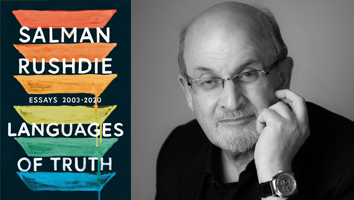
Until the age of thirteen, when I was sent from Bombay to boarding school in faraway England, I was a much more homogeneous self than I am now. I had lived in the same house in the same city all my life, in the bosom of my family, among people whose customs I knew without having to do anything as conscious as ‘know’ them, speaking the languages that people spoke in that city, in that country, in that time. These are the four roots of the self: language, place, community, custom. But in our age, the great age of migration, many of us have at least one of these roots pulled up. We move away from the place we know, away from the community that knows us, to a place where the customs are different and, perhaps, the most commonly spoken language is one we don’t know, or if we speak it, we speak it badly and cannot express in it the subjects of what we think and who we are. In my case, I had been brought up multilingually, so my English was fine, it was the one root still planted in the earth, but the others had all gone. In Norse mythology, the World Tree, the great ash Yggdrasil, has three roots. One falls into the Pool of Knowledge near Valhalla, the pool from which odin drinks, but the others are slowly being destroyed, one gnawed by a monster called the Nidhogg, the other being gradually burned away by the flames of the fire region, Muspelheim. When these two roots are destroyed, the tree falls, and the Götterdämmerung begins. The migrant too is at first a tree standing without roots, trying not to fall. Migration is an existential act, stripping us of our defences, mercilessly exposing us to a world that understands us badly, if at all: as if the earth were stripped of its atmosphere and the sun were to bear down upon it in all its pitiless force.

Outrunning the Sun

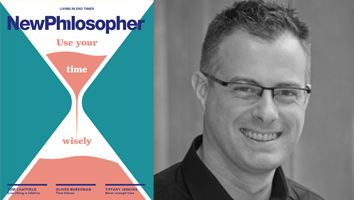
If you visit Christ Church College at Oxford University, you might notice something rather strange among the fabled ‘dreaming spires’: the clocks are wrong. Or, rather, the clocks are right.

It’s not a huge difference. The clocks are just five minutes and two seconds behind Greenwich Mean Time – time as measured at the Royal Observatory in Greenwich, London, which forms the basis of the Coordinated Universal Time (UTC) used around the world. That five-minute gap exists because Oxford lies west of the Prime Meridian, the line of 0° longitude that runs through Greenwich. The further from London you go, the further ahead or behind UTC the local solar time becomes. In Cornwall, the sundial was more than a quarter of an hour behind Greenwich.

I say ‘was’, because in the 19th century everything changed. Technology transformed our relationship to space, and time was dragged along with it.

In Being and Time – that hand-grenade thrown into 20th century European philosophy – Martin Heidegger wrote that “initially, ‘time’ shows itself in the sky, that is, precisely where one finds it in the natural orientation towards it, so that ‘time’ is even identified with the sky.” For most of human history, to ask the time was to ask a question about the Sun. Indeed, such a question was probably rare, for nobody really needed to know the minute. People lived by the hours of the day and the ebb and flow of the seasons.

We still created calendars, of course, and a roster of feasts and holidays – events that unify what Charles Taylor called “high time” and “profane time”, the time of the sacred and the time of everyday work and rest. But even these were still linked to the accidents of the orbit of the planet and the positions of celestial bodies. Time was structured by rhythms and cycles that had their origins in the tilt and rotation of the Earth, rather than any more distinctively human project.

As evolved creatures, we are embodied to the effects of these cosmic accidents. The Sun is buried deep in our biology. We rise and sleep with circadian rhythms that betray our identity as animals living on a planet that turns on its axis once every twenty-four hours. On the plains of Africa, our distant ancestors could simply never move fast enough to experience jetlag; never had to forego sleep in order to communicate with anyone in a different time zone. They could outwit predators and prey alike, but they could never outrun the Sun.

But it’s different for us. New technologies changed things. It appears most people used to fall asleep for about four hours, wake for an hour or two deep in the night, and then sleep for another four. But street lighting and candles made it possible to fight the darkness for longer, so a single long period of sleep became the default. Interestingly, though, experimental data suggests that if people are kept in the dark for fourteen hours a day, the old two-part sleeping pattern seems to re-emerge.

With the coming of the factory, time was turned into a commodity, carved up and sold in increments. A new question became possible: “Do you have the time?” – a question that faintly alludes to a sense in which the speaker has lost the time, through time’s being made more precise than the sky and the body can provide.

If you visit Christ Church College at Oxford University, you might notice something rather strange among the fabled ‘dreaming spires’: the clocks are wrong. Or, rather, the clocks are right.

It’s not a huge difference. The clocks are just five minutes and two seconds behind Greenwich Mean Time – time as measured at the Royal Observatory in Greenwich, London, which forms the basis of the Coordinated Universal Time (UTC) used around the world. That five-minute gap exists because Oxford lies west of the Prime Meridian, the line of 0° longitude that runs through Greenwich. The further from London you go, the further ahead or behind UTC the local solar time becomes. In Cornwall, the sundial was more than a quarter of an hour behind Greenwich.

I say ‘was’, because in the 19th century everything changed. Technology transformed our relationship to space, and time was dragged along with it.

In Being and Time – that hand-grenade thrown into 20th century European philosophy – Martin Heidegger wrote that “initially, ‘time’ shows itself in the sky, that is, precisely where one finds it in the natural orientation towards it, so that ‘time’ is even identified with the sky.” For most of human history, to ask the time was to ask a question about the Sun. Indeed, such a question was probably rare, for nobody really needed to know the minute. People lived by the hours of the day and the ebb and flow of the seasons.

We still created calendars, of course, and a roster of feasts and holidays – events that unify what Charles Taylor called “high time” and “profane time”, the time of the sacred and the time of everyday work and rest. But even these were still linked to the accidents of the orbit of the planet and the positions of celestial bodies. Time was structured by rhythms and cycles that had their origins in the tilt and rotation of the Earth, rather than any more distinctively human project.

As evolved creatures, we are embodied to the effects of these cosmic accidents. The Sun is buried deep in our biology. We rise and sleep with circadian rhythms that betray our identity as animals living on a planet that turns on its axis once every twenty-four hours. On the plains of Africa, our distant ancestors could simply never move fast enough to experience jetlag; never had to forego sleep in order to communicate with anyone in a different time zone. They could outwit predators and prey alike, but they could never outrun the Sun.

But it’s different for us. New technologies changed things. It appears most people used to fall asleep for about four hours, wake for an hour or two deep in the night, and then sleep for another four. But street lighting and candles made it possible to fight the darkness for longer, so a single long period of sleep became the default. Interestingly, though, experimental data suggests that if people are kept in the dark for fourteen hours a day, the old two-part sleeping pattern seems to re-emerge.

With the coming of the factory, time was turned into a commodity, carved up and sold in increments. A new question became possible: “Do you have the time?” – a question that faintly alludes to a sense in which the speaker has lost the time, through time’s being made more precise than the sky and the body can provide.

It’s easy to think we should resist this shift somehow, and reclaim time as a lived experience of sky and body instead of an artificial, mathematical structuring of our days, years, and lives. Those deliberately slow clocks in Oxford are a charming little act of rebellion against the divorce of clock-time and sky-time. Our sun-programmed body, after all, has a habit of reasserting itself against clock-time, as anyone who has laid sleepless in a foreign city after a long flight can tell you. (Insomnia, said Levinas, is sheer awareness of being as such, a state of watchfulness without an object. It also, we might add, sucks). Jetlag is a reminder that we’re moving at velocities far greater than our ancestors on the plains ever could.

But instead of fighting it, some reformers suggest we should just finish what we started two centuries ago. Aviation, for instance, largely works on ‘Zulu Time’ i.e. UTC. So why not simply use one time zone for the whole world?

That would take some getting used to, of course. For the first time, ‘midday’ and ‘12pm’ would be very different things everywhere but London. Depending where you live you might be watching the dawn at 11pm or snuggling into bed at 11am. Yet we’re already used to clock-time diverging from the sky given the shorter days of winter and the long twilights of summer, and the change to daylight saving time and back. Perhaps it wouldn’t be that much of a shift.

Still, don’t be surprised if the old rhythms continue to haunt us even as our technological powers increase. No matter how fast we manage to live, we’re still creatures of the Sun.

PS.png

The Mythmaker

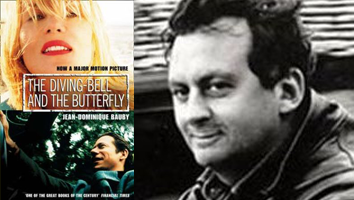
On the benches of the Paris school where I wore out my first pair of jeans I made friends with a skinny red-faced boy named Olivier, whose runaway mythomania made his company irresistible. With him around, there was no need to go to the movies. Olivier’s friends had the best seats in the house, and the film was a miracle of invention. On Monday he would amaze us with a weekend saga straight out of the Thousand and One Nights. If he had not spent Sunday with Johnny Hallyday it was because he had gone to London to see the new James Bond, unless he had been driving the latest Honda. (Japanese motorbikes, just then arriving in France, were all the rage in schoolyard discussions.) From morning to night our friend fed us small lies and gross fabrications, brazenly inventing new stories even when they contradicted preceding ones. An orphan at 10 a.m., an only son at noon, he could dig up four sisters by mid-afternoon, one of them a figure-skating champion. As for his father - in reality a sober civil servant - he became, depending on the day, the inventor of the atom bomb, the Beatles’ manager, or General de Gaulle’s unacknowledged son. Since Olivier himself neglected to give coherence to the dishes he served up, we would have been the last to expect consistency of him. When he came out with some utterly outlandish fable we would voice tentative doubts, but he defended his good faith with such indignant protest of ‘I swear!’ that we would swiftly back down.

When I last checked, Olivier was neither a fighter pilot nor a secret agent nor adviser to an Emir (careers he once considered). Fairly predictably, it is in the advertising world that he wields his inexhaustible faculty for gilding every lily.

Ineludible honesty.

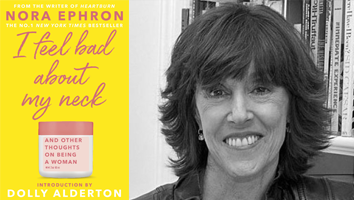
Oh, the necks. There are chicken necks. There are turkey gobbler necks. There are elephant necks. There are necks with wattles and necks with creases that are on the verge of becoming wattles. There are scrawny necks and fat necks, loose necks, crepey necks, banded necks, wrinkled necks, stringy necks, saggy necks, flabby necks, mottled necks. There are necks that are an amazing combination of all of the above. According to my dermatologist, the neck starts to go at forty-three, and that's that. You can put makeup on your face and concealer under your eyes and dye on your hair, you can shoot collagen and Botox and Restylane into your wrinkles and creases, but short of surgery, there's not a damn thing you can do about a neck. The neck is a dead giveaway. Our faces are lies and our necks are the truth. You have to cut open a redwood tree to see how old it is, but you wouldn't have to if it had a neck.

DiscriminAItion

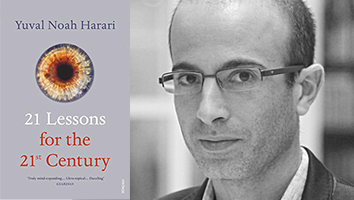
Even if democracy manages to adapt and survive, people might become the victims of new kinds of oppression and discrimination. Already today more and more banks, corporations and institutions are using algorithms to analyse data and make decisions about us. When you apply to your bank for a loan, it is likely that your application is processed by an algorithm rather than by a human. The algorithm analyses lots of data about you and statistics about millions of other people, and decides whether you are reliable enough to give you a loan. Often, the algorithm does a better job than a human banker. But the problem is that if the algorithm discriminates against some people unjustly, it is difficult to know that. If the bank refuses to give you a loan, and you ask 'Why?', the bank replies, 'The algorithm said no.' You ask, 'Why did the algorithm say no? What's wrong with me?', and the bank replies, 'We don't know. No human understands this algorithm, because it is based on advanced machine learning. But we trust our algorithm, so we won't give you a loan.'

When discrimination is directed against entire groups, such as women or black people, these groups can organise and protest against their collective discrimination. But now an algorithm might discriminate against you personally, and you have no idea why. Maybe the algorithm found something in your DNA, your personal history or your Facebook account that it does not like. The algorithm discriminates against you not because you are a woman, or an African American — but because you are you. There is something specific about you that the algorithm does not like. You don't know what it is, and even if you knew, you cannot organise with other people to protest, because there are no other people suffering the exact same prejudice. It is just you. Instead of just collective discrimination, in the twenty-first century we might face a growing problem of individual discrimination.

Unplan.

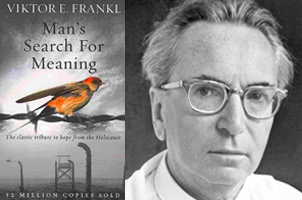
Don’t aim at success — the more you aim at it and make it a target, the more you are going to miss it. For success, like happiness, cannot be pursued; it must ensue, and it only does so as the unintended side-effect of one’s dedication to a cause greater than oneself or as the by-product of one’s surrender to a person other than oneself. Happiness must happen, and the same holds for success: you have to let it happen by not caring about it. I want you to listen to what your conscience commands you to do and go on to carry it out to the best of your knowledge. Then you will live to see that in the long run—in the long run, I say!—success will follow you precisely because you had forgotten to think of it.

Manadas

A los hombres les gusta hablar de las mujeres. Así no tienen que hablar sobre sí mismos. ¿Cómo se explica que en los últimos treinta años ningún hombre haya producido un texto innovador sobre la masculinidad? Ellos que son tan locuaces y tan competentes cuando se trata de disertar sobre las mujeres, ¿cómo se explica ese silencio con respecto a sí mismos? Porque sabemos que cuanto más hablan, menos dicen. Sobre lo esencial, lo que tienen realmente en la cabeza. ¿Quizá quieren que seamos ahora nosotras las que hablemos de ellos? ¿Querrán, por ejemplo, que digamos qué es lo que pensamos nosotras, desde fuera, de sus violaciones colectivas? Diremos que ellos quieren verse follando entre ellos, mirarse las pollas los unos a los otros, empalmarse juntos, diremos que tienen ganas de metérsela entre ellos por el culo. Diremos que de lo que tienen ganas, realmente, es de follar entre ellos. A los hombres les gustan los hombres. Nos explican todo el rato cuánto les gustan las mujeres, pero todas sabemos que no son más que palabras. Se quieren entre hombres. Se follan unos a otros a través de las mujeres, muchos de ellos piensan en sus amigos mientras la meten en un coño. Se miran a sí mismos en el cine, se dan los mejores papeles, se sienten potentes, fanfarronean, alucinan de ser tan fuertes, tan guapos y de tener tanto valor. Escriben unos para otros, se felicitan mutuamente, se apoyan. Tienen razón. Pero de tanto escucharles quejarse de que las mujeres no follan bastante, de que no les gusta tanto el sexo como haría falta, de que no entienden nada, acabamos preguntándonos: ¿a qué esperan para darse por el culo los unos a los otros? Venga. Si eso os puede devolver la sonrisa, entonces es que está bien, Pero entre las cosas que les han inculcado bien está el miedo de ser marica, la obligación de que les gusten las mujeres. Así que se comportan. Refunfuñan, pero obedecen. Y de paso, furiosos por tener que someterse, le dan un par de hostias a una o dos chicas.

NYC

It was 1978. I was new to New York. A rich acquaintance had invited me to a housewarming party, and, as my cabdriver wound his way down increasingly potholed and dingy streets, I began wondering whether he'd got the address right. Finally he stopped at the doorway of a gloomy, unwelcoming industrial building. Two winos were crumpled on the steps, oblivious. There was no other sign of life in the whole street.

"I think you may have made a mistake", I ventured.

But he hadn't. My friend's voice called "Top Floor!" when I rang the bell, and I thought - knowing her sense of humour - "Oh this is going to be some kind of joke!" I was all ready to laugh. The elevator creaked and clanked slowly upwards, and I stepped out - into a multi-million dollar palace. The contrast with the rest of the building and the street outside couldn't have been starker.

I just didn't understand. Why would anyone spend so much money building a place like that in a neighbourhood like this? Later I got into conversation with the hostess. "Do you like it here?" I asked. "It's the best place I've ever lived", she replied. "But I mean, you know, is it an interesting neighbourhood?" "Oh, the neighbourhood? Well that's outside!" she laughed.

The incident stuck in my mind. How could you live so blind to your surroundings? How could you not think of where I live as including at least some of the space outside your four walls, some of the bits you couldn't lock up behind you? I felt this was something particular to New York: I called it "The Small Here". I realised that, like most Europeans, I was used to living in a bigger Here.

I noticed that this very local attitude to space in New York paralleled a similarly limited attitude to time. Everything was exciting, fast, current, and temporary. Enormous buildings came and went, careers rose and crashed in weeks. You rarely got the feeling that anyone had the time to think two years ahead, let alone ten or a hundred. Everyone seemed to be passing through. It was undeniably lively, but the downside was that it seemed selfish, irresponsible and randomly dangerous. I came to think of this as "The Short Now", and this suggested the possibility of its opposite - "The Long Now".

"Now" is never just a moment. The Long Now is the recognition that the precise moment you're in grows out of the past and is a seed for the future. The longer your sense of Now, the more past and future it includes. It's ironic that, at a time when humankind is at a peak of its technical powers, able to create huge global changes that will echo down the centuries, most of our social systems seem geared to increasingly short nows. Huge industries feel pressure to plan for the bottom line and the next shareholders meeting. Politicians feel forced to perform for the next election or opinion poll. The media attract bigger audiences by spurring instant and heated reactions to human interest stories while overlooking longer-term issues - the real human interest.

Meanwhile, we struggle to negotiate our way through an atmosphere of Utopian promises and dystopian threats, a minefield studded with pots of treasure. We face a future where almost anything could happen. Will we be crippled by global warming, weapons proliferation and species depletion, or liberated by space travel, world government and molecule-sized computers? We don't even want to start thinking about it. This is our peculiar form of selfishness, a studied disregard of the future. Our astonishing success as a technical civilisation has led us to complacency, to expect that things will probably just keep getting better.

But there is no reason to believe this. We might be living in the last gilded bubble of a great civilisation about to collapse into a new Dark Age, which, given our hugely amplified and widespread destructive powers, could be very dark indeed.

If we want to contribute to some sort of tenable future, we have to reach a frame of mind where it comes to seem unacceptable - gauche, uncivilised - to act in disregard of our descendants. Such changes of social outlook are quite possible - it wasn't so long ago, for example, that we accepted slavery, an idea which most of us now find repellent. We felt no compulsion to regard slaves as fellow-humans and thus placed them outside the circle of our empathy. This changed as we began to realise, perhaps it was partly the glory of their music, that they were real people, and that it was no longer acceptable that we should cripple their lives just so that ours could be freer. It just stopped feeling right.

The same type of change happened when we stopped employing kids to work in mines, or when we began to accept that women had voices too. Today we view as fellow-humans many whom our grandparents may have regarded as savages, and even feel some compulsion to share their difficulties - aid donations by individuals to others they will never meet continue to increase. These extensions of our understanding of who qualifies for our empathy, indicate that culturally, economically and emotionally we live in an increasingly Big Here, unable to lock a door behind us and pretend the rest of the world is just "outside".

We don't yet, however, live in The Long Now. Our empathy doesn't extend far forward in time. We need now to start thinking of our great-grandchildren, and their great-grandchildren, as other fellow-humans who are going to live in a real world which we are incessantly, though only semi-consciously, building. But can we accept that our actions and decisions have distant consequences, and yet still dare do anything? It was an act of complete faith to believe, in the days of slavery, that a way of life which had been materially very successful could be abandoned and replaced by another, as yet unimagined, but somehow it happened. We need to make a similar act of imagination now.

Since this act of imagination concerns our relationship to time, a Millennium is a good moment to articulate it. Can we grasp this sense of ourselves as existing in time, part of the beautiful continuum of life? Can we become inspired by the prospect of contributing to the future? Can we shame ourselves into thinking that we really do owe those who follow us some sort of consideration, just as the people of the nineteenth century shamed themselves out of slavery? Can we extend our empathy to the lives beyond ours?

I think we can. Humans are capable of a unique trick: creating realities by first imagining them, by experiencing them in their minds. When Martin Luther King said "I have a dream", he was inviting others to dream it with him. Once a dream becomes shared in that way, current reality gets measured against it and then modified towards it. As soon as we sense the possibility of a more desirable world, we begin behaving differently, as though that world is starting to come into existence, as though, in our minds at least, we're already there. The dream becomes an invisible force which pulls us forward. By this process it starts to come true. The act of imagining something makes it real.

This imaginative process can be seeded and nurtured by artists and designers, for, since the beginning of the 20th century, artists have been moving away from an idea of art as something finished, perfect, definitive and unchanging towards a view of artworks as processes or the seeds for processes - things that exist and change in time, things that are never finished. Sometimes this is quite explicit - as in Walter de Maria's "Lightning Field", a huge grid of metal poles designed to attract lightning. Many musical compositions don't have one form, but change unrepeatingly over time - many of my own pieces and Jem Finer's Artangel installation "LongPlayer" are like this. Artworks in general are increasingly regarded as seeds - seeds for processes that need a viewer's (or a whole culture's) active mind in which to develop. Increasingly working with time, culture-makers see themselves as people who start things, not finish them.

And what is possible in art becomes thinkable in life. We become our new selves first in simulacrum, through style and fashion and art, our deliberate immersions in virtual worlds. Through them we sense what it would be like to be another kind of person with other kinds of values. We rehearse new feelings and sensitivities. We imagine other ways of thinking about our world and its future.

Danny Hillis's Clock of the Long Now is a project designed to achieve such a result. It is, on the face of it, far-fetched to think that one could make a clock which will survive and work for the next 10,000 years. But the act of even trying is valuable: it puts time and the future on the agenda and encourages thinking about them. As Stewart Brand, a colleague in The Long Now Foundation, says:

“Such a clock, if sufficiently impressive and well engineered, would embody deep time for people. It should be charismatic to visit, interesting to think about, and famous enough to become iconic in the public discourse. Ideally, it would do for thinking about time what the photographs of Earth from space have done for thinking about the environment. Such icons reframe the way people think.

The 20th Century yielded its share of icons, icons like Muhammad Ali and Madonna that inspired our attempts at self-actualisation and self-reinvention. It produced icons to our careless and misdirected power - the mushroom cloud, Auschwitz, and to our capacity for compassion - Live Aid, the Red Cross.

In this, the 21st century, we may need icons more than ever before. Our conversation about time and the future must necessarily be global, so it needs to be inspired and consolidated by images that can transcend language and geography. As artists and culture-makers begin making time, change and continuity their subject-matter, they will legitimise and make emotionally attractive a new and important conversation.
BE.jpg

Prozac blues.

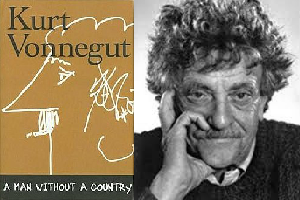
No matter how corrupt, greedy, and heartless our government, our corporations, our media, and our religious & charitable institutions may become, the music will still be wonderful.

If I should ever die, God forbid, let this be my epitaph:

THE ONLY PROOF HE NEEDED
FOR THE EXISTENCE OF GOD
WAS MUSIC

***

Back to music. It makes practically everybody fonder of life than he or she would be without it. Even military bands, although I am a pacifist, always cheer me up. And I really like Strauss and Mozart and all that, but the priceless gift that African Americans gave the whole world when they were still in slavery was a gift so great that it is now almost the only reason many foreigners still like us at least a little bit. That specific remedy for the worldwide epidemic of depression is a gift called the blues. All pop music today—jazz, swing, be-bop, Elvis Presley, the Beatles, the Stones, rock-and-roll, hip-hop, and on and on—is derived from the blues.
 
A gift to the world? One of the best rhythm-and-blues combos I ever heard was three guys and a girl from Finland playing in a club in Krakow, Poland.
 
The wonderful writer Albert Murray, who is a jazz historian and a friend of mine among other things, told me that during the era of slavery in this country—an atrocity from which we can never fully recover—the suicide rate per capita among slave owners was much higher than the suicide rate among slaves.
 
Murray says he thinks this was because slaves had a way of dealing with depression, which their white owners did not: They could shoo away Old Man Suicide by playing and singing the Blues. He says something else which also sounds right to me. He says the blues can't drive depression clear out of a house, but can drive it into the corners of any room where it's being played. 

220px-AManWithoutACountry.jpg

«Ogilvy on advertising», the prequel.

After spending a few weeks getting a solid grounding in opinion research, Ogilvy accompanied Gallup to Hollywood. They pitched their services to the head of RKO studios, pointing out the competitive advantages of measuring the popularity of movie stars, pretesting audience acceptance of movie ideas and titles, and forecasting trends. RKO awarded them a twelve-month contract, and other studios soon followed suit, noting that David Selznick «took to ordering surveys the way other people order groceries.» Ogilvy admired Gallup immensely and gained a deep respect for the value of opinion research as a predictive tool in everything from marketing to politics. He found his time in Hollywood both entertaining and instructive and hobnobbed with some of the most famous movie stars of the day, almost all of whom he considered «repulsive egotists.» As a result of his audience research, Ogilvy discovered that certain marquee names had a negative effect on a picture's earnings, and he assembled a classified list he called «box office poison» that prematurely ended many a career. «There is no great trick to doing research,» Ogilvy later observed. «The problem is to get people to use it—particularly when the research reveals that you have been making mistakes.» Most people, he found, had "a tendency to use research as a drunkard uses a lamppost—for support, not for illumination.»

(…)

Stephenson had sent Fleming there in 1942 and had been impressed with how well he had come through the course, recalling that he was «top of his section,» though he lacked the killer's instinct, and had hesitated—a fatal error—during an exercise in which he was expected to «shoot a man in cold blood.» While the camp schooled secret agents, spies, and guerrilla fighters who went on to carry out BSC missions in enemy-occupied Europe and Asia, most of the people sent on the course with Ogilvy had been recruited to do intelligence or propaganda work, had backgrounds in journalism and foreign relations, and knew little or nothing about spycraft beyond the jobs they were doing at their typewriters. At Camp X, Ogilvy and his fellow trainees donned army fatigues designed to help maintain the facility's cover as a regular army base, and attended lectures on the new high technology of espionage, from the use of codes and ciphers to listening devices, and observed awe-inspiring demonstrations of silent killing and underwater demolitions. They also received some limited practice in how to use a handgun and shoot quickly and accurately without hesitation. «l was taught the tricks of the trade,» recalled Ogilyy. «How do you follow people without arousing their suspicion? Walk in front of them; if you also push a pram this will disarm their suspicions still further. I was taught to use a revolver, to blow up bridges and power lines with plastic, to cripple police dogs by grabbing their front legs and tearing their chests apart, and to kill a man with my bare hands.»

Fully expecting to be parachuted behind enemy lines, he was a little let down when Stephenson assigned him to desk duty.

Google Street View, word edition.

This is a story about love and death in the golden land, and begins with the country. The San Bernardino Valley lies only an hour east of Los Angeles by the San Bernardino Freeway but is in certain ways an alien place: not the coastal California of the subtropical twilights and the soft westerlies off the Pacific but a harsher California, haunted by the Mojave just beyond the mountains, devastated by the hot dry Santa Ana wind that comes down through the passes at 100 miles an hour and whines through the eucalyptus windbreaks and works on the nerves. October is the bad month for the wind, the month when breathing is difficult and the hills blaze up spontaneously. There has been no rain since April. Every voice seems a scream. It is the season of suicide and divorce and prickly dread, wherever the wind blows. The Mormons settled this ominous country, and then they abandoned it, but by the time they left the first orange tree had been planted and for the next hundred years the San Bernardino Valley would draw a kind of people who imagined they might live among the talismanic fruit and prosper in the dry air, people who brought with them Midwestern ways of building and cooking and praying and who tried to graft those ways upon the land. The graft took in curious ways. This is the California where it is possible to live and die without ever eating an artichoke, without ever meeting a Catholic or a Jew. This is the California where it is easy to Dial-A-Devotion, but hard to buy a book. This is the country in which a belief in the literal interpretation of Genesis has slipped imperceptibly into a belief in the literal interpretation of Double Indemnity, the country of the teased hair and the Capris and the girls for whom all life’s promise comes down to a waltz-length white wedding dress and the birth of a Kimberly or a Sherry or a Debbi and a Tijuana divorce and a return to hairdressers’ school. “We were just crazy kids,” they say without regret, and look to the future. The future always looks good in the golden land, because no one remembers the past. Here is where the hot wind blows and the old ways do not seem relevant, where the divorce rate is double the national average and where one person in every thirty-eight lives in a trailer. Here is the last stop for all those who come from somewhere else, for all those who drifted away from the cold and the past and the old ways. Here is where they are trying to find a new life style, trying to find it in the only places they know to look: the movies and the newspapers.

IB.jpg

Lies: About 1,160,000,000 results (0.51 seconds)

Frankly, the overwhelming majority of academics have ignored the data explosion caused by the digital age. The world’s most famous sex researchers stick with the tried and true. They ask a few hundred subjects about their desires; they don’t ask sites like PornHub for their data. The world’s most famous linguists analyze individual texts; they largely ignore the patterns revealed in billions of books. The methodologies taught to graduate students in psychology, political science, and sociology have been, for the most part, untouched by the digital revolution. The broad, mostly unexplored terrain opened by the data explosion has been left to a small number of forward-thinking professors, rebellious grad students, and hobbyists. That will change.

(...)

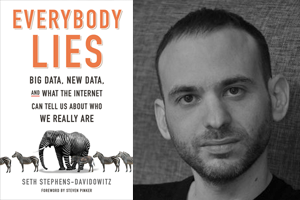
Everybody lies. People lie about how many drinks they had on the way home. They lie about how often they go to the gym, how much those new shoes cost, whether they read that book. They call in sick when they’re not. They say they’ll be in touch when they won’t. They say it’s not about you when it is. They say they love you when they don’t. They say they’re happy while in the dumps. They say they like women when they really like men. People lie to friends. They lie to bosses. They lie to kids. They lie to parents. They lie to doctors. They lie to husbands. They lie to wives. They lie to themselves. And they damn sure lie to surveys. Here’s my brief survey for you:

Have you ever cheated in an exam?

Have you ever fantasised about killing someone?

Were you tempted to lie?

Many people underreport embarrassing behaviours and thoughts on surveys. They want to look good, even though most surveys are anonymous. This is called social desirability bias. 

An important paper in 1950 provided powerful evidence of how surveys can fall victim to such bias. Researchers collected data, from official sources, on the residents of Denver: what percentage of them voted, gave to charity, and owned a library card. They then surveyed the residents to see if the percentages would match. The results were, at the time, shocking. What the residents reported to the surveys was very different from the data the researchers had gathered. Even though nobody gave their names, people, in large numbers, exaggerated their voter registration status, voting behaviour, and charitable giving.

Has anything changed in 65 years? In the age of the internet, not owning a library card is no longer embarrassing. But, while what’s embarrassing or desirable may have changed, people’s tendency to deceive pollsters remains strong. A recent survey asked University of Maryland graduates various questions about their college experience. The answers were compared with official records. People consistently gave wrong information, in ways that made them look good. Fewer than 2% reported that they graduated with lower than a 2.5 GPA (grade point average). In reality, about 11% did. And 44% said they had donated to the university in the past year. In reality, about 28% did.

Then there’s that odd habit we sometimes have of lying to ourselves. Lying to oneself may explain why so many people say they are above average. How big is this problem? More than 40% of one company’s engineers said they are in the top 5%. More than 90% of college professors say they do above-average work. One-quarter of high school seniors think they are in the top 1% in their ability to get along with other people. If you are deluding yourself, you can’t be honest in a survey.

The more impersonal the conditions, the more honest people will be. For eliciting truthful answers, internet surveys are better than phone surveys, which are better than in-person surveys. People will admit more if they are alone than if others are in the room with them. However, on sensitive topics, every survey method will elicit substantial misreporting. People have no incentive to tell surveys the truth.

How, therefore, can we learn what our fellow humans are really thinking and doing? Big data. Certain online sources get people to admit things they would not admit anywhere else. They serve as a digital truth serum. Think of Google searches. Remember the conditions that make people more honest. Online? Check. Alone? Check. No person administering a survey? Check.

The power in Google data is that people tell the giant search engine things they might not tell anyone else. Google was invented so that people could learn about the world, not so researchers could learn about people, but it turns out the trails we leave as we seek knowledge on the internet are tremendously revealing.

I have spent the past four years analysing anonymous Google data. The revelations have kept coming. Mental illness, human sexuality, abortion, religion, health. Not exactly small topics, and this dataset, which didn’t exist a couple of decades ago, offered surprising new perspectives on all of them. I am now convinced that Google searches are the most important dataset ever collected on the human psyche.

SS.png

The new needs friends.

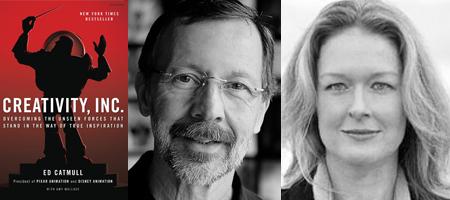
«In many ways, the work of a critic is easy,» Ego says. «We risk very little, yet enjoy a position over those who offer up their work and their selves to our judgment. We thrive on negative criticism, which is fun to write and to read. But the bitter truth we critics must face is that, in the grand scheme of things, the average piece of junk is probably more meaningful than our criticism designating it so. But there are times when a critic truly risks something, and that is in the discovery and defense of the new. The world is often unkind to new talent, new creations. The new needs friends.»

EC.png

Animal rights vs. biblical literalism and unbridled science.

Another fundamental error of Christianity is that it has in an unnatural fashion sundered mankind from the animal world to which it essentially belongs and now considers mankind alone as of any account, regarding the animals as no more than things. This error is a consequence of creation out of nothing, after which the Creator, in the first and second chapters of Genesis, takes all the animals just as if they were things, and without so much as the recommendation of kind treatment which even a dog-seller usually adds when he parts with his dogs, hands them over to man for man to rule, that is to do with them what he likes; subsequently, in the second chapter, the Creator goes on to appoint him the first professor of zoology by commissioning him to give the animals the names they shall thenceforth bear, which is once more only a symbol of their total dependence on him, i.e their total lack of rights.

It can truly be said: Men are the devils of the earth, and the animals are the tormented souls. This is the consequence of that installation scene in the Garden of Eden. For the mob can be controlled only by force or by religion, and here Christianity leaves us shamefully in the lurch. I heard from a reliable source that a Protestant pastor, requested by an animal protection society to preach a sermon against cruelty to animals, replied that with the best will in the world he was unable to do so, because he could find no support in his religion. The man was honest, and he was right.

When I was studying at Göttingen, Blumenbach spoke to us very seriously about the horrors of vivisection and told us what a cruel and terrible thing it was; wherefore it should be resorted to only very seldom and for very important experiments which would bring immediate benefit, and even then it must be carried out as publicly as possible so that the cruel sacrifice on the altar of science should be of the maximum possible usefulness. Nowadays, on the contrary, every little medicine-man thinks he has the right to torment animals in the cruellest fashion in his torture chamber so as to decide problems whose answers have for long stood written in books into which he is too lazy and ignorant to stick his nose. – Special mention should be made of an abomination committed by Baron Ernst von Bibra at Nürnberg and, with incomprehensible naïveté, tanquam re bene gesta, [As if the thing were done well] narrated by him to the public in his Vergleichende Untersuchungen über das Gehirn des Menschen und der Wirbelthiere: he deliberately let two rabbits starve to death! – in order to undertake the totally idle and useless experiment of seeing whether starvation produces a proportional change in the chemical composition of the brain! For the ends of science – n'est-ce pas? Have these gentlemen of the scalpel and crucible no notion at all then that they are first and foremost men, and chemists only secondly? How can you sleep soundly knowing you have harmless animals under lock and key in order to starve them slowly to death? Don't you wake up screaming in the night?

It is obviously high time that the Jewish conception of nature, at any rate in regard to animals, should come to an end in Europe, and that the eternal being which, as it lives in us, also lives in every animal should be recognized as such, and as such treated with care and consideration. One must be blind, deaf and dumb, or completely chloroformed by the foetor judaicus, not to see that the animal is in essence absolutely the same thing that we are, and that the difference lies merely in the accident, the intellect, and not in the substance, which is the will.

The greatest benefit conferred by the railways is that they spare millions of draught-horses their miserable existence.

AS.png

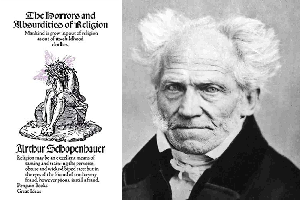
Arthur Schopenhauer (1788-1860) The Horrors and Absurdities of Religion