El professor Jerison ha estudiat en profunditat l'evolució del cervell humà, i s'ha concentrat, sobretot, en els suposats avantatges d'un cervell molt desenvolupat en relació amb la grandària i el pes corporal. Amb tot, els neuròlegs afirmen que la depressió és una malaltia mental que només afecta els éssers que tenen la capacitat de reflexionar sobre si mateixos i de pensar en el seu passat i el seu futur. És a dir, que només es poden deprimir els humans perquè tenen un cervell gros. En aquest sentit, patim potser un excés de cervell?
Segons el famós psiquiatre britànic Tim Crow, hem de buscar l'origen de l'esquizofrènia en l'evolució dels cervells de majors dimensions. Crow afirma que l'esquizofrènia és el preu que paga l'Homo sapiens per tenir la capacitat del llenguatge. Aquesta idea és sens dubte suggeridora, però per a Jerison l'aspecte interessant és l'engrandiment del cervell, que suposa un nou salt evolutiu, d'una magnitud comparable al que va haver-hi fa 200 milions d'anys, quan en passar de rèptils a mamífers els animals van necessitar l'oïda i l'olfacte, a més de la vista.
«En l'evolució de tots els llinatges d'homínids, de l'australopitec en endavant, en un moment determinat va sorgir la necessitat de posseir un "mapa" més precís del territori que ocupaven, constituït ara per uns quants quilòmetres quadrats, i no solament uns quants metres quadrats, com en el cas del rèptil». Aquesta necessitat d'informació es troba en l'origen de l'engrandiment del cervell humà. Segons Jerison, això degué succeir quan el cervell humà tenia la grandària del d'un ximpanzé o una mica més, i l'evolució cap al llenguatge va venir de la necessitat de conèixer, reconèixer, un territori més extens. I del coneixement, i no pas de la grandària, ve la depressió. Perquè, com afirma Jerison no sense una certa ironia, «quan coneixem millor el món també ens coneixem millor a nosaltres amteixos i quan et coneixes a tu mateix, és molt probable que no t'agradis tant». Així, per a ell, l'esquizofrènia, la depressió, fins i tot els desordres bipolars podrien tenir l'origen en el millor coneixement de nosaltres mateixos. Un fet molt complex i en el qual influeixen multiples factors, entre els quals, saber que morirem, la renúncia a la immortalitat que va comportar el canvi del sistema de reproducció. La consciència de la mort ha significat un gran impuls en l'evolució. A excepció de l'home, no hi ha cap animal que la tingui. De manera que, ja ho veieu, quan parlem d'intel·ligència no tot són avantatges.
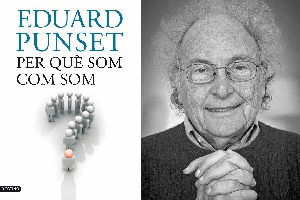
Eduard Punset (2008) Per què som com som