Constant variation.

Most successful big-company innovators I met, whether Chief Innovation Officers, innovation team members or people without an innovation job title but who are tackling a big change project for the first time, have something in common: they respect the organisation they work for, but they don't revere it. As innovators, they want their businesses to do better, but at the same time they are dissatisfied with the status quo. There's a kind of 'love-hate' going on. But too much love and an innovator becomes an ineffective 'yes-man'. Too much hate and he or she ends up an ineffective loner.

It's a delicate balancing act. I describe someone who effectively manages it as a 'Captain One Minute, Pirate the Next'. One minute the innovation leader is the Captain, the passionate man-with-the-plan, standing tall on the bridge of the ship and inspiring us all to go 'this way'. But the next time you meet, the Captain has morphed into a Pirate. This time he or she is down to the boiler room, sleeves rolled up, shipmates gathered around, using all of his or her cunning to shortcut a process, to subvert the system. Now our protagonist is asking really challenging questions: 'What if we did it differently? What if we ripped up the way things are done around here? What if?'

So one minute an innovation leader is stubbornly sticking to the big picture; the next he or she is telling you not to sweat the small stuff. I think this intriguing mix of vision and cunning comes from the fact that successful innovators are fixated by outcomes. They are highly motivated to make change happen - so much so that they're often less bothered about how they get there.

A hurdle called truth.

Magic requires tacit cooperation of the audience with the magician--an abandonment of skepticism, or what is sometimes described as the willing suspension of disbelief.

---

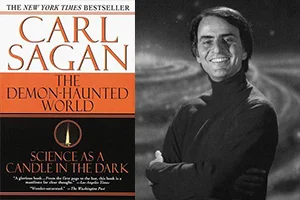
It was a 1954 book I had read in college, The Fifty-Minute Hour. The author, a psychoanalyst named Robert Lindner, had been called by the Los Alamos National Laboratory to treat a brilliant young nuclear physicist whose delusional system was beginning to interfere with his secret government research. The physicist (given the pseudonym Kirk Allen) had, it turned out, another life besides making nuclear weapons: in the far future, he confided, he piloted (or will pilot - the tenses get a little addled) interstellar spacecraft. He enjoyed rousing, swashbuckling adventures on planets of other stars. He was "lord" of many worlds. Perhaps they called him Captain Kirk. Not only could he "remember" this other life; he could also enter into it whenever he chose. By thinking in the right way, by wishing, he could transport himself across the light years and the centuries.

In some way I could not comprehend, by merely desiring it to be so, I had crossed the immensities of space, broken out of time, and merged with - literally became - that distant and future self . . . Don't ask me to explain. I can't, although God knows I've tried.

Lindner found him intelligent, sensitive, pleasant, polite and perfectly able to deal with everyday human affairs. But, in reflecting on the excitement of his life among the stars, Allen had found himself a little bored with his life on Earth, even if it did involve building weapons of mass destruction. When admonished by his laboratory supervisors for distraction and dreaminess, he apologized; he would try, he assured them, to spend more time on this planet. That's when they contacted Lindner. 

Allen had written 12,000 pages on his experiences in the future, and dozens of technical treatises on the geography, politics, architecture, astronomy, geology, life forms, genealogy and ecology of the planets of other stars. A flavour of the material is given by these monograph titles: "The Unique Brain Development of the Chrystopeds of Srom Norba X", "Fire Worship and Sacrifice on Srom Sodrat II", "The History of the Intergalactic Scientific Institute", and "The Application of Unified Field Theory and the Mechanics of the Stardrive to Space Travel". (That last is the one I'd like to see; after all, Allen was said to have been a first-rate physicist.) Fascinated, Lindner pored over the material. 

Allen was not in the least shy about presenting his writings to Lindner or discussing them in detail. Unflappable and intellectually formidable, he seemed not to be yielding an inch to Lindner's psychiatric ministrations. When everything else failed, the psychiatrist attempted something different:

I tried . . . to avoid giving in any way the impression that I was entering the lists with him to prove that he was psychotic, that this was to be a tug of war over the question of his sanity. Instead, because it was obvious that both his temperament and training were scientific, I set myself to capitalize on the one quality he had demonstrated throughout his life . . . the quality that urged him toward a scientific career: his curiosity .. . This meant . . . that at least for the time being I 'accepted' the validity of his experiences . . . In a sudden flash of inspiration it came to me that in order to separate Kirk from his madness it was necessary for me to enter his fantasy and, from that position, to pry him loose from the psychosis.

Lindner highlighted certain apparent contradictions in the documents and asked Allen to resolve them. This required the physicist to re-enter the future to find the answers. Dutifully, Allen would arrive at the next session with a clarifying document written in his neat hand. Lindner found himself eagerly awaiting each interview, so he could be once more captivated by the vision of abundant life and intelligence in the galaxy. Between them, they were able to resolve many problems of consistency. 

Then a strange thing happened: "The materials of Kirk's psychosis and the Achilles heel of my personality met and meshed like the gears of a clock." The psychoanalyst became a co-conspirator in his patient's delusion. He began to reject psychological explanations of Allen's story. How sure are we that it couldn't really be true? He found himself defending the notion that another life, that of a spacefarer in the far future, could be entered into by a simple effort of the will. 

At a startlingly rapid rate . . . larger and larger areas of my mind were being taken over by the fantasy . . . With Kirk's puzzled assistance I was taking part in cosmic adventures, sharing the exhilaration of the sweeping extravaganza he had plotted. 

But eventually, an even stranger thing happened: concerned for the well-being of his therapist, and mustering admirable reserves of integrity and courage, Kirk Allen confessed: he had made the whole thing up. It had roots in his lonely childhood and his unsuccessful relationships with women. He had shaded, and then forgotten, the boundary between reality and imagination. Filling in plausible details and weaving a rich tapestry about other worlds was challenging and exhilarating. He was sorry he had led Lindner down this primrose path. 

"Why," the psychiatrist asked, "why did you pretend? Why did you keep on telling me . . .?" 

"Because I felt I had to," the physicist replied. "Because I felt you wanted me to."

Kirk and I reversed roles, Lindner explained, and, in one of those startling denouements that make my work the unpredictable, wonderful and rewarding pursuit it is, the folly we shared collapsed . . . I employed the rationalization of clinical altruism for personal ends and thus fell into a trap that awaits all unwary therapists of the mind . . . Until Kirk Allen came into my life, I had never doubted my own stability. The aberrations of mind, so I had always thought, were for others . . . I am ashamed by this smugness. But now, as I listen from my chair behind the couch, I know better. I know that my chair and the couch are separated only by a thin line. I know that it is, after all, but a happier combination of accidents that determines, finally, who shall lie on the couch, and who shall sit behind it.

On shared dreams.

Las ciudades y el deseo. 5

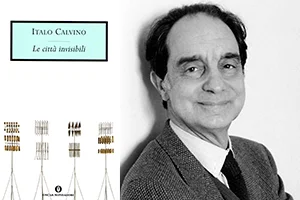
Desde allí, al cabo de seis días y seis noches, el hombre llega a Zobeida, ciudad blanca, bien expuesta a la luna, con calles que giran sobre sí mismas como un ovillo. De su fundación se cuenta esto: hombres de naciones diversas tuvieron el mismo sueño, vieron una mujer que corría de noche por una ciudad desconocida, la vieron de espaldas, con el pelo largo, y estaba desnuda. Soñaron que la seguían. Al final, tras muchas vueltas, todos la perdieron. Después del sueño buscaron aquella ciudad; no la encontraron pero se encontraron entre sí; decidieron construir una ciudad como en el sueño. En la disposición de las calles cada uno repitió el recorrido de su persecución; en el punto donde había perdido las huellas de la fugitiva, cada uno ordenó los espacios y los muros de manera distinta que en el sueño, de modo que no pudiera escapársele más. 

Ésta fue la ciudad de Zobeida donde se establecieron esperando que una noche se repitiese aquella escena. Ninguno de ellos, ni en el sueño ni en la vigilia, vio nunca más a la mujer. Las calles de la ciudad eran las que recorrían todos los días para ir al trabajo, sin ninguna relación ya con la persecución soñada. Que por lo demás hacía tiempo que estaba olvidada. 

De otros países llegaron nuevos hombres que habían tenido un sueño como el de ellos y en la ciudad de Zobeida reconocían algo de las calles del sueño, y cambiaban de lugar galerías y escaleras para que se parecieran más al camino de la mujer seguida y para que en el punto donde había desaparecido no le quedara modo de escapar.

Los que habían llegado primero no entendían qué era lo que atraía a esa gente a Zobeida, a esa ciudad fea, a esa trampa.

Casual casualties.

The School

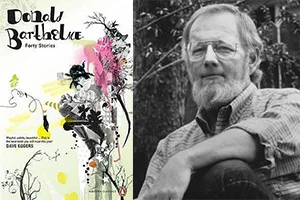
Well, we had all these children out planting trees, see, because we figured that ... that was part of their education, to see how, you know, the root systems ... and also the sense of responsibility, taking care of things, being individually responsible. You know what I mean. And the trees all died. They were orange trees. I don’t know why they died, they just died. Something wrong with the soil possibly or maybe the stuff we got from the nursery wasn’t the best. We complained about it. So we’ve got thirty kids there, each kid had his or her own little tree to plant and we’ve got these thirty dead trees. All these kids looking at these little brown sticks, it was depressing.

It wouldn’t have been so bad except that just a couple of weeks before the thing with the trees, the snakes all died. But I think that the snakes – well, the reason that the snakes kicked off was that ... you remember, the boiler was shut off for four days because of the strike, and that was explicable. It was something you could explain to the kids because of the strike. I mean, none of their parents would let them cross the picket line and they knew there was a strike going on and what it meant. So when things got started up again and we found the snakes they weren’t too disturbed.

With the herb gardens it was probably a case of overwatering, and at least now they know not to overwater. The children were very conscientious with the herb gardens and some of them probably ... you know, slipped them a little extra water when we weren’t looking. Or maybe ... well, I don’t like to think about sabotage, although it did occur to us. I mean, it was something that crossed our minds. We were thinking that way probably because before that the gerbils had died, and the white mice had died, and the salamander ... well, now they know not to carry them around in plastic bags.

Of course we expected the tropical fish to die, that was no surprise. Those numbers, you look at them crooked and they’re belly-up on the surface. But the lesson plan called for a tropical fish input at that point, there was nothing we could do, it happens every year, you just have to hurry past it.

We weren’t even supposed to have a puppy.

We weren’t even supposed to have one, it was just a puppy the Murdoch girl found under a Gristede’s truck one day and she was afraid the truck would run over it when the driver had finished making his delivery, so she stuck it in her knapsack and brought it to the school with her. So we had this puppy. As soon as I saw the puppy I thought, Oh Christ, I bet it will live for about two weeks and then... And that’s what it did. It wasn’t supposed to be in the classroom at all, there’s some kind of regulation about it, but you can’t tell them they can’t have a puppy when the puppy is already there, right in front of them, running around on the floor and yap yap yapping. They named it Edgar – that is, they named it after me. They had a lot of fun running after it and yelling, “Here, Edgar! Nice Edgar!” Then they’d laugh like hell. They enjoyed the ambiguity. I enjoyed it myself. I don’t mind being kidded. They made a little house for it in the supply closet and all that. I don’t know what it died of. Distemper, I guess. It probably hadn’t had any shots. I got it out of there before the kids got to school. I checked the supply closet each morning, routinely, because I knew what was going to happen. I gave it to the custodian.

And then there was this Korean orphan that the class adopted through the Help the Children program, all the kids brought in a quarter a month, that was the idea. It was an unfortunate thing, the kid’s name was Kim and maybe we adopted him too late or something. The cause of death was not stated in the letter we got, they suggested we adopt another child instead and sent us some interesting case histories, but we didn’t have the heart. The class took it pretty hard, they began (I think, nobody ever said anything to me directly) to feel that maybe there was something wrong with the school. But I don’t think there’s anything wrong with the school, particularly, I’ve seen better and I’ve seen worse. It was just a run of bad luck. We had an extraordinary number of parents passing away, for instance. There were I think two heart attacks and two suicides, one drowning, and four killed together in a car accident. One stroke. And we had the usual heavy mortality rate among the grandparents, or maybe it was heavier this year, it seemed so. And finally the tragedy.

The tragedy occurred when Matthew Wein and Tony Mavrogordo were playing over where they’re excavating for the new federal office building. There were all these big wooden beams stacked, you know, at the edge of the excavation. There’s a court case coming out of that, the parents are claiming that the beams were poorly stacked. I don’t know what’s true and what’s not. It’s been a strange year. I forgot to mention Billy Brandt’s father who was knifed fatally when he grappled with a masked intruder in his home.

One day, we had a discussion in class. They asked me, where did they go? The trees, the salamander, the tropical fish, Edgar, the poppas and mommas, Matthew and Tony, where did they go? And I said, I don’t know, I don’t know. And they said, who knows? and I said, nobody knows. And they said, is death that which gives meaning to life? And I said no, life is that which gives meaning to life. Then they said, but isn’t death, considered as a fundamental datum, the means by which the taken-for-granted mundanity of the everyday may be transcended in the direction of – 
I said, yes, maybe. 
They said, we don’t like it. 
I said, that’s sound. 
They said, it’s a bloody shame! 
I said, it is. 
They said, will you make love now with Helen (our teaching assistant) so that we can see how it is done? We know you like Helen. 
I do like Helen but I said that I would not. 
We’ve heard so much about it, they said, but we’ve never seen it. 
I said I would be fired and that it was never, or almost never, done as a demonstration. Helen looked out the window. 
They said, please, please make love with Helen, we require an assertion of value, we are frightened.

I said that they shouldn’t be frightened (although I am often frightened) and that there was value everywhere. Helen came and embraced me. I kissed her a few times on the brow. We held each other. The children were excited. Then there was a knock on the door, I opened the door, and the new gerbil walked in. The children cheered wildly.

Get your wishing right.

El deseo trabaja como el viento. Sin esfuerzo aparente. Si encuentra las velas extendidas nos arrastrará a velocidad de vertigo. Si las puertas y contraventanas están cerradas, golpeará durante un rato en busca de las grietas o ranuras que le permitan filtrarse. El deseo asociado a un objeto de deseo nos condena a él. Pero hay otra forma de deseo, abstracta, desconcertante, que nos envuelve como un estado de ánimo. Anuncia que estamos listos para el deseo y solo nos queda esperar, desplegadas las velas, que sople su viento. Es el deseo de desear.

Ethos vs Nature.

"My dear Prue, we are the inheritors of a wonderful world, full of life and mystery, goodness and pain. But likewise are we the children of an indifferent universe. We break our own hearts imposing our moral order on what is, by nature, a wide web of chaos. It's a hopeless task."

The relativity of time at work.

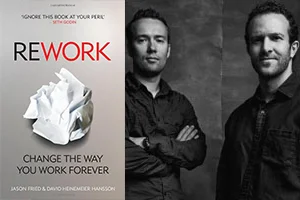
Interruption is the enemy of productivity

If you're constantly staying late and working weekends, it's not because there's too much work to be done. It's because you're not getting enough done at work. And the reason is interruptions.

Think about it: When do you get most of your work done? If you're like most people, it's at night or early in the morning. It's no coincidence that these are the times when nobody else is around.

At 2 p.m., people are usually in a meeting or answering e-mail or chatting with colleagues. Those taps on the shoulder and little impromptu get-togethers may seem harmless, but they're actually corrosive to productivity. Interruption is not collaboration, it’s just interruption. And when you're interrupted, you're not getting work done.

Interruptions break your workday into a series of work moments. Forty-five minutes and then you have a call. Fifteen minutes and then you have lunch. An hour later, you have an afternoon meeting. Before you know it, it's five o'clock, and you've only had a couple uninterrupted hours to get your work done. You can't get meaningful things done when you're constantly going start, stop, start, stop.

Instead, you should get in the alone zone. Long stretches of alone time are when you’re most productive. When you don't have to mind-shift between various tasks, you get a boatload done. (Ever notice how much work you get done on a plane since you’re offline and there are zero outside distractions?)

Getting into that zone takes time and requires avoiding interruptions. It's like REM sleep: You don't just go directly into REM sleep. You go to sleep first and then make your way to REM. Any interruptions force you to start over. And just as REM is when the real sleep magic happens, the alone zone is where the real productivity magic happens.

Your alone zone doesn't have to be in the wee hours, though. You can set up a rule at work that half the day is set aside for alone time. Decree that from 10 a.m. to 2p.m., people can't talk to each other (except during lunch). Or make the first or last half of the day your alone-time period. Or instead of casual Fridays, try no-talk Thursdays. Just make sure this period is unbroken in order to avoid productivity-zapping interruptions.

And go all the way with it. A successful alone-time period means letting go of communication addiction. During alone time, give up instant messages, phone calls, e-mail, and meetings. Just shut up and get to work. You'll be surprised how much more you get done.

Also, when you do collaborate, try to use passive communication tools, like e-mail, that don't require an instant reply, instead of interruptive ones, like phone calls and face-to-face meetings. That way people can respond when it's convenient for them, instead of being forced to drop everything right away.

Your day is under siege by interruptions. It's on you to fight back.

It's not paranoia if they're shooting bullets of niceness at you.

The cat had a party to attend, and went to the baboon to get herself groomed.

“What kind of party?” the baboon asked, and she massaged the cat’s neck in order to relax her, the way she did with all her customers. “Hope it’s not that harvest dance down on the riverbank. My sister went last year and said she’d never seen such rowdiness. Said a fight broke out between two possums, and one gal, the wife of one or the other, got pushed onto a stump and knocked out four teeth. And they were pretty ones too, none of this yellowness you find on most things that eat trash.”

The cat shuddered. “No,” she said. “This is just a little get-together, a few friends. That type of thing.”

“Will there be food?” the baboon asked.

“Something,” the cat sighed. “I just don’t know what.”

“ ‘Course it’s hard,” the baboon said. “Everybody eating different things. You got one who likes leaves and another who can’t stand the sight of them. Folks have gotten so picky nowadays, I just lay out some peanuts and figure they either eat them or they don’t.”

“Now, I wouldn’t like a peanut,” the cat said. “Not at all.”

“Well, I guess you’d just have drinks, then. The trick is knowing when to stop.”

“That’s never been a problem for me,” the cat boasted. “I drink until I’m full, and then I push myself away from the table. Always have.”

“Well, you’ve got sense, then. Not like some of them around here.” The baboon picked a flea from the cat’s head and stuck it gingerly between her teeth. “Take this wedding I went to — last Saturday, I think it was. Couple of marsh rabbits got married — you probably heard about it.”

The cat nodded.

“Now, I like a church service, but this was one of those write-your-own-vows sorts of things. Neither of them had ever picked up a pen in their life, but all of a sudden they’re poets, right, like that’s all it takes — being in love.”

“My husband and I wrote our own vows,” the cat said defensively.

“Sure you did,” countered the baboon, “but you probably had something to say, not like these marsh rabbits, carrying on that their love was like a tender sapling or some damn thing. And all the while they had this squirrel off to the side, plucking at a harp, I think it was.”

“I had a harp player at my wedding,” the cat said, “and it was lovely.”

“I bet it was, but you probably hired a professional, someone who could really play. This squirrel, I don’t think she’d taken a lesson in her life. Just clawed at those strings, almost like she was mad at them.”

“Well, I’m sure she tried her best,” the cat said.

The baboon nodded and smiled, the way one must in the service industry. She’d planned to tell a story about a drunken marsh rabbit, the brother of the groom at last week’s wedding, but there was no point in it now, not with this client anyway. Whatever she said, the cat disagreed with, and unless she found a patch of common ground she was sure to lose her tip. “You know,” she said, cleaning a scab off the cat’s neck, “I hate dogs. Simply cannot stand them.”

“What makes you bring that up?” the cat asked.

“Just thinking,” the baboon said. “Some kind of spaniel mix walked in yesterday, asking for a shampoo, and I sent him packing, said, ‘I don’t care how much money you have, I’m not making conversation with anyone who licks his own ass.’ ” And the moment she said it, she realized her mistake.

“Now, what’s wrong with that?” the cat protested. “It’s good to have a clean anus. Why, I lick mine at least five times a day.”

“And I admire you for it,” the baboon said, “but you’re not a dog.”

“Meaning?”

“On a cat it’s . . . classy,” the baboon said. “There’s a grace to it, but a dog, you know the way they hunker over, legs going every which way.” “Well, yes,” the cat said. “I suppose you have a point.”

“Then they slobber and drool all over everything, and what they don’t get wet, they chew to pieces.”

“That they do.” The cat chuckled, and the baboon relaxed and searched her memory for a slanderous dog story. The collie, the German shepherd, the spaniel mix she claimed to have turned away: they were all good friends of hers, and faithful clients, but what would it hurt to pretend otherwise and cross that fine line between licking ass and simply kissing it?
Focus Groups vs Quantum Mechanics.

"I reached a point in my life where I became exclusively interested in the unseen reality of human behavior, and I did not think it was possible to study such behavior if the person knew they were being studied." He went on to say that the traditional means for understanding human psychology was by asking subjects questions about themselves, a process he finds futile. "The act of asking someone a question completely destroys the value of the answer," he said. He asked if I was familiar with the Heisenberg Uncertainty Principle*. When I told him I was, he said, "Well, then you already understand why psychology has failed."

---

*In quantum mechanics, the Uncertainty Principle suggests that the act of watching one magnitude of a particle, be it mass, velocity, or position, causes the other magnitudes to blur. In other words, the very process of examining something changes what that something is.

Unerring prophecies.

So common is the pattern of the self-fulfilling prophecy that each of us has his favored specimen. Consider the case of the examination neurosis. Convinced that he is destined to fail, the anxious student devotes more time to worry than to stufy and then turns in a poor examination. The initial fallacious anxiety is transformed into an entirely justified fear. Or it is believed that war between two nations is inevitable. Actuated by this conviction, representatives of the two nations become progresively alienated, apprehensively countering each "offensive" move of the other with a "deffensive" move of their own. Stockpiles of armaments, raw materials, and armed men grow larger, and eventually the anticipation of war helps create the actuality.

The self-fulfilling prophecy is, in the beginning, a false definition of the situation evoking a new behavior which makes the originally false conception come true. The specious validity of the self-fulfilling prophecy perpetuates a reign of error. For the prophet will cite the actual course of events as proof that he was right from the very beginning.

(...)

The initial definition of the situation which has set the circle in motion must be abandoned. Only when the original assumption is questioned and a new definition of the situation introduced, does the consequent flow of events give the lie to the assumption. Only then does the belief not father the reality.

Private. Please come in.

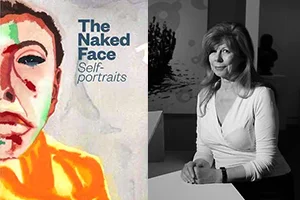
The flourishing of internet applications such as Facebook, Twitter and YouTube and the pervasion of media and celebrity culture has brought a corresponding escalation of the theatrical conditions of everyday life. Self-branding has become mandatory, not just for corporations but for individuals seeking visibility in the public arena. These developments have drastically increased the contrast between private and public. In 1959 the sociologist Erving Goffman published his influential theory for human behavior governed by a theatrical metaphor in which everyday social life was enacted as if on stage in front of an audience, while another self is backstage. This view of the split between public and private protects the vulnerable self yet dooms it to secrecy, hiding behind a performing mask.

There has been continuing debate over the paradoxical exposure of the private sphere, over what Roland Barthes described as ‘the creation of a new social value, which is the publicity of the private’. Concern about the effects of the changing social balance became a recurrent theme for twentieth-century writers such as Hannah Arendt, Jürgen Habermas and Richard Sennett, who believed that the shared public realm was undermined by the increased clamour for attention by private lives.

Exposure is often thought to be a desirable function of self-portraits. But self-portraits also work by concealment, a technique pursued ingeniously by Rembrandt through lighting effects that obscured his face or elaborate costume changes that multiplied his identity. In the twentieth century artists have gone further, replacing the notion of hidden private depths with that of a camouflage or a disappearing self. Most notably Andy Warhol overrode the idea of privacy in favour of an aesthetic of fame. After the hyperactive glamour of his images, depth became less tenable; identity is defined in terms of shifting surface appearances, a development corresponding with the abandonment of a singular model for human identity, characteristic of later twentieth-century art and philosophy.

Yet this emphasis on surface and the underlying disconnect between self and society, public and private, enabled an expansion of selves within societal norms. The performance of self gave cathartic expression to otherwise repressed emotions and created new models for human identity that have fed back into the diversity of human culture.

What a mouth really says.

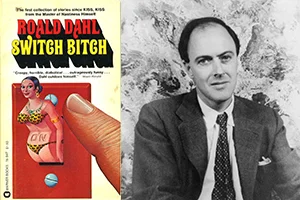
It really does seem to be a fact, I told myself, as my eyes wandered from lower lip to lower lip across the room, that all the less attractive traits of the human animal, arrogance, rapacity, gluttony, lasciviousness, and the rest of them, are clearly signalled in that little carapace of scarlet skin. But you have to know the code. The protuberant or bulging lower lip is supposed to signify sensuality. But this is only half true in men and wholly untrue in women. In women, it is the thin line you should look for, the narrow blade with the sharply delineated bottom edge. And in the nymphomaniac there is a tiny just visible crest of skin at the top centre of the lower lip.

Samantha, my hostess, had that.

Joe Save the Queen.

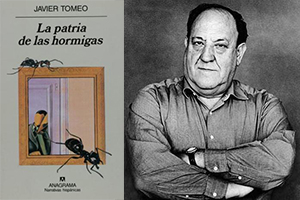
Blas continúa sin oírle y opta por sonreír. Ésa es siempre una respuesta inteligente. Llama a Carmen, que está canturreando en la cocina, y le pide que les traiga otra vez la botella de anís. Juan rechaza la invitación y Blas, que debe de ser un poco brujo, adivina que su joven huésped está pensando en venenos. Se queda un momento en silencio y luego le explica que las hormigas, aparte de tener las mandíbulas muy afiladas, están equipadas con venenos mortales.

Dice también que los hormigueros están siempre en estado de guerra, sobre todo cuando la comida escasea, que las hormigas lo dan todo por la patria y que sólo las reinas están en condiciones de quedar preñadas.

Es la primera vez en su vida que Juan oye decir que las hormigas tienen también una patria y, sobre todo, que pueden quedar preñadas, como si fuesen yeguas. Lo más importante, de todos modos, es que ha entendido lo que Blas ha querido decirle: las reinas son las únicas hembras en todo el hormiguero que pueden asegurar la continuidad de la especie.

-Son también las únicas que tienen alas -añade el viejo.

Se trata de una información muy valiosa que algún día puede serle de utilidad, pero Juan se disculpa con una sonrisa y vuelve a pasarse la mano por la frente, como limpiándose el sudor, para dar a entender al viejo que lo único que le interesa es meterse debajo de la ducha.

Cuando vuelve a su habitación, sin embargo, continúa pensando todavía en las mandíbulas de las hormigas.

Hay algo seguro -piensa, mientras el agua cae con fuerza por el pecho y por la espalda hacia las piernas-. Esas reinas no podrían reproducirse si no fuese por los proletarios que las fecundan.

Raise your left fist!

De aquel hombre me acuerdo y no han pasado
sino dos siglos desde que lo vi,
no anduvo ni a caballo ni en carroza:
a puro pie
deshizo
las distancias
y no llevaba espada ni armadura,
sino redes al hombro,
hacha o martillo o pala,
nunca apaleó a ninguno de su especie:
su hazaña fue contra el agua o la tierra,
contra el trigo para que hubiera pan,
contra el árbol gigante para que diera leña,
contra los muros para abrir las puertas,
contra la arena construyendo muros
y contra el mar para hacerlo parir.

Lo conocí y aún no se me borra.

Cayeron en pedazos las carrozas,
la guerra destruyó puertas y muros,
la ciudad fue un puñado de cenizas,
se hicieron polvo todos los vestidos,
y él para mí subsiste,
sobrevive en la arena,
cuando antes parecía
todo imborrable menos él.

En el ir y venir de las familias
a veces fue mi padre o mi pariente
o apenas si era él o si no era
tal vez aquel que no volvió a su casa
porque el agua o la tierra lo tragaron
o lo mató una máquina o un árbol
o fue aquel enlutado carpintero
que iba detrás del ataúd, sin lágrimas,
alguien en fin que no tenía nombre,
que se llamaba metal o madera,
y a quien miraron otros desde arriba
sin ver la hormiga
sino el hormiguero
y que cuando sus pies no se movían,
porque el pobre cansado había muerto,
no vieron nunca que no lo veían:
había ya otros pies en donde estuvo.

Los otros pies eran él mismo,
también las otras manos,
el hombre sucedía:
cuando ya parecía transcurrido
era el mismo de nuevo,
allí estaba otra vez cavando tierra,
cortando tela, pero sin camisa,
allí estaba y no estaba, como entonces,
se había ido y estaba de nuevo,
y como nunca tuvo cementerio,
ni tumba, ni su nombre fue grabado
sobre la piedra que cortó sudando,
nunca sabía nadie que llegaba
y nadie supo cuando se moría,
así es que sólo cuando el pobre pudo
resucitó otra vez sin ser notado.

Era el hombre sin duda, sin herencia,
sin vaca, sin bandera,
y no se distinguía entre los otros,
los otros que eran él,
desde arriba era gris como el subsuelo,
como el cuero era pardo,
era amarillo cosechando trigo,
era negro debajo de la mina,
era color de piedra en el castillo,
en el barco pesquero era color de atún
y color de caballo en la pradera:
cómo podía nadie distinguirlo
si era el inseparable, el elemento,
tierra, carbón o mar vestido de hombre?

Donde vivió crecía
cuanto el hombre tocaba:
la piedra hostil
quebrada
por sus manos,
se convertía en orden
y una a una formaron
la recta claridad del edificio,
hizo el pan con sus manos,
movilizó los trenes,
se poblaron de pueblos las distancias,
otros hombres crecieron,
llegaron las abejas,
y porque el hombre crea y multiplica
la primavera caminó al mercado
entre panaderías y palomas.

El padre de los panes fue olvidado,
él que cortó y anduvo, machacando
y abriendo surcos, acarreando arena,
cuando todo existió ya no existía,
él daba su existencia, eso era todo.
Salió a otra parte a trabajar, y luego
se fue a morir rodando
como piedra del río:
aguas abajo lo llevó la muerte.

Yo, que lo conocí, lo vi bajando
hasta no ser sino lo que dejaba:
calles que apenas pudo conocer,
casas que nunca y nunca habitaría.

Y vuelvo a verlo, y cada día espero.

Lo veo en su ataúd y resurrecto .

Lo distingo entre todos
los que son sus iguales
y me parece que no puede ser,
que así no vamos a ninguna parte,
que suceder así no tiene gloria.
Yo creo que en el trono debe estar
este hombre, bien calzado y coronado.

Creo que los que hicieron tantas cosas
deben ser dueños de todas las cosas.

Y los que hacen el pan deben comer!

Y deben tener luz los de la mina!

Basta ya de encadenados grises!

Basta de pálidos desaparecidos!

Ni un hombre más que pase sin que reine.

Ni una sola mujer sin su diadema.

Para todas las manos guantes de oro.

Frutas del sol a todos lo oscuros!

Yo conocí a aquel hombre y cuando pude,
cuando ya tuve ojos en la cara,
cuando ya tuve la voz en la boca
lo busqué entre las tumbas, y le dije
apretándole un brazo que aún no era polvo:

"Todos se irán, tú quedarás viviente.
Tú encendiste la vida
Tú hiciste lo que es tuyo".

Por eso nadie se moleste cuando
parece que estoy solo y no estoy solo,
no estoy con nadie y hablo para todos:

Alguien me está escuchando y no lo saben
pero aquellos que canto y que lo saben
siguen naciendo y llenarán el mundo.

Love is always bespoke.

When he met her and they liked each other a great deal, he heard things better, and in his eyes the lines of the physical world were sharper than before. He was smarter, he was more aware, and he thought of new things to do with his days. He considered activities which before had been vaguely intriguing but which now seemed urgent, and which must, he thought, be done with his new companion. He wanted to fly in lightweight contraptions with her. He had always been intrigued by gliders, parachutes, ultralights and hangliders, and now he felt that this would be a facet of their new life: that they would be a couple that flew around on weekends and on vacations, in small aircraft. They would learn the terminology. They would join clubs. They would have a trailer of some kind, or a large van, in which to hold their new machines and supple wings folded, and they would drive to new places to see from above. The kind of flying that interested him was close to the ground--less than a thousand feet above the Earth.

He wanted to see things moving quickly below him, wanted to be able to wave to people below, to see wildebeest run and to count dolphins streaming away from shore. He hoped this was the kind of flying she'd want to do, too. He became so attached to the idea of this person and this flying and this life entwined that he was not sure what he would do if it did not become actual. It was odd, though, he thought, that while the notion of this flying was his, and he would be the driving force behind the carrying out of this plan, he needed another person, this new person in his world, to enable him to do it. He didn't want to do this flying alone; he would rather not do it than do it without her. But if he asked her to fly with him, and she expressed reservations, or was not inspired, would he stay with her? Could he? He deciders that he would not. If she does not drive in the van with the wings carefully folded, he will have to leave, smile and leave, and then he will look again. But when and if he finds another companion, he knows his plan will not be for flying. It will be another plan with another person, because if he goes flying close to the Earth it will be with her.