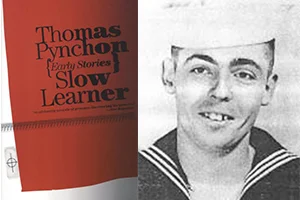
He had known all along, of course, that nothing but a theoretical engine or system ever runs at 100 percent efficiency; and about the theorem of Clausius, which states that the entropy of an isolated system always continually increases. It was not, however, until Gibbs and Boltzmann brought to this principle the methods of Statistical mechanics that the horrible significance of it all dawned on him: only then did he realize that the isolated system -galaxy, engine, human being, culture, whatever- must evolve spontaneously toward the Condition of the More Probable. He was forced, therefore, in the sad dying fall of middle age, to a radical reevaluation of everything he had learned up to then; all the cities and seasons and casual passions of his days had now to be looked at in a new and elusive light. He did not know if he was equal to the task. He was aware of the dangers of the reductive fallacy and, he hoped, strong enough not to drift into the graceful decadence of an enervated fatalism. His had always been a vigorous, Italian sort of pessimism: like Machiavelli, he allowed the forces of virtù and fortuna to be about fifty/fifty; but the equations now introduced a random factor which pushed the odds to some unutterable and indeterminate ratio which he found himself afraid to calculate.
---
Nevertheless (...) he found in entropy or the measure of disorganisation for a closed system an adequate metaphor to apply to certain phenomena in his own world. He saw, for example, the younger generation responding to Madison Avenue with the same spleen his own had once reserved for Wall Street: and in American ‘consumerism’ discovered a similar tendency from the least to the most probable, from differentiation to sameness, from ordered individuality to a kind of chaos. He found himself, in short, restating Gibbs’ prediction in social terms, and envisioned a heat death for his culture in which ideas, like heat energy, would no longer be transferred, since each point in it would ultimately have the same quantity of energy; and intellectual motion would, accordingly, cease.
Don't Say It. Be It.
En la comunicación cara a cara intervienen infinitas formas de reforzamiento extralingüístico (gesticular, ostensivo, etc.) e infinitos procedimientos de redundancia y feed back (retroalimentación) que se apuntalan mutuamente. Esto revela que nunca se da una comunicación meramente lingüística, sino una actividad semiótica en sentido amplio, en la que varios sistemas de signos se complementan entre sí. Pero ¿qué ocurre en el caso de un texto escrito, que el autor genera y después entrega a una variedad de actos de interpretación, como quien mete un mensaje en una botella y luego la arroja al mar?
Hemos dicho que el texto postula la cooperación del lector como condición de su actualización. Podemos mejorar esa formulación diciendo que un texto es un producto cuya suerte interpretativa debe formar parte de su propio mecanismo generativo: generar un texto significa aplicar una estrategia que incluye las previsiones de los movimientos del otro; como ocurre, por lo demás, en toda estrategia.
En la estrategia militar (o ajedrecística, digamos: en toda estrategia de juego), el estratega se fabrica un modelo de adversario. Si hago este movimiento, arriesgaba Napoleón, Wellington debería reaccionar de tal manera. Si hago este movimiento, argumentaba Wellington, Napoleón debería reaccionar de tal manera. En ese caso concreto, Wellington generó su estrategia mejor que Napoleón, se construyó un Napoleón Modelo que se parecía más al Napoleón concreto que el Wellington Modelo, imaginado por Napoleón, al Wellington concreto. La analogía sólo falla por el hecho de que, en el caso de un texto, lo que el autor suele querer es que el adversario gane, no que pierda.
···
Cuando el texto se dirige a unos lectores que no postula ni contribuye a producir, se vuelve ilegible (más de lo que ya es), o bien se convierte en otro libro.
···
Si el Autor y el Lector Modelo son dos estrategias textuales, entonces nos encontramos ante una situación doble. Por un lado, como hemos dicho hasta ahora, el autor empírico, en cuanto sujeto de la enunciación textual, formula una hipótesis de Lector Modelo y, al traducirla al lenguaje de su propia estrategia, se caracteriza a sí mismo en cuanto sujeto del enunciado, con un lenguaje igualmente “estratégico”, como modo de operación textual. Pero, por otro lado, también el lector empírico, como sujeto concreto de los actos de cooperación, debe fabricarse una hipótesis de Autor, deduciéndola precisamente de los datos de la estrategia textual.
La hipótesis que formula el lector empírico acerca de su Autor Modelo parece más segura que la que formula el autor empírico acerca de su Lector Modelo. De hecho, el segundo debe postular algo que aún no existe efectivamente y debe realizarlo como una serie de operaciones textuales; en cambio, el primero deduce una imagen tipo a partir de algo que previamente se ha producido como acto de enunciación y que está presente textualmente como enunciado. (…) La configuración del Autor Modelo depende de determinadas huellas textuales, pero también involucra al universo que está detrás del texto, detrás del destinatario y, probablemente, también ante el texto y ante el proceso de cooperación (en el sentido de que dicha configuración depende de la pregunta: “¿qué quiero hacer con este texto?”).
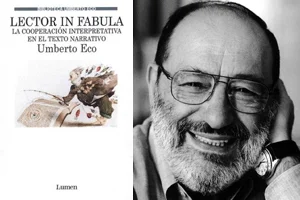
Umbero Eco (1999) Lector in Fabula - Cooperacion Interpretativa en el Texto Narrativo
Nothing can be better. No, seriously.

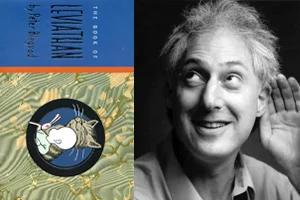
The crowded club of the chosen ones.
Soy hija de una prestidigitadora y de un acróbata. Nací, y viví siempre, en el circo. Estoy casada con un domador de fieras. Tengo un don probablemente excepcional. Basta que alguien se acerque a mí, para que yo lea su pensamiento. Me resigno, sin embargo, a que mi actuación en el circo donde trabajo sea aún más modesta que la de los payasos: ellos, al fin y al cabo, pretenden provocar la risa. Yo, por mi parte, con falda corta y muy largas medias blancas, al compás de la música, ejecuto pasos de baile ante la indiferencia del público, mientras a mi alrededor jinetes, equilibristas o domadores se juegan la vida.
De chica fui vanidosa. Para mí no había halago comparable al de ser admirada por mi don. Pronto, demasiado pronto, sospeché que por ese mismo don la gente me rehuía, como si me temiera. Me dije: “Si no lo olvidan quedaré sola.” Oculté mi don; fue un secreto que no revelé a nadie, ni siquiera a mi marido.
De un tiempo a esta parte Gustav trabaja con un solo tigre. Hace poco nos enteramos de que un viejo domador, famoso entre la gente del gremio por tratar a las fieras como si fueran humanos, se jubilaba y vendía un tigre. Gustav fue a verlo y, tras mucho regateo, lo compró. La primera tarde en que Gustav ante el público trabajó con el tigre, yo bailaba en el centro de la pista. De pronto, sin proponérmelo, me puse a leer pensamientos. Cuando me acerqué a mi marido, toda lectura cesó; pero cuando me acerqué al tigre, cuál no sería mi sorpresa, leí fácilmente su pensamiento, que se dirigía a mi marido y ordenaba: “Dígame que salte”, “dígame que dé un zarpazo”, “dígame que ruja”. Obedeció mi marido y el tigre saltó, dio un zarpazo y rugió con ferocidad.
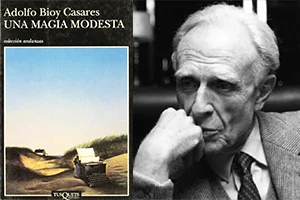
Adolfo Bioy Casares (1998) Una magia modesta
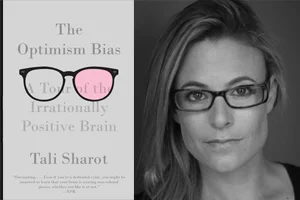
Homo optimisticus.
Overly positive assumptions can lead to disastrous miscalculations — make us less likely to get health checkups, apply sunscreen or open a savings account, and more likely to bet the farm on a bad investment. But the bias also protects and inspires us: it keeps us moving forward rather than to the nearest high-rise ledge. Without optimism, our ancestors might never have ventured far from their tribes and we might all be cave dwellers, still huddled together and dreaming of light and heat.
To make progress, we need to be able to imagine alternative realities — better ones — and we need to believe that we can achieve them. Such faith helps motivate us to pursue our goals. Optimists in general work longer hours and tend to earn more. Economists at Duke University
found that optimists even save more. And although they are not less likely to divorce, they are more likely to remarry — an act that is, as Samuel Johnson wrote, the triumph of hope over experience. Even if that better future is often an illusion, optimism has clear benefits in the present. Hope keeps our minds at ease, lowers stress and improves physical health. Researchers studying heart-disease patients found that optimists were more likely than nonoptimistic patients to take vitamins, eat low-fat diets and exercise, thereby reducing their overall coronary risk. A study of cancer patients revealed that pessimistic patients under the age of 60 were more likely to die within eight months than nonpessimistic patients of the same initial health, status and age.
In fact, a growing body of scientific evidence points to the conclusion that optimism may be hardwired by evolution into the human brain. The science of optimism, once scorned as an intellectually suspect province of pep rallies and smiley faces, is opening a new window on the workings of human consciousness. What it shows could fuel a revolution in psychology, as the field comes to grips with accumulating evidence that our brains aren't just stamped by the past.
They are constantly being shaped by the future.
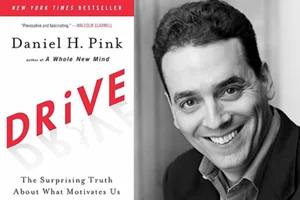
The tainting essence of carrots.
Goals that people set for themselves and that are devoted to attaining mastery are usually healthy. But goals imposed by others -sales targets, quarterly returns, standardized test scores, and so on- can sometimes have dangerous side effects.
Like all extrinsic motivators, goals narrow our focus. That's one reason they can be effective; they concentrate the mind. But as we've seen, a narrowed focus exacts a cost. For complex or conceptual tasks, offering a reward can blinker the wide-ranging thinking necessary to come up with an innovative solution. Likewise, when an extrinsic goal is paramount -particularly a short-term, measurable one whose achievement delivers a big payoff- its presence can restrict our view of the broader dimensions of our behavior. As the cadre of business school professors write, "Substantial evidence demonstrates that in addition to motivating constructive effort, goal setting can induce unethical behavior."
The examples are legion, the researchers note. Sears imposes a sales quota on its auto repair staff -and workers respond by overcharging customers and completing unnecessary repairs. Enron sets lofty revenue goals -and the race to meet them by any means possible catalyzes the company's collapse. Ford is so intent on producing a certain car at a certain weight at a certain price by a certain date that it omits safety checks and unleashes the dangerous Ford Pinto.
The problem with making an extrinsic reward the only destination that matters is that some people will choose the quickest route there, even if it means taking the low road.
Indeed, most of the scandals and misbehavior that have seemed endemic to modern life involve shortcuts. Executives game their quarterly earnings so they can snag a performance bonus. Secondary school counselors doctor student transcripts so their seniors can get into college. Athletes inject themselves with steroids to post better numbers and trigger lucrative performance bonuses.
Contrast that approach with behavior sparked by intrinsic motivation. When the reward is the activity itself -deepening learning, delighting customers, doing one's best- there are no shortcuts. The only route to the destination is the high road. In some sense, it's impossible to act unethically because the person who's disadvantaged isn't a competitor but yourself.
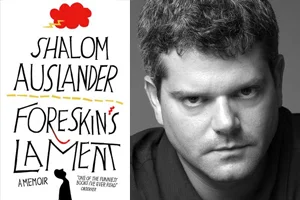
The flip side of fame.
- What's wrong?
I shrugged.
- Did something happen at school?
I shrugged.
- I have something that will cheer you up.
She handed me a large white envelope. It was addressed to My Biggest Fan. I tore the envelope open and pulled out a large color photograph of Steve Austin. There was handwriting across the bottom of the photo.
For Sharon, it read. Love, Lee Majors.
- Who's Sharon? I asked my mother.
She shrugged.
- Who's Lee Majors? I asked.
She shrugged.
- They probably got your name wrong, she said.
- Which name? I asked.—Sharon or Lee Majors?
- Sharon. Lee Majors is the actor.
- What actor?
- The actor that plays Steve Whatever His Name Is.
- But I didn't want an actor's signature. I wanted Steve Austin's signature.
In the age of information, who's thinking?
I was, throughout my tour of largely similar fish, doing my best to read the little plaques next to each tank, which told me and other curious visitors the name, feeding habitats and musical tastes of whatever was diving, swimming or floating upside-down inside. About halfway through this fabricated subterranean labyrinth, my conscious mind suddenly latched onto an oddity. I realized that underneath the descriptions of the various natant ichthyoids there was a translation of what I presumed to be the same information in Braille. For a while this seemed quite natural, and then I caught myself wondering: on average, how many blind people a year visit the London Aquarium? Now I don't want to sound insensitive, but I imagine the number must be negligible.
I would welcome any answers from blind people to a couple of questions that have been bugging me since. Firstly, how do you know where the Braille sign is located? This must be relatively straightforward in such things as lifts, but what about in an alien environment? If alone in a train toilet, how does one find Braille instructions for the use of obscured or unusual soap dispensers or toilet flushers? That sounds like an unpleasant and even unhygienic search to be undertaking while bumping around somewhere near Didcot Parkway. My second concern, clearly, is if a blind visitor found the Braille sign in the Aquarium, of what earthly use would it be? Aside from possible fleeting strokes of passing stingray in the 'touching pool', the London Aquarium seems to be an experience ill suited to visitors with severe visual challenges. It occurred to me that the Braille signs, if located, would at best provide the blind visitor with no more to take with him from his afternoon than a list of fish.
Carrying a Balance
The tightrope artist
walks a fine line
between two yawning options-
to fall to his death
to his left,
or from the same height
on the right.
His middle way is no matter
of ease or comfort.
It's obligatory.
Still, it is something of a relief
to have the world's compass points
shrunk to two.
This one-dimensional man
knows his back from his front,
what he's done from what he must do,
and may look like he knows
how he got where he is.
But really,
he hasn't a clue.

Troy Jollimore
How new are you?

The ever-changing nature of normality.
We are here at the dawn of the social web. The game-changing technologies on the internet at the moment are the ones that let us comment on the world in as many ways as we can think of: from broadcasting our moment-to-moment status, location, or opinion to commenting and tagging not just every digital conversation and content, but the real world as well. In 2010, this is new but it's also such a natural extension of our human behavior that soon enough it's going to feel like this is what the internet was always meant for.
The transformation we are going through at the moment in technology is moving from the interactive version of "old media" - publishing, television, and so on - to a digital version of our behavior out there in the real world. We are also bringing the internet out of the house. It already seems antiquated to log on to the internet or to find your way to a computer to access the web. We've always got it with us, and because we have access to everything and everyone all the time, in many ways we don't even realize we are online anymore. Big companies, brands - our clients - now have to figure out how to behave in a time when, just like all of their customers, their every move is observed and broadcasted, accepted or rejected. That's branding in real time on the social web. It's totally freaking everyone out right now, which is actually pretty awesome because transformational panic usually leads to great things.
Benjamin Palmer
Teen mantra.

Chris Ware
All Memoirs Are Fake.
I like things to be story-shaped. Reality, however, is not story-shaped, and the eruptions of the odd into our lives are not story-shaped either. They do not end in entirely satisfactory ways. Recounting the strange is like telling one's dreams: one can communicate the events of a dream but not the emotional content, the way that a dream can color one's entire day.
Super John Doe.
It is quite saddening to think of those people who have been
mistreated by history. There were the poètes maudits, like Edgar Allan
Poe or Arthur Rimbaud, scorned by society and latter worshipped and
force-fed to school to schoolchildren (There are even schools named
after high school dropouts.) Alas, this recognition came a little too
late for the poet to get a serotonin kick out of it, or to prop up his
romantic life on earth. But there are even more mistreated heroes-the
very sad category of those who we do not know were heroes, who saved
our lives, who helped to avoid disasters. They left no traces and did
not even know that they were making a contribution. We remember the
martyrs who died for a cause that we knew about, never those no less
efective in their contribution but whose cause we were never aware
of-precisely because they were successful. Our ingratitude toward the
poète maudits fades completely in front of this other type of
thanklessness. This is a far more vicious kind of ingratitude: the
feeling of uselessness on the part of the silent hero.
mistreated by history. There were the poètes maudits, like Edgar Allan
Poe or Arthur Rimbaud, scorned by society and latter worshipped and
force-fed to school to schoolchildren (There are even schools named
after high school dropouts.) Alas, this recognition came a little too
late for the poet to get a serotonin kick out of it, or to prop up his
romantic life on earth. But there are even more mistreated heroes-the
very sad category of those who we do not know were heroes, who saved
our lives, who helped to avoid disasters. They left no traces and did
not even know that they were making a contribution. We remember the
martyrs who died for a cause that we knew about, never those no less
efective in their contribution but whose cause we were never aware
of-precisely because they were successful. Our ingratitude toward the
poète maudits fades completely in front of this other type of
thanklessness. This is a far more vicious kind of ingratitude: the
feeling of uselessness on the part of the silent hero.
When Ideas Have Sex.
Sex is what makes biological evolution cumulative, because it brings
together the genes of different individuals. A mutation that occurs in
one creature can therefore join forces with a mutation that occurs in
another. The analogy is most explicit in bacteria, which trade genes
without replicating at the same time – hence their ability to acquire
immunity to antibiotics from other species. If microbes had not begun
swapping genes a few billion years ago, and animals had not continued
doing so through sex, all the genes that make eyes could never had got
together in one animal; nor the genes to make legs or nerves or
brains. Each mutation would have remained isolated in its own linage,
unable to discover the joys of synergy. Think, in cartoon terms, of
one fish evolving a nascent lung, another nascent limb and neither
getting out on land. Evolution can happen without sex; but it is far,
far slower.
And so it is with culture. If culture consisted simply of learning
habits from others, it would soon stagnate. For culture to turn
cumulative, ideas needed to meet and mate. The ‘cross-fertilisation of
ideas’ is a cliché, but one with unintentional fecundity. ‘To create
is to recombine’ said the molecular biologist François Jacob. Imagine
if the man who invented the railway and the man who invented the
locomotive could never meet or speak to each other, even through third
parties. Paper and the printing press, the internet and the mobile
phone, coal and turbines, copper and tin, the wheel and steel,
software and hardware. I shall argue that there was a point in human
pre-history when big-brained, cultural, learning people for the first
time began to exchange things with each other, and that once they
started doing so, culture suddenly became cumulative, and the great
headlong experiment of human economic ‘progress’ began. Exchange is to
cultural evolution as sex is to biological evolution.
Matt Ridley
together the genes of different individuals. A mutation that occurs in
one creature can therefore join forces with a mutation that occurs in
another. The analogy is most explicit in bacteria, which trade genes
without replicating at the same time – hence their ability to acquire
immunity to antibiotics from other species. If microbes had not begun
swapping genes a few billion years ago, and animals had not continued
doing so through sex, all the genes that make eyes could never had got
together in one animal; nor the genes to make legs or nerves or
brains. Each mutation would have remained isolated in its own linage,
unable to discover the joys of synergy. Think, in cartoon terms, of
one fish evolving a nascent lung, another nascent limb and neither
getting out on land. Evolution can happen without sex; but it is far,
far slower.
And so it is with culture. If culture consisted simply of learning
habits from others, it would soon stagnate. For culture to turn
cumulative, ideas needed to meet and mate. The ‘cross-fertilisation of
ideas’ is a cliché, but one with unintentional fecundity. ‘To create
is to recombine’ said the molecular biologist François Jacob. Imagine
if the man who invented the railway and the man who invented the
locomotive could never meet or speak to each other, even through third
parties. Paper and the printing press, the internet and the mobile
phone, coal and turbines, copper and tin, the wheel and steel,
software and hardware. I shall argue that there was a point in human
pre-history when big-brained, cultural, learning people for the first
time began to exchange things with each other, and that once they
started doing so, culture suddenly became cumulative, and the great
headlong experiment of human economic ‘progress’ began. Exchange is to
cultural evolution as sex is to biological evolution.
Matt Ridley