This is the story.

This is the Story

This is the beginning. Here is where the story begins. The character is introduced—we meet the character, her, we’ll call her a her. We begin to learn about her background, or if not so much as that, then her habits. We see her doing what she does every day, in medias res. What she does now foreshadows what will happen to her later. She does the same thing every day, and then something changes. It’s not much, but it’s something, and so it is a story.

This is the middle. The thing that happens, the different thing, happens here. She was safe in her assumptions, but this thing occurs, or something occurs to her, a realization, and she can no longer go on thinking what she thought. Perhaps it has to do with him, someone important to her, someone whom perhaps she loves. And yet he is also her antagonist, the one who stands in the way of what must happen for her to be, if not happy, then consummated, fulfilled. This is when we meet him, when we come to understand the obstacle he presents, when we are allowed to wonder how she will, how she can, proceed.

This is the ending. At this point the situation comes to its crisis. Events build to a climax. We have been expecting this: a conflict, and, through its resolution, change. But then something happens that we had not -expected, a surprise, a twist, which nonetheless feels, now that it has happened, -inevitable. They were at odds in a way that had become familiar, and now we learn that their goals are not so far apart, that perhaps what had seemed a conflict is in fact its own resolution.

Finally there is this, something after the ending, after the climax: the result. It is not at all what we expected. Perhaps one of them—him—is left behind in some way by the events that have transpired. He is lost, and she must suffer a kind of grief, as must he, for he is lost but must go on, as she must, too. So the story comes to its conclusion, open to interpretation, and we find that the only way out, for us as well as for them, is this lyrical finale, a few words, a bit of poetry. This last sentence is beautiful, as though beauty is itself the justification, though it isn’t—not quite.

ct.png

White-out history.

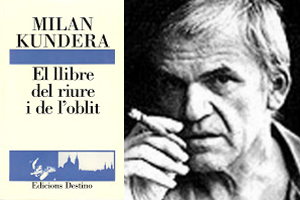
El febrer de 1948 el dirigent comunista Klement Gottwald va sortir al balcó d'un palau barroc de Praga per adreçar-se als centenars de ciutadans txecs que omplien la plaça de la Ciutat Vella. Aquella havia de ser una gran fita en la història de Bohèmia. Un d'aquells moments fatídics que ocorren una o dues vegades cada mil·lenni. Gottwald estava envoltat pels seus camarades i just al seu costat hi havia Clementis. La neu planava en l'aire, feia fred i Gottwald anava amb el cap descobert. Clementis, tot sol·lícit, es va treure la gorra de pell i la va posar al cap de Gottwald. 

La secció de propaganda va reproduir en centenars de milers d'exemplars la fotografia del balcó des del qual Gottwald, amb una gorra de pell al cap i envoltat de camarades, s'adreça al poble. En aquell balcó va començar la història de la Bohemia comunista. Aquella fotografia, la coneixien tots els nens d'haver-la vista en els cartells, en els Ilibres de text i en els museus. 

Quatre anys més tard Clementis va ser acusat de traició i penjat. La secció de propaganda el va esborrar immediatament de la història i, naturalment, de totes les fotografies. Des d'aleshores Gottwald està tot sol al balcó. En el lloc on havia estat Clementis hi ha només el mur buit del palau. De Clementis tan sols ha quedat la gorra de pell al cap de Gottwald. 

mk.png

Brain's the enemy.

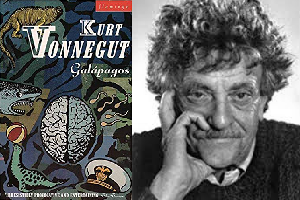
Mary had also taught that the human brain was the most admirable survival device yet produced by evolution. But now her own big brain was urging her to take the polyethylene garment bag from around a red evening dress in her closet, and to wrap it around her head, thus depriving her cells of oxygen.

Before that, her wonderful brain had entrusted a thief at the airport with a suitcase containing all her toilet articles and clothes which would have been suitable for the hotel.

Her colossal thinking machine could be so petty, too. It would not let her go downstairs in her combat fatigues on the grounds that everybody, even though there was practically nobody in the hotel, would find her comical in such a costume. Her brain told her: ‘They’ll laugh at you behind your back, and think you’re crazy and pitiful, and your life is over anyway. You’ve lost your husband and your teaching job, and you don’t have any children or anything else to live for, so just put yourself out of your misery with the garment bag. What could be easier? What could be more painless? What could make more sense?’

Just about every adult human being back then had a brain weighing about three kilogrammes! There was no end to the evil schemes that a thought machine that oversized couldn’t imagine and execute. 

So I raise this question, although there is nobody around to answer it: Can it be doubted that three-kilogramme brains were once nearly fatal defects in the evolution of the human race?

KV.png

Man created God in his own image and likeness, on Halloween.

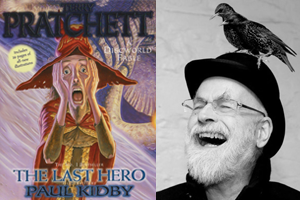
The gods play games with the fate of men. Not complex ones obviously, because gods lack patience. Cheating is part of the rules. And gods play hard. To lose all believers is, for a god, the end. But a believer who survives the game gains honour and extra belief. Who wins with the most believers, lives.

Believers can include other gods, of course. Gods believe in belief.

There were always many games going on in Dunmanifestin, the abode of die gods on Cori Celesti. It looked, from outside, like a crowded city.* Not all gods lived there, many of them being bound to a particular country or in the case of the smaller ones, even one tree. But it was a Good Address. It was where you hung your metaphysical equivalent of the shiny brass plate, like those small discreet buildings in the smarter areas of major cities which nevertheless appear to house one hundred and fifty lawyers and accountants, presumably on some sort of shelving.

The city's domestic appearance was because, while people are influenced by gods, so gods are influenced by people.

Most gods were people-shaped: people don't have much imagination, on the whole. Even Offler the Crocodile God was only crocodile-headed. Ask people to imagine an annual god and they will, basically, come up with the idea of someone in a really bad mask. Men have been much better at inventing demons, which is why there are so many. 

*Few religions are definite about the size of Heaven, but on the planet Earth the Book of Revelation (ch. XXI, v.l6) gives it as a cube 12,000 furlongs on a side. This is somewhat less than 500,000,000.000,000,000,000 cubic feet. Even allowing that the Heavenly Host and other essential services take up at least two thirds of this spate, this leaves about one million cubic feet of space for each human occupant-assuming that every creature that could be called 'human' is allowed in, and that the human race eventually totals a thousand times the number of humans alive up until now. This is such a generous amount of space that it suggests that room has also been provided for some alien races or - a happy thought - that pets are allowed.

tp.png

Fictions and facts.

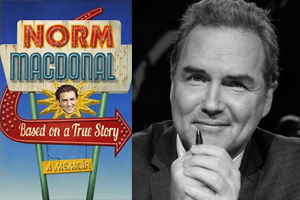
A picture hung on the wall of our parlor. In it, a woman was taking a shirt from a clothesline. She had clothespins in her teeth and it was windy and a boy was tugging at her dress. The woman looked like she was in a hurry and the whole scene gave me the idea that, just outside the frame, full, dark clouds were gathering. But that was not what it was. It was paint. So I decided right then and there to see the picture as it really was. I stared at the thing long and hard, trying to only see the paint. But it was no use. All my eyes would allow me to see was the lie. In fact, the longer I gazed at the paint, the more false detail I began to imagine. The boy was crying, as if afraid, and the woman was weaker than I had first believed. I finally gave up. I understood then that it takes a powerful imagination to see a thing for what it really is.

(...)

Death is a funny thing. Not funny haha, like a Woody Allen movie, but funny strange, like a Woody Allen marriage. When it’s unexpected, death comes fast like a ravenous wolf and tears open your throat with a merciful fury. But when it’s expected, it comes slow and patient like a snake, and the doctor tells you how far away it is and when, exactly, it will be at your door. And when it will be at the foot of your bed. And when it will be on your flesh. It’s all right there on their clipboards.

nm.png

Class struggle revisited.

In the rarified air that was pumped into the Concorde Room, there nonetheless hovered a hint of something troubling: the implicit suggestion that the three traditional airline classes represented nothing less than a tripartite division of society according to people’s genuine talents and virtues. Having abolished the caste systems of old and fought to ensure universal access to education and opportunity, it seemed that we might have built up a meritocracy that had introduced an element of true justice into the distribution of wealth as well as poverty. In the modern era, destitution could therefore be regarded as not merely pitiable but deserved. The question of why, if one was in any way talented or adept, one was still unable to earn admittance to an elegant lounge was a conundrum for all economy airline passengers to ponder in the privacy of their own minds as they perched on hard plastic chairs in the overcrowded and chaotic public waiting areas of the world’s airports.

The West once had a powerful and forgiving explanation for exclusion from any sort of lounge: for two thousand years Christianity rejected the notion, inherent in the modern meritocratic system, that virtue must inevitably usher in material success. Jesus was the highest man, the most blessed, and yet throughout his earthly life he was poor, thus by his very example ruling out any direct equation between righteousness and wealth. the Christian story emphasized that, however apparently equitable our educational and commercial infrastructures might seem, random factors and accidents would always conspire to wreck any neat alignment between hierarchies of wealth on the one hand and virtue on the other. According to St Augustine, only God himself knew what each individual was worth, and He would not reveal that assessment before the time of the Last Judgement, to the sound of thunder and the trumpets of angels – a phantasmagorical scenario for non-believers, but helpful nevertheless in reminding us to refrain from judging others on the basis of a casual look at their tax returns.

The Christian story has neither died out nor been forgotten. That it continues even now to scratch away at meritocratic explanations of privilege was made clear to me when, after a copious lunch rounded off by a piece of chocolate cake with passionfruit sorbet, an employee called Reggie described for me the complicated set of circumstance that had brought her to the brutally decorated staff area of the Concorde Room from a shantytown outside Puerto Princesa in the Philippines. Our preference for the meritocratic versus the Christian belief system will in the end determine how we decide to interpret the relative standing of a tracksuited twenty-seven-year-old entrepreneur reading the Wall Street Journal by a stone-effect fireplace while waiting to board his fight to Seattle, against that of a Filipina cleaner whose job it is to tour the bathrooms of an airline’s first-class lounge, swabbing the shower cubicles of their diverse and ever-changing colonies of international bacteria.

At the end of my life, may my sons wear many hats.

The son of the late philosopher-mystic Perelmann, who was writing a biography of his father, used to say at our weekly brown-bag colloquiums that he wore two hats: that of Perelmann’s son and that of his biographer. We assumed that this was just a figure of speech until a graduate student who happened to be renting an apartment across the street from him told us that he really wore two physical hats: the son-of-Perelmann hat was a Boston Red Sox cap, and the biographer-of-Perelmann hat was a brown fedora. Some evenings he wore the Red Sox cap, some evenings he wore the brown fedora, and some evenings he went back and forth, more or less rapidly, between the cap and the fedora.

Word circulated, and before long the chair of the department knocked on Perelmann’s son’s office door. The chair urged him to take some time off, please, for his own sake.

“Bill,” Perelmann’s son said, with a knowing smile. “Is this about the hats?”

The chair admitted that he was concerned.

“Bill,” Perelmann’s son said again, touching the chair’s wrist. “Don’t worry about me. I’m not going crazy, at least not yet! The hats serve a purely functional purpose.”

It looked silly, he knew, but the hats helped him keep separate his two conflicting roles—first as a son still grieving for his father, second as a scholar trying to understand, to historicize, and, yes, to critique, as dispassionately as possible, his father’s ideas. Before hitting upon the two-hat system, he’d lived in a state of perpetual self-reproach: when he thought of Perelmann in the way that a son thinks of his father, the scholar in him condemned his lack of objectivity, and when he thought of Perelmann in the way that a scholar thinks of his subject the son in him condemned his lack of loyalty.

The hats put an end to all that.

When he pulled on the old Red Sox cap, its snug fit and familiar smell had a Proustian effect. He was returned to the grandstands of Fenway Park, beside his father. He was suffused with compassion and pity, with respect, love, and acceptance—for his father’s flaws no less than for his virtues. He wanted to annihilate his father’s academic detractors and slaughter those who would attempt to understand him as a product of his milieu. Such was the effect of the Red Sox cap. But under the weight of the brown fedora, beneath its sober brim, he could put aside his childish devotion and scrutinize his father’s thought with the skepticism required of an intellectual historian. He investigated the genealogy of his father’s ideas, examined their internal consistency, considered their presuppositions and limitations.

“Bill, I admit it’s a strange system!” Perelmann’s son said, laughing. “That what happens in our heads should be so affected by what happens on top of our heads. But, for me, this does seem to be the case.” He shrugged. “It helps me proceed. I do not question it.”

The department chair went away intensely impressed, even moved. Word went around that Perelmann’s son was not crazy but brilliant.

At our next brown-bag colloquium, Perelmann’s son claimed to wear “four hats.” He was Perelmann’s son, Perelmann’s biographer, Perelmann’s philosophical interlocutor, and Perelmann’s estate executor.

The following morning, the graduate student reported that two new hats, a black bowler and a purple yarmulke, had entered the rotation. From what he’d seen, he hypothesized that the bowler was the executor hat and the yarmulke was the interlocutor hat. Perelmann’s son had spent most of the early evening going calmly back and forth between the Red Sox cap and the bowler. At around eight o’clock, the yarmulke had gone on and stayed on until just after nine. From then until midnight, he’d frantically switched among the yarmulke, the Red Sox cap, and the brown fedora. He had ended the night with forty-five relatively relaxed minutes in the black bowler.

“I’m fine, Bill!” Perelmann’s son said, touching the chair’s wrist. “How can I summon memories of my father one minute and deal with his taxes the next? Impossible, unless I physically put on the bowler hat. One minute I’m recalling the sensation of being up on his shoulders, the next I’m attacking his peculiar interpretation of Kant? The purple yarmulke. Who taught him this idiosyncratic Kant, and when? Brown fedora.”

By the next colloquium, Perelmann’s son wore sixteen hats. He was Perelmann’s son, Perelmann’s biographer, Perelmann’s philosophical interlocutor, Perelmann’s estate executor, Perelmann’s publicist, Perelmann’s usurper, Perelmann’s housekeeper, Perelmann’s zealot, Perelmann’s annihilator, Perelmann’s designated philosophical heir, Perelmann’s defector, Perelmann’s librarian, Perelmann’s gene carrier, Perelmann’s foot soldier, Perelmann’s betrayer, and Perelmann’s doppelgänger. Twelve new hats joined the repertoire, including a beret, a bandanna, a small straw hat, and a sombrero.

Naturally, we were a little alarmed. Perelmann’s son’s evenings, the graduate student reported, were now mere blurs of hat transitions. Nothing stayed on his head for long. But reality, we assumed, would sooner or later impose a limit on his mania. There are only so many kinds of hats, just as there are only so many relations that can possibly obtain between a father and a son. In due course Perelmann’s son would run out of either hats or relations, we thought—probably hats—and thereafter he would return to reason.

But soon there were relations we had never considered, hats we’d never heard of. He was Perelmann’s old-Jewish-joke repository, Perelmann’s voice impersonator, Perelmann’s sweater wearer, the last living practitioner of Perelmann’s skiing technique, Perelmann’s surpasser, Perelmann’s victim. He wore an eighteenth-century tricorne, a deerstalker, a round Hasidic kolpik, an Afghan pakol with a peacock feather tucked into its folds.

By the end of the fall semester we knew something had to be done. The explosion of hats and relations had not abated. Left alone, we realized, Perelmann’s son would partition his relationship with his father ad infinitum, and for each infinitesimal slice of relationship he would purchase a hat. Ultimately, he would turn his relationship with his father—by nature, one simple thing—into something infinitely complex, and his hat collection would, correspondingly, grow without bound, and he would wind up destroying himself. His analytical tendency, along with the huge hat collection that resulted from it, would obliterate him.

So, one morning, in an attempt to save Perelmann’s son from himself, a group of graduate students and junior faculty members slipped, with the department chair’s blessing, into his apartment. (He was at a Perelmann conference.) We gathered all the hats and put them in garbage bags—a hundred and twenty-eight hats in twelve garbage bags—and got them out of there.

But in our hearts we must have known that we were treating the symptom, not the cause. Yesterday, according to our informant, Perelmann’s son spent all day and all night in a ten-gallon hat of thus far unknown paternal associations.

Adam Ehrlich Sachs, (2016) Two Hats - The New Yorker Feb 1, 2016


Reality generates data. Or is it the other way around?

Everyone knows that dragons don’t exist. But while this simplistic formulation may satisfy the layman, it does not suffice for the scientific mind. The School of Higher Neantical Nillity is in fact wholly unconcerned with what does exist. Indeed, the banality of existence has been so amply demonstrated, there is no need for us to discuss it any further here. The brilliant Cerebron, attacking the problem analytically, probability theory to this area and, in so doing, created the field of statistical draconics, which says that dragons are thermodynamically impossible only in the probabilistic sense, as are elves, fairies, gnomes, witches, pixies and the like. Using the general equation of improbability, the two constructors obtained the coefficients of pixation, elfinity, kobolding, etc. They found that for the spontaneous manifestation of an average dragon, one would have to wait a good sixteen quintoquadrillion heptillion years. In other words, the whole problem would have remained a mathematical curiosity had it not been for that famous tinkering passion of Trurl, who decided to examine the nonphenomenon empirically. First, as he was dealing with the highly improbable, he invented a probability amplifier and ran tests in his basement – then later at the Dracogenic Proving Grounds established and funded by the probability theory to this area and, in so doing, created the field of statistical draconics, which says that dragons are thermodynamically impossible only in the probabilistic sense, as are elves, fairies, gnomes, witches, pixies and the like. Using the general equation of improbability, the two constructors obtained the coefficients of pixation, elfinity, kobolding, etc. They found that for the spontaneous manifestation of an average dragon, one would have to wait a good sixteen quintoquadrillion heptillion years. In other words, the whole problem would have remained a mathematical curiosity had it not been for that famous tinkering passion of Trurl, who decided to examine the nonphenomenon empirically. First, as he was dealing with the highly improbable, he invented a probability amplifier and ran tests in his basement – then later at the Dracogenic Proving Grounds established and funded by the Academy. To this day those who (sadly enough) have no knowledge of the General Theory of Improbability ask why Trurl probabilized a dragon and not an elf or goblin. The answer is simply that dragons are more probable than elves or goblins to begin with. True, Trurl might have gone further with his amplifying experiments, had not the first been so discouraging – discouraging in that the materialized dragon tried to make a meal of him. Fortunately, Klapaucius was nearby and lowered the probability, and the monster vanished.

Let me help you with that.

He recalled what his favorite professor, Leonard Leech, once told him about getting ahead in law. Leech said that, just as a good airplane pilot should always be looking for places to land, so should a lawyer be looking for situations where large amounts of money were about to change hands.

"In every big transaction," said Leech, "there is a magic moment during which a man has surrendered a treasure, and during which the man who is due to receive it has not yet done so. An alert lawyer will make that moment his own, possessing the treasure for a magic microsecond, taking a little of it, passing it on. If the man who is to receive the treasure is unused to wealth, has an inferiority complex and shapeless feelings of guilt, as most people do, the lawyer can often take as much as half the bundle, and still receive the recipient's blubbering thanks."

Kurt Vonnegut (1965) God Bless You, Mr. Rosewater

Secret handshake.

Every work of art is one half of a secret handshake, a challenge that seeks the password, a heliograph flashed from a tower window, an act of hopeless optimism in the service of bottomless longing. Every great record or novel or comic book convenes the first meeting of a fan club whose membership stands forever at one but which maintains chapters in every city—in every cranium—in the world. Art, like fandom, asserts the possibility of fellowship in a world built entirily from the materials of solitude. The novelist, the cartoonist, the songwriter, knows that the gesture is doomed from the beginning but makes it anyway, flashes his or her bit of mirror, not on the chance that the signal will be seen or understood but as if such a chance existed.

A-players and A-bombs.

For most things in life, the range between best and average is 30% or so. The best airplane flight, the best meal, they may be 30% better than your average one. What I saw with Woz was somebody who was fifty times better than the average engineer. He could have meetings in his head. The Mac team was an attempt to build a whole team like that, A players. People said they wouldn’t get along, they’d hate working with each other . But I realized that A players like to work with A players , they just didn’t like working with C players. At Pixar, it was a whole company of A players. When I got back to Apple, that’s what I decided to try to do. You need to have a collaborative hiring process. When we hire someone, even if they’re going to be in marketing, I will have them talk to the design folks and the engineers. My role model was J. Robert Oppenheimer. I read about the type of people he sought for the atom bomb project. I wasn’t nearly as good as he was, but that’s what I aspired to do.

Walter Isaacson (2011). Steve Jobs.

Live your life at 80%.

I’ve always thought of myself as an 80 percenter. I like to throw myself passionately into a sport or activity until I reach about an 80 percent proficiency level. To go beyond that requires an obsession and degree of specialization that doesn’t appeal to me. Once I reach that 80 percent level I like to go off and do something totally different; that probably explains the diversity of the Patagonia product line—and why our versatile, multifaceted clothes are the most successful.

Competition is for incompetents—an ode to monopolies.

What valuable company is nobody building? This question is harder than it looks, because your company could create a lot of value without becoming very valuable itself. Creating value isn't enough—you also need to capture some of the value you create.

This means that even very big businesses can be bad businesses. For example, U.S. airline companies serve millions of passengers and create hundreds of billions of dollars of value each year. But in 2012, when the average airfare each way was $178, the airlines made only 37 cents per passenger trip. Compare them to Google, which creates less value but captures far more. Google brought in $50 billion in 2012 (versus $160 billion for the airlines), but it kept 21% of those revenues as profits—more than 100 times the airline industry's profit margin that year. Google makes so much money that it is now worth three times more than every U.S. airline combined.

The airlines compete with each other, but Google stands alone. Economists use two simplified models to explain the difference: perfect competition and monopoly.

"Perfect competition" is considered both the ideal and the default state in Economics 101. So-called perfectly competitive markets achieve equilibrium when producer supply meets consumer demand. Every firm in a competitive market is undifferentiated and sells the same homogeneous products. Since no firm has any market power, they must all sell at whatever price the market determines. If there is money to be made, new firms will enter the market, increase supply, drive prices down and thereby eliminate the profits that attracted them in the first place. If too many firms enter the market, they'll suffer losses, some will fold, and prices will rise back to sustainable levels. Under perfect competition, in the long run no company makes an economic profit.

The opposite of perfect competition is monopoly. Whereas a competitive firm must sell at the market price, a monopoly owns its market, so it can set its own prices. Since it has no competition, it produces at the quantity and price combination that maximizes its profits.

To an economist, every monopoly looks the same, whether it deviously eliminates rivals, secures a license from the state or innovates its way to the top. I'm not interested in illegal bullies or government favorites: By "monopoly," I mean the kind of company that is so good at what it does that no other firm can offer a close substitute. Google is a good example of a company that went from 0 to 1: It hasn't competed in search since the early 2000s, when it definitively distanced itself from Microsoft and Yahoo!

Americans mythologize competition and credit it with saving us from socialist bread lines. Actually, capitalism and competition are opposites. Capitalism is premised on the accumulation of capital, but under perfect competition, all profits get competed away. The lesson for entrepreneurs is clear: If you want to create and capture lasting value, don't build an undifferentiated commodity business.

How much of the world is actually monopolistic? How much is truly competitive? It is hard to say because our common conversation about these matters is so confused. To the outside observer, all businesses can seem reasonably alike, so it is easy to perceive only small differences between them. But the reality is much more binary than that. There is an enormous difference between perfect competition and monopoly, and most businesses are much closer to one extreme than we commonly realize.

The confusion comes from a universal bias for describing market conditions in self-serving ways: Both monopolists and competitors are incentivized to bend the truth.

Monopolists lie to protect themselves. They know that bragging about their great monopoly invites being audited, scrutinized and attacked. Since they very much want their monopoly profits to continue unmolested, they tend to do whatever they can to conceal their monopoly—usually by exaggerating the power of their (nonexistent) competition.

Think about how Google talks about its business. It certainly doesn't claim to be a monopoly. But is it one? Well, it depends: a monopoly in what? Let's say that Google is primarily a search engine. As of May 2014, it owns about 68% of the search market. (Its closest competitors, Microsoft and Yahoo!, have about 19% and 10%, respectively.) If that doesn't seem dominant enough, consider the fact that the word "google" is now an official entry in the Oxford English Dictionary—as a verb. Don't hold your breath waiting for that to happen to Bing.

But suppose we say that Google is primarily an advertising company. That changes things. The U.S. search-engine advertising market is $17 billion annually. Online advertising is $37 billion annually. The entire U.S. advertising market is $150 billion. And global advertising is a $495 billion market. So even if Google completely monopolized U.S. search-engine advertising, it would own just 3.4% of the global advertising market. From this angle, Google looks like a small player in a competitive world.

What if we frame Google as a multifaceted technology company instead? This seems reasonable enough; in addition to its search engine, Google makes dozens of other software products, not to mention robotic cars, Android phones and wearable computers. But 95% of Google's revenue comes from search advertising; its other products generated just $2.35 billion in 2012 and its consumer-tech products a mere fraction of that. Since consumer tech is a $964 billion market globally, Google owns less than 0.24% of it—a far cry from relevance, let alone monopoly. Framing itself as just another tech company allows Google to escape all sorts of unwanted attention.

Non-monopolists tell the opposite lie: "We're in a league of our own." Entrepreneurs are always biased to understate the scale of competition, but that is the biggest mistake a startup can make. The fatal temptation is to describe your market extremely narrowly so that you dominate it by definition.

Suppose you want to start a restaurant in Palo Alto that serves British food. "No one else is doing it," you might reason. "We'll own the entire market." But that is only true if the relevant market is the market for British food specifically. What if the actual market is the Palo Alto restaurant market in general? And what if all the restaurants in nearby towns are part of the relevant market as well?

These are hard questions, but the bigger problem is that you have an incentive not to ask them at all. When you hear that most new restaurants fail within one or two years, your instinct will be to come up with a story about how yours is different. You'll spend time trying to convince people that you are exceptional instead of seriously considering whether that is true. It would be better to pause and consider whether there are people in Palo Alto who would rather eat British food above all else. They may well not exist.

In 2001, my co-workers at PayPal and I would often get lunch on Castro Street in Mountain View, Calif. We had our pick of restaurants, starting with obvious categories like Indian, sushi and burgers. There were more options once we settled on a type: North Indian or South Indian, cheaper or fancier, and so on. In contrast to the competitive local restaurant market, PayPal was then the only email-based payments company in the world. We employed fewer people than the restaurants on Castro Street did, but our business was much more valuable than all those restaurants combined. Starting a new South Indian restaurant is a really hard way to make money. If you lose sight of competitive reality and focus on trivial differentiating factors—maybe you think your naan is superior because of your great-grandmother's recipe—your business is unlikely to survive.

The problem with a competitive business goes beyond lack of profits. Imagine you're running one of those restaurants in Mountain View. You're not that different from dozens of your competitors, so you've got to fight hard to survive. If you offer affordable food with low margins, you can probably pay employees only minimum wage. And you'll need to squeeze out every efficiency: That is why small restaurants put Grandma to work at the register and make the kids wash dishes in the back.

A monopoly like Google is different. Since it doesn't have to worry about competing with anyone, it has wider latitude to care about its workers, its products and its impact on the wider world. Google's motto—"Don't be evil"—is in part a branding ploy, but it is also characteristic of a kind of business that is successful enough to take ethics seriously without jeopardizing its own existence. In business, money is either an important thing or it is everything. Monopolists can afford to think about things other than making money; non-monopolists can't. In perfect competition, a business is so focused on today's margins that it can't possibly plan for a long-term future. Only one thing can allow a business to transcend the daily brute struggle for survival: monopoly profits.

So a monopoly is good for everyone on the inside, but what about everyone on the outside? Do outsize profits come at the expense of the rest of society? Actually, yes: Profits come out of customers' wallets, and monopolies deserve their bad reputation—but only in a world where nothing changes.

In a static world, a monopolist is just a rent collector. If you corner the market for something, you can jack up the price; others will have no choice but to buy from you. Think of the famous board game: Deeds are shuffled around from player to player, but the board never changes. There is no way to win by inventing a better kind of real-estate development. The relative values of the properties are fixed for all time, so all you can do is try to buy them up.

But the world we live in is dynamic: We can invent new and better things. Creative monopolists give customers more choices by adding entirely new categories of abundance to the world. Creative monopolies aren't just good for the rest of society; they're powerful engines for making it better.

Even the government knows this: That is why one of its departments works hard to create monopolies (by granting patents to new inventions) even though another part hunts them down (by prosecuting antitrust cases). It is possible to question whether anyone should really be awarded a monopoly simply for having been the first to think of something like a mobile software design. But something like Apple's monopoly profits from designing, producing and marketing the iPhone were clearly the reward for creating greater abundance, not artificial scarcity: Customers were happy to finally have the choice of paying high prices to get a smartphone that actually works. The dynamism of new monopolies itself explains why old monopolies don't strangle innovation. With Apple's iOS at the forefront, the rise of mobile computing has dramatically reduced Microsoft's decadeslong operating system dominance.

Before that, IBM's hardware monopoly of the 1960s and '70s was overtaken by Microsoft's software monopoly. AT&T had a monopoly on telephone service for most of the 20th century, but now anyone can get a cheap cellphone plan from any number of providers. If the tendency of monopoly businesses was to hold back progress, they would be dangerous, and we'd be right to oppose them. But the history of progress is a history of better monopoly businesses replacing incumbents. Monopolies drive progress because the promise of years or even decades of monopoly profits provides a powerful incentive to innovate. Then monopolies can keep innovating because profits enable them to make the long-term plans and finance the ambitious research projects that firms locked in competition can't dream of.

So why are economists obsessed with competition as an ideal state? It is a relic of history. Economists copied their mathematics from the work of 19th-century physicists: They see individuals and businesses as interchangeable atoms, not as unique creators. Their theories describe an equilibrium state of perfect competition because that is what's easy to model, not because it represents the best of business. But the long-run equilibrium predicted by 19th-century physics was a state in which all energy is evenly distributed and everything comes to rest—also known as the heat death of the universe. Whatever your views on thermodynamics, it is a powerful metaphor. In business, equilibrium means stasis, and stasis means death. If your industry is in a competitive equilibrium, the death of your business won't matter to the world; some other undifferentiated competitor will always be ready to take your place.

Perfect equilibrium may describe the void that is most of the universe. It may even characterize many businesses. But every new creation takes place far from equilibrium. In the real world outside economic theory, every business is successful exactly to the extent that it does something others cannot. Monopoly is therefore not a pathology or an exception. Monopoly is the condition of every successful business.

Tolstoy famously opens "Anna Karenina" by observing: "All happy families are alike; each unhappy family is unhappy in its own way." Business is the opposite. All happy companies are different: Each one earns a monopoly by solving a unique problem. All failed companies are the same: They failed to escape competition.
Straight up.

Blogger Jason Kottke wrestled with what to call this new class of entrepreneurship, these cottage industries with global reach targeting niche markets of distributed demand. “Boutique” is too pretentious, and “indie” not quite right. He observed that others had suggested “craftsman, artisan, bespoke, cloudless, studio, atelier, long tail, agile, bonsai company, mom and pop, small scale, specialty, anatomic, big heart, GTD business, dojo, haus, temple, coterie, and disco business.” But none seemed to capture the movement.

So he proposed “small batch,” a term most often applied to bourbon. In the spirits world, this implies handcrafted care. But it can broadly refer to businesses focused more on the quality of their products than the size of the market. They’d rather do something they were passionate about than go mass. And these days, when anyone can get access to manufacturing and distribution, that is actually a viable choice. Walmart, and all the compromise that comes with it, is no longer the only path to success.

The collective potential of a million garage tinkerers is about to be unleashed on the global markets, as ideas go straight into production, no financing or tooling required. “Three guys with laptops” used to describe a Web startup. Now it describes a hardware company, too. “Hardware is becoming much more like software,” as MIT professor Eric von Hippel puts it. 

The Web was just the proof-of-concept of what an open, bottom-up, collaborative industrial model could look like. Now the revolution hits the real world.

Constant variation.

Most successful big-company innovators I met, whether Chief Innovation Officers, innovation team members or people without an innovation job title but who are tackling a big change project for the first time, have something in common: they respect the organisation they work for, but they don't revere it. As innovators, they want their businesses to do better, but at the same time they are dissatisfied with the status quo. There's a kind of 'love-hate' going on. But too much love and an innovator becomes an ineffective 'yes-man'. Too much hate and he or she ends up an ineffective loner.

It's a delicate balancing act. I describe someone who effectively manages it as a 'Captain One Minute, Pirate the Next'. One minute the innovation leader is the Captain, the passionate man-with-the-plan, standing tall on the bridge of the ship and inspiring us all to go 'this way'. But the next time you meet, the Captain has morphed into a Pirate. This time he or she is down to the boiler room, sleeves rolled up, shipmates gathered around, using all of his or her cunning to shortcut a process, to subvert the system. Now our protagonist is asking really challenging questions: 'What if we did it differently? What if we ripped up the way things are done around here? What if?'

So one minute an innovation leader is stubbornly sticking to the big picture; the next he or she is telling you not to sweat the small stuff. I think this intriguing mix of vision and cunning comes from the fact that successful innovators are fixated by outcomes. They are highly motivated to make change happen - so much so that they're often less bothered about how they get there.