Winging it.

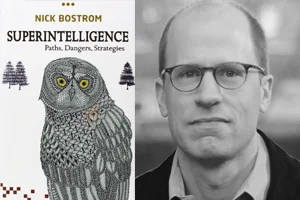
The Unfinished Fable of the Sparrows

It was the nest-building season, but after days of long hard work, the sparrows sat in the evening glow, relaxing and chirping away.
“We are all so small and weak. Imagine how easy life would be if we had an owl who could help us build our nests!”
“Yes!” said another. “And we could use it to look after our elderly and our young.”
“It could give us advice and keep an eye out for the neighborhood cat,” added a third.
Then Pastus, the elder-bird, spoke: “Let us send out scouts in all directions and try to find an abandoned owlet somewhere, or maybe an egg. A crow chick might also do, or a baby weasel. This could be the best thing that ever happened to us, at least since the opening of the Pavilion of Unlimited Grain in yonder backyard.”
The flock was exhilarated, and sparrows everywhere started chirping at the top of their lungs.
Only Scronkfinkle, a one-eyed sparrow with a fretful temperament, was unconvinced of the wisdom of the endeavor. Quoth he: “This will surely be our undoing. Should we not give some thought to the art of owl-domestication and owl-taming first, before we bring such a creature into our midst?”
Replied Pastus: “Taming an owl sounds like an exceedingly difficult thing to do. It will be difficult enough to find an owl egg. So let us start there. After we have succeeded in raising an owl, then we can think about taking on this other challenge.”
“There is a flaw in that plan!” squeaked Scronkfinkle; but his protests were in vain as the flock had already lifted off to start implementing the directives set out by Pastus.
Just two or three sparrows remained behind. Together they began to try to work out how owls might be tamed or domesticated. They soon realized that Pastus had been right: this was an exceedingly difficult challenge, especially in the absence of an actual owl to practice on. Nevertheless they pressed on as best they could, constantly fearing that the flock might return with an owl egg before a solution to the control problem had been found.
The great leap backwards.

In 1957, a billion Chinese were going hungry.
Mao Zedong couldn’t admit this was because of the failings of his communist agricultural policies.
The reason must be something else.
He heard that sparrows were eating lots of grain.
That must be the reason.
So began ‘The Great Sparrow Campaign’.
The people must do whatever was necessary to rid China of sparrows.
That way the people would have plenty to eat.
It became everyone’s responsibility to help wipe out sparrows.
Masses of schoolchildren were taken on outings to destroy nests, to smash eggs, to kill chicks.
Everyone with any kind of gun was told to shoot sparrows wherever they saw them.
Poison was put wherever sparrows lived.
The Chinese organised in thousands to visit the areas where the sparrows gathered.
They did anything to stop them landing in the trees.
They made vast amounts of noise: sounding horns, thumping drums, even banging old pots and pans.
Propaganda films of the period show entire villages participating right across China.
They wouldn’t let the sparrows land and eventually the sparrows exhausted themselves and dropped to earth dead.
All over China, towns and villages were given recognition for the amount of sparrows they killed.
One day alone, in Shanghai, they killed 198,000.
Eventually, sparrows in China were eradicated, around two billion birds.
So that was the end of the problem, now food would be plentiful.
Well not quite.
What Mao Zedong hadn’t allowed for was what else the sparrows ate, besides grain.
They ate locusts.
Without the sparrows, the locusts had nothing to stop them.
They multiplied on a massive scale.
And locusts were many times more destructive than sparrows.
Plagues of locusts took over huge areas of Chinese farmland.
Each swarm covering hundreds of square miles made up of trillions of locusts.
It resulted in the Great Famine.
Which resulted in thirty million people dead from starvation.
Which created a new problem: what could be done to control the locusts?
The only solution was for China to import millions of sparrows from Communist Russia.
To try to put everything back the way it had been.
Because the solution had been worse than the problem.
Which is pretty much what’s happened to advertising.
Advertising was good, but we were looking for a way to make it better.
So we had to replace intuition and normal common-sense.
We had to make everything rational and verifiable, measurable and accountable, sensible and scientific.
And what happened?
We killed off the intuitive, the common-sense, the fun.
Advertising became formulaic, dull, invisible and predictable.

We killed off the sparrows and the locusts were worse.

Dave Trott (2015) Dave Trott's Blog.