Unerring prophecies.

So common is the pattern of the self-fulfilling prophecy that each of us has his favored specimen. Consider the case of the examination neurosis. Convinced that he is destined to fail, the anxious student devotes more time to worry than to stufy and then turns in a poor examination. The initial fallacious anxiety is transformed into an entirely justified fear. Or it is believed that war between two nations is inevitable. Actuated by this conviction, representatives of the two nations become progresively alienated, apprehensively countering each "offensive" move of the other with a "deffensive" move of their own. Stockpiles of armaments, raw materials, and armed men grow larger, and eventually the anticipation of war helps create the actuality.

The self-fulfilling prophecy is, in the beginning, a false definition of the situation evoking a new behavior which makes the originally false conception come true. The specious validity of the self-fulfilling prophecy perpetuates a reign of error. For the prophet will cite the actual course of events as proof that he was right from the very beginning.

(...)

The initial definition of the situation which has set the circle in motion must be abandoned. Only when the original assumption is questioned and a new definition of the situation introduced, does the consequent flow of events give the lie to the assumption. Only then does the belief not father the reality.

Private. Please come in.

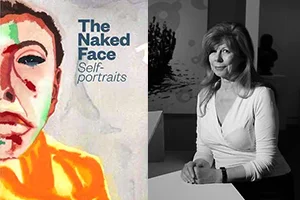
The flourishing of internet applications such as Facebook, Twitter and YouTube and the pervasion of media and celebrity culture has brought a corresponding escalation of the theatrical conditions of everyday life. Self-branding has become mandatory, not just for corporations but for individuals seeking visibility in the public arena. These developments have drastically increased the contrast between private and public. In 1959 the sociologist Erving Goffman published his influential theory for human behavior governed by a theatrical metaphor in which everyday social life was enacted as if on stage in front of an audience, while another self is backstage. This view of the split between public and private protects the vulnerable self yet dooms it to secrecy, hiding behind a performing mask.

There has been continuing debate over the paradoxical exposure of the private sphere, over what Roland Barthes described as ‘the creation of a new social value, which is the publicity of the private’. Concern about the effects of the changing social balance became a recurrent theme for twentieth-century writers such as Hannah Arendt, Jürgen Habermas and Richard Sennett, who believed that the shared public realm was undermined by the increased clamour for attention by private lives.

Exposure is often thought to be a desirable function of self-portraits. But self-portraits also work by concealment, a technique pursued ingeniously by Rembrandt through lighting effects that obscured his face or elaborate costume changes that multiplied his identity. In the twentieth century artists have gone further, replacing the notion of hidden private depths with that of a camouflage or a disappearing self. Most notably Andy Warhol overrode the idea of privacy in favour of an aesthetic of fame. After the hyperactive glamour of his images, depth became less tenable; identity is defined in terms of shifting surface appearances, a development corresponding with the abandonment of a singular model for human identity, characteristic of later twentieth-century art and philosophy.

Yet this emphasis on surface and the underlying disconnect between self and society, public and private, enabled an expansion of selves within societal norms. The performance of self gave cathartic expression to otherwise repressed emotions and created new models for human identity that have fed back into the diversity of human culture.

Don't Say It. Be It.

En la comunicación cara a cara intervienen infinitas formas de reforzamiento extralingüístico (gesticular, ostensivo, etc.) e infinitos procedimientos de redundancia y feed back (retroalimentación) que se apuntalan mutuamente. Esto revela que nunca se da una comunicación meramente lingüística, sino una actividad semiótica en sentido amplio, en la que varios sistemas de signos se complementan entre sí. Pero ¿qué ocurre en el caso de un texto escrito, que el autor genera y después entrega a una variedad de actos de interpretación, como quien mete un mensaje en una botella y luego la arroja al mar?

Hemos dicho que el texto postula la cooperación del lector como condición de su actualización. Podemos mejorar esa formulación diciendo que un texto es un producto cuya suerte interpretativa debe formar parte de su propio mecanismo generativo: generar un texto significa aplicar una estrategia que incluye las previsiones de los movimientos del otro; como ocurre, por lo demás, en toda estrategia.

En la estrategia militar (o ajedrecística, digamos: en toda estrategia de juego), el estratega se fabrica un modelo de adversario. Si hago este movimiento, arriesgaba Napoleón, Wellington debería reaccionar de tal manera. Si hago este movimiento, argumentaba Wellington, Napoleón debería reaccionar de tal manera. En ese caso concreto, Wellington generó su estrategia mejor que Napoleón, se construyó un Napoleón Modelo que se parecía más al Napoleón concreto que el Wellington Modelo, imaginado por Napoleón, al Wellington concreto. La analogía sólo falla por el hecho de que, en el caso de un texto, lo que el autor suele querer es que el adversario gane, no que pierda.

···

Cuando el texto se dirige a unos lectores que no postula ni contribuye a producir, se vuelve ilegible (más de lo que ya es), o bien se convierte en otro libro.

···

Si el Autor y el Lector Modelo son dos estrategias textuales, entonces nos encontramos ante una situación doble. Por un lado, como hemos dicho hasta ahora, el autor empírico, en cuanto sujeto de la enunciación textual, formula una hipótesis de Lector Modelo y, al traducirla al lenguaje de su propia estrategia, se caracteriza a sí mismo en cuanto sujeto del enunciado, con un lenguaje igualmente “estratégico”, como modo de operación textual. Pero, por otro lado, también el lector empírico, como sujeto concreto de los actos de cooperación, debe fabricarse una hipótesis de Autor, deduciéndola precisamente de los datos de la estrategia textual.

La hipótesis que formula el lector empírico acerca de su Autor Modelo parece más segura que la que formula el autor empírico acerca de su Lector Modelo. De hecho, el segundo debe postular algo que aún no existe efectivamente y debe realizarlo como una serie de operaciones textuales; en cambio, el primero deduce una imagen tipo a partir de algo que previamente se ha producido como acto de enunciación y que está presente textualmente como enunciado. (…) La configuración del Autor Modelo depende de determinadas huellas textuales, pero también involucra al universo que está detrás del texto, detrás del destinatario y, probablemente, también ante el texto y ante el proceso de cooperación (en el sentido de que dicha configuración depende de la pregunta: “¿qué quiero hacer con este texto?”).
 

The flip side of fame.

- What's wrong?

I shrugged.

- Did something happen at school?

I shrugged.

- I have something that will cheer you up.

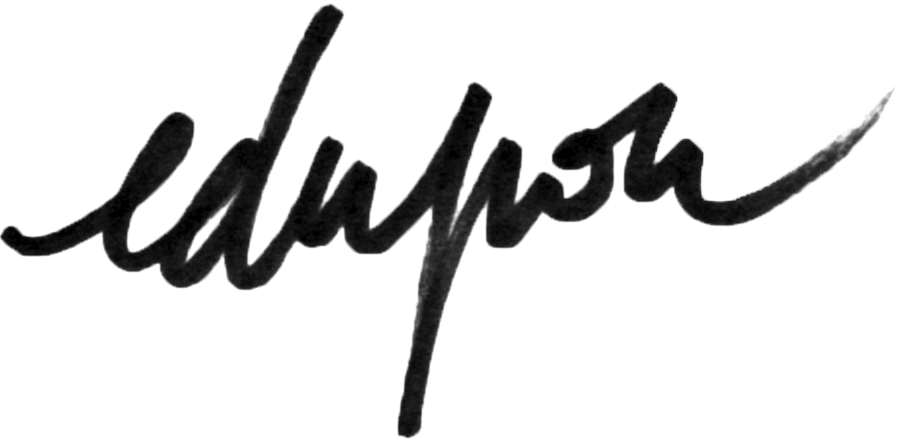
She handed me a large white envelope. It was addressed to My Biggest Fan. I tore the envelope open and pulled out a large color photograph of Steve Austin. There was handwriting across the bottom of the photo.

For Sharon, it read. Love, Lee Majors.

- Who's Sharon? I asked my mother.

She shrugged.

- Who's Lee Majors? I asked.

She shrugged.

- They probably got your name wrong, she said.

- Which name? I asked.—Sharon or Lee Majors?

- Sharon. Lee Majors is the actor.

- What actor?

- The actor that plays Steve Whatever His Name Is.

- But I didn't want an actor's signature. I wanted Steve Austin's signature.

Revolution for sale

If a revolution is not accessible, tangible, and replicable, how on earth can it be a revolution? "Because I'm worth it" and "Does she or doesn't she?" were powerful, then precisely because they were commercials, for commercials come with products attached, and products offer something that songs and poems and political movements and radical ideologies do not, which is an immediate and affordable means of transformation. "We discovered in the first few years of 'Because I'm worth it' campaign that we were getting more than our fair share of new users to the category - women who were just beginning to color their hair," Sennott told me. "And within that group we were getting those undergoing life changes, which usually meant divorce. We had far more women who were getting divorced than Clairol had. Their children had grown, and something had happened, and they were reinventing themselves." They felt different, and Ilon Specht gave them the means to look different - and do we really know which came first, or even how to separate the two? They changed their lives and their hair. But it wasn't one thing or the other. It was both.

MG.png

Civil War

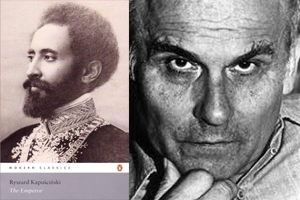
I penetrated the muddy alleys, making my way into houses that from the outside looked empty and abandoned. I was afraid. The houses were watched, and I was afraid of getting caught along with their inhabitants. Such a thing was possible, since they often made a sweep through a neighborhood or even a whole quarter of the town in search of weapons, subversive leaflets, or people from the old regime. All the houses were watching each other, spying on each other, sniffing each other out. This is civil war; this is what it's like. I sit down by the window, and immediately they say, "Somewhere else, sir, please. You're visible from the street. It would be easy to pick you off." A car passes, then stops. The sound of gunfire. Who was it? These? Those? And who, today, are "these," and who are the "those" who are against "these" just because they are "these"? The car drives off, accompanied by the barking of dogs. They bark all night. Addis Ababa is a dog city, full of pedigreed dogs running wild, vermin-eaten, with malaria and tangled hair. They caution me again, needlessly: no addresses, no names, don't say that he's tall, that he's short, that he's skinny, that his forehead this or his hands that. Or that his eyes, or that his legs, or that his knees... There's nobody left to get down on your knees for.

rk.png