Oh, just, subtle, and mighty opium! that to the hearts of poor and rich alike, for the wounds that will never heal, and for "the pangs that tempt the spirit to rebel," bringest an assuaging balm; eloquent opium! that with thy potent rhetoric stealest away the purposes of wrath; and to the guilty man for one night givest back the hopes of his youth, and hands washed pure from blood; and to the proud man a brief oblivion for wrongs undress'd and insults unavenged; that summonest to the chancery of dreams, for the triumphs of suffering innocence, false witnesses; and confoundest perjury, and dost reverse the sentences of unrighteous judges;--thou buildest upon the bosom of darkness, out of the fantastic imagery of the brain, cities and temples beyond the art of Phidias and Praxiteles--beyond the splendour of Babylon and Hekatompylos, and "from the anarchy of dreaming sleep" callest into sunny light the faces of long-buried beauties and the blessed household countenances cleansed from the "dishonours of the grave." Thou only givest these gifts to man; and thou hast the keys of Paradise, oh, just, subtle, and mighty opium!
Revolution for sale
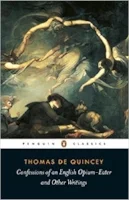
If a revolution is not accessible, tangible, and replicable, how on earth can it be a revolution? "Because I'm worth it" and "Does she or doesn't she?" were powerful, then precisely because they were commercials, for commercials come with products attached, and products offer something that songs and poems and political movements and radical ideologies do not, which is an immediate and affordable means of transformation. "We discovered in the first few years of 'Because I'm worth it' campaign that we were getting more than our fair share of new users to the category - women who were just beginning to color their hair," Sennott told me. "And within that group we were getting those undergoing life changes, which usually meant divorce. We had far more women who were getting divorced than Clairol had. Their children had grown, and something had happened, and they were reinventing themselves." They felt different, and Ilon Specht gave them the means to look different - and do we really know which came first, or even how to separate the two? They changed their lives and their hair. But it wasn't one thing or the other. It was both.
Civil War
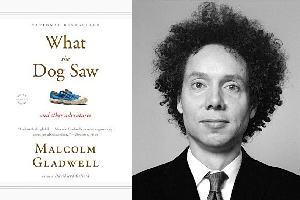
I penetrated the muddy alleys, making my way into houses that from the outside looked empty and abandoned. I was afraid. The houses were watched, and I was afraid of getting caught along with their inhabitants. Such a thing was possible, since they often made a sweep through a neighborhood or even a whole quarter of the town in search of weapons, subversive leaflets, or people from the old regime. All the houses were watching each other, spying on each other, sniffing each other out. This is civil war; this is what it's like. I sit down by the window, and immediately they say, "Somewhere else, sir, please. You're visible from the street. It would be easy to pick you off." A car passes, then stops. The sound of gunfire. Who was it? These? Those? And who, today, are "these," and who are the "those" who are against "these" just because they are "these"? The car drives off, accompanied by the barking of dogs. They bark all night. Addis Ababa is a dog city, full of pedigreed dogs running wild, vermin-eaten, with malaria and tangled hair. They caution me again, needlessly: no addresses, no names, don't say that he's tall, that he's short, that he's skinny, that his forehead this or his hands that. Or that his eyes, or that his legs, or that his knees... There's nobody left to get down on your knees for.
Hierarchy
Observing the behavior of individual fowl in a henhouse, we note that birds lower in rank are pecked by, and give way to, birds of higher rank. In an ideal case, there exists a linear order of rank with a top hen who pecks all the others. Those in the middle ranks peck those below them but respect all the hens above them. At the bottom there is a drudge who has to take it from everyone.
Adolf Remane
Flophouse
you haven't lived
until you've been in a
flophouse
with nothing but one
light bulb
and 56 men
squeezed together
on cots
with everybody
snoring
at once
and some of those
snores
so
deep and
gross and
unbelievable-
dark
snotty
gross
subhuman
wheezings
from hell
itself.
your mind
almost breaks
under those
death-like
sounds
and the
intermingling
odors:
hard
unwashed socks
pissed and
shitted
underwear
and over it all
slowly circulating
air
much like that
emanating from
uncovered
garbage
cans.
and those
bodies
in the dark
fat and
thin
and
bent
some
legless
armless
some
mindless
and worst of
all:
the total
absence of
hope
it shrouds
them
covers them
totally.
it's not
bearable.
you get
up
go out
walk the
streets
up and
down
sidewalks
past buildings
around the
corner
and back
up
the same
street
thinking
those men
were all
children
once
what has happened
to
them?
and what has
happened
to
me?
it's dark
and cold
out
here.
Charles Bukowski
Disobedience
Human history began with an act of disobedience, and it is not unlikely that it will be terminated by an act of obedience.
Human history was ushered in by an act of disobedience according to the Hebrew and Greek myths. Adam and Eve, living in the Garden of Eden, were part of nature; they were in harmony with it, yet did not transcend it. They were in nature as the fetus is in the womb of the mother. They were human, and at the same time not yet human. All this changed when they disobeyed an order. By breaking the ties with earth and mother, by cutting the umbilical cord, man emerged from a pre-human harmony and was able to take the first step into independence and freedom. The act of disobedience set Adam and Eve free and opened their eyes. They recognized each other as strangers and the world outside them as strange and even hostile. Their act of disobedience broke the primary bond with nature and made them individuals. "Original sin," far from corrupting man, set him free; it was the beginning of history. Man had to leave the Garden of Eden in order to learn to rely on his own powers and to become fully human.
The prophets, in their messianic concept, confirmed the idea that man had been right in disobeying; that he had not been corrupted by his "sin," but freed from the fetters of pre-human harmony. For the prophets, history is the place where man becomes human; during its unfolding he develops his powers of reason and of love until he creates a new harmony between himself, his fellow man and nature. This new harmony is described as "the end of days," that period of history in which there is peace between man and man, and between man and nature. It is a "new" paradise created by man himself, and one which he alone could create because he was forced to leave the "old" paradise as a result of his disobedience.
Just as the Hebrew myth of Adam and Eve, so the Greek myth of Prometheus sees all human civilization based on an act of disobedience. Prometheus, in stealing the fire from the gods, lays the foundation for the evolution of man. There would be no human history were it not for Prometheus´ "crime." He, like Adam and Eve, is punished for his disobedience. But he does not repent and ask for forgiveness. On the contrary, he proudly says: "I would rather be chained to this rock than be the obedient servant of the gods."
Man has continued to evolve by acts of disobedience. Not only was his spiritual development possible only because there were men who dared to say no to the powers that be in the name of their conscience or their faith, but also his intellectual development was dependent on the capacity for being disobedient--disobedient to authorities who tried to muzzle new thoughts and to the authority of long-established opinions which declared a change to be nonsense.
Erich Fromm
Fake Love
Fake love is a very powerful thing. That girl who adored John Cusack once had the opportunity to spend a weekend with me in New York at the Waldorf-Astoria, but she elected to fly to Portland instead to see the first U.S. appearance by Coldplay, a British pop group whose success derives from their ability to write melodramatic alt-rock songs about fake love. It does not matter that Coldplay is absolutely the shittiest fucking band I've ever heard in my entire fucking life, or that they sound like a mediocre photocopy of Travis (who sound like a mediocre photocopy of Radiohead), or that their greatest fucking artistic achievement is a video where their blandly attractive frontman walks on a beach on a cloudy fucking afternoon. None of that matters. What matters is that Coldplay manufactures fake love as frenetically as the Ford fucking Motor Company manufactures Mustangs, and that's all this woman heard. "For you I bleed myself dry," sang their blockhead vocalist, brilliantly informing us that stars in the sky are, in fact, yellow. How am I going to compete with that shit? That sleepy-eyed bozo isn't even making sense. He's just pouring fabricated emotions over four gloomy guitar chords, and it ends up sounding like love. And what does that mean? It means she flies to fucking Portland to hear two hours of amateurish U.K. hyper-slop, and I sleep alone in a $270 hotel in Manhattan, and I hope Coldplay gets fucking dropped by fucking EMI and ends up like the Stone fucking Roses, who were actually a better fucking band, all things considered.
Chuck Klosterman
Crown.
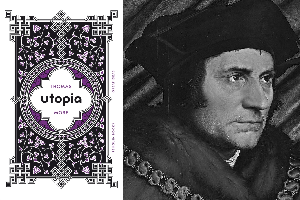
No, if a king is so hated or despised by his subjects that he can't keep them in order unless he reduces them to beggary by violence, extortion, he'd far better abdicate. Such methods of staying in power may preserve the title, but they destroy the majesty of a king. There's nothing majestic about ruling a nation of beggars - true majesty consists in governing the rich and prosperous. That's what that admirable character Fabricius meant when he said he'd rather govern rich men than be one.
***
To start with, most kings are more interested in the science of war - which I don't know anything about, and don't want to - than in useful peaceful techniques. They’re far more anxious, by hook or by crook, to acquire new kingdoms than to govern their existing ones properly. Besides, privy councilors are either too wise to need, or too conceited to take advice from anyone else - though of course they're always prepared to suck up to the king's special favorites by agreeing with the silliest things they say. After all, it's a natural instinct to be charmed by one's own productions. That's why raven chicks are such a delight to their parents, and mother apes find their babies exquisitely beautiful.So there you have a group of people who are deeply prejudiced against everyone else’s ideas, or at any rate prefer their own. Suppose, in such company, you suggest a policy that you’ve seen adopted elsewhere, or for which you can quote a historical precedent, what will happen? They’ll behave as though their professional reputations were at stake, and they’d look fools for the rest of their lives if they couldn’t raise some objection to your proposal. Failing all else, their last resort will be: ‘This was good enough for our ancestors, and who are we to question their wisdom?’ Then they’ll settle back in their chairs, with an air of having said the last word on the subject – as if it would be a major disaster for anyone to be caught being wiser than his ancestors! And yet we’re quite prepared to reverse their most sensible decisions. It’s only the less intelligent ones that we cling on to like grim death.
Noise
The sound shivers through the walls, through the table, through the window frame, and into my finger. These distraction-oholics. These focus-ophobics. Old George Orwell got it backward. Big Brother isn't watching. He's singing and dancing. He's pulling rabbits out of a hat. Big Brother’s busy holding your attention every moment you're awake. He's making sure you're always distracted. He's making sure you're fully absorbed. He's making sure your imagination withers. Until it's as useful as your appendix. He's making sure your attention is always filled. And this being fed, it's worse than being watched. With the world always filling you, no one has to worry about what's in your mind. With everyone's imagination atrophied, no one will ever be a threat to the world.
Chuck Palahniuk
Book of Bokonon - chapter 124
"Beware of the man who works hard to learn something, learns it, and finds himself no wiser than before," Bokonon tells us. "He is full of murderous resentment of people who are ignorant without having come by their ignorance the hard way."
Kurt Vonnegut